
Salzburg Festival 2026: Your Complete Guide to the World's Leading Music Festival
Every summer, Salzburg transforms into a global stage for opera, drama, and classical music, drawing tens of thousands of visitors. The Salzburg Festival is renowned as one of the world's most prestigious cultural events, with a history dating back over a century. From its founding in 1920, the festival has been a platform for the greatest artists, and today it continues to blend tradition with bold contemporary programming.
The 2026 edition of the Salzburg Festival ran from 17 July to 30 August, featuring 172 performances over 45 days. According to the official summary, the festival attracted more than 261,300 guests from 84 countries, with an attendance rate over 99%. This scale can be overwhelming for first-timers, so careful planning is essential to make the most of your visit.
This guide recaps the 2026 program highlights, ticketing strategies, key venues, and practical tips, so you can build your own festival itinerary for future years. Whether you're a devoted opera fan or a curious newcomer, understanding how the festival works will enhance your experience.
2026 Dates and Duration
The Salzburg Festival 2026 Summer Festival ran from 17 July to 30 August 2026, as confirmed by the official sources. The festival typically spans six weeks, with performances almost every day. Before booking travel for any future edition, always verify the dates on the official website, as they are subject to change.
In addition to the summer festival, the Whitsun Festival 2026 took place from 22 to 25 May 2026. This shorter event offers a different thematic focus. If you're flexible with your travel dates, attending the Whitsun Festival can be a more intimate introduction to the festival experience.
Opera Highlights of 2026
The 2026 opera program featured a rich mix of German, French, and Italian repertoire. New productions included Richard Strauss's Ariadne auf Naxos and Georges Bizet's Carmen, both staged by acclaimed directors. Also on the roster was Mozart's Così fan tutte, a festival favorite.
Beyond these, the festival presented Il viaggio a Reims and Saint François d'Assise, among others. With nine opera productions total, there was ample choice for attendees. For anyone planning a future visit, these headline operas are excellent starting points because they showcase the festival's artistic ambition.
Theatre Program: Jedermann and World Premieres
The festival's theatre program is anchored by the legendary Jedermann, performed annually on the steps of the cathedral. In 2026, Philipp Hochmair took on the title role, with Roxane Duran as Buhlschaft, a pairing that drew critical praise.
Two world premieres added to the excitement: Peter Handke's Schnee von gestern, Schnee von morgen and Elfriede Jelinek's Unter Tieren. These contemporary works reflected the festival's commitment to modern drama, making the 2026 program especially diverse.
Concerts: Vienna Philharmonic on Top
The Vienna Philharmonic is the festival's resident orchestra, performing five concert programs under world-class conductors. In 2026, audiences heard them led by Gustavo Dudamel, Riccardo Muti, Christian Thielemann, Andris Nelsons, and Tugan Sokhiev, a stellar lineup.
Beyond the Vienna Philharmonic, the festival featured numerous guest orchestras, chamber concerts, and solo recitals. A highlight was the tribute to composer György Kurtág, showcasing the festival's range from classical standards to modern masterpieces.
The Youth Program 'jung & jede*r'
The festival's youth program, jung & jede*r, is designed to engage audiences of all ages. It includes children's operas, youth tickets, and school programs, with two mobile productions that toured the Salzburg province starting in March 2026. These initiatives make the festival accessible beyond the main city venues.
Festival Venues in Salzburg
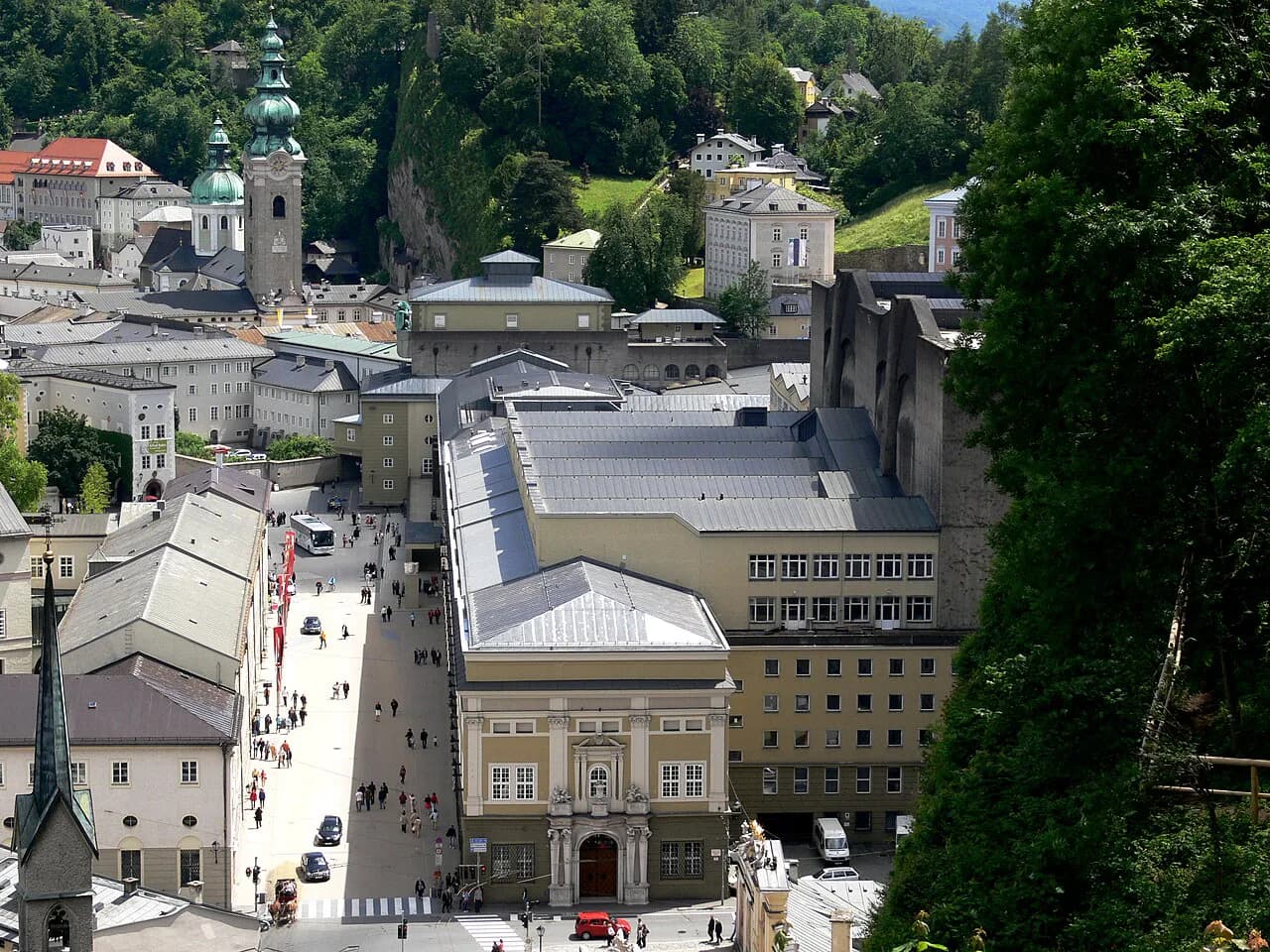
Performances take place in iconic venues such as the Felsenreitschule, a rock-cut riding school, and the Grosses Festspielhaus, home to grand opera productions. The Haus für Mozart offers a more intimate setting for chamber works. Each venue has its own atmosphere and acoustic quirks, so choosing the right seat matters.
The Domplatz, where Jedermann is performed outdoors, is a unique experience but weather-dependent. Knowing which venue your chosen performance is in helps with planning your logistics, especially if you need to move between locations.
How to Get Tickets: Official Channels and Pricing
Tickets are officially sold through the festival's website and its ticketing hotline, with pricing that varies by performance and seat category. For exact prices, consult the official tickets page, which also lists availability and any returned tickets for sold-out shows.
The program is typically released in December, and subscriptions offer early access. If you're on a budget, consider youth tickets offered under the jung & jede*r program, which provide substantial discounts. Checking periodically for released seats can also pay off.
Ticketing Pitfalls for First-Timers
A common mistake is waiting until the last minute, hoping for last-minute deals. The festival frequently sells out, especially high-profile operas. Avoid resale platforms without official authorization, as you risk paying inflated prices or receiving invalid tickets.
Instead, register for the festival's newsletter to receive program announcements and sales updates. If you're flexible, consider weekday performances, which are often less in demand. The official site also offers subscription packages that can guarantee seats across multiple events.
Combo Experiences: Mozart, Sound of Music, and More
Pair your festival performances with visits to Salzburg's other cultural icons. The city is Mozart's birthplace, so you can explore his residences. Fans of The Sound of Music will recognize locations used in the film, offering a different kind of musical pilgrimage.
When planning your itinerary, consider day trips to nearby attractions like the Salzkammergut lakes. Balancing festival evenings with daytime exploration makes your Salzburg trip memorable.
Practical Visitor Tips
Accommodation books up months in advance, so reserve early. Consider staying in nearby towns and using public transport, as Salzburg's center is compact. The Salzburg Card provides free public transport and museum entry, and it includes discounts on some festival events.
Getting around during the festival is easy thanks to frequent buses and a short walkable historic center. For detailed transport options, you might find our guide on how to get to Salzburg Festival useful, but be aware that festival crowds mean slower movement through the city.
Seasonal Considerations: July–August Weather
July and August in Salzburg are generally warm, with average highs around 25°C. However, alpine weather can bring sudden showers, especially in the evenings. Pack layers and a light rain jacket for outdoor events and choir performances.
For a packing list tailored to the festival, check our salzburg festival packing list. Also, if you're attending multiple events, ensure your outfit meets any dress codes – though most venues are relaxed, formal attire is common for opening nights.
Plan Your Visit
The Salzburg Festival is a once-in-a-lifetime cultural immersion, but it requires thoughtful planning. Start by confirming the official dates and program on the festival's website, then secure your tickets through authorized channels to avoid disappointment.
Pair your festival experience with the city's Mozart heritage and Sound of Music sights to create the ultimate summer trip. With this guide, you're equipped to navigate the festival like a pro.
Explore more Salzburg guides
Frequently Asked Questions
What is the famous Salzburg Festival?
The Salzburg Festival is an internationally renowned music and drama festival held annually in Salzburg, Austria. Founded in 1920, it features opera, theatre, and concerts, with a focus on Mozart's works, and attracts top artists and audiences worldwide. It is considered one of the world's most significant cultural events.
Did the Von Trapp family sing at the Salzburg Festival?
No, the Von Trapp family did not perform at the Salzburg Festival. They have a historical connection to Salzburg, but their musical career was separate. The Sound of Music, which portrays them, is set in Salzburg, but they were not part of the festival's history.
What are the dates of the Salzburg Festival?
For 2026, the Summer Festival ran from 17 July to 30 August 2026. The Whitsun Festival took place from 22 to 25 May 2026. However, dates for future editions are subject to change, so always check the official website for the most current information.
When and where will the Salzburg Music Festival be held in 2026?
The 2026 Salzburg Festival took place from 17 July to 30 August 2026 in Salzburg, Austria, at venues such as the Grosses Festspielhaus, Felsenreitschule, Haus für Mozart, and Domplatz. The Whitsun Festival was also in Salzburg from 22 to 25 May 2026.
How much do Salzburg Festival tickets cost?
Ticket prices vary widely depending on the performance, venue, and seating category. Exact prices are not published in this guide. Please consult the official ticketing page at salzburgerfestspiele.at for accurate pricing and availability.
What operas are on at the Salzburg Festival 2026?
The 2026 program included new productions of Richard Strauss's Ariadne auf Naxos, Georges Bizet's Carmen, and Mozart's Così fan tutte, along with other works like Il viaggio a Reims and Saint François d'Assise. A total of nine opera productions were planned.
Where can I buy Salzburg Festival tickets?
Tickets can be purchased through the official Salzburg Festival website (www.salzburgerfestspiele.at/en) or via their ticketing hotline. The site also offers subscription options and an 'Available Tickets' page where returned tickets may be sold. Always use official channels to avoid scams.