

12 Months of Festivals in Germany: A Complete Calendar
Last updated July 2026, this calendar sorts festivals in Germany by month using each event's real recurrence rule instead of a guessed date. Traditions like Oktoberfest and Cologne Carnival repeat on predictable rules, while music festivals such as Wacken Open Air announce fresh dates every year. Either way, this guide gives you the rule behind each date so you can plan travel with confidence for 2026.
Understanding Germany's Festival Calendar
Germany's festival calendar splits into three broad categories: fixed-rule folk traditions, announced music and arts festivals, and the dated Christmas market season that closes out the year. Folk traditions such as Oktoberfest and Cannstatter Volksfest follow strict recurring rules set by the host city, so their timing repeats in a predictable pattern even when the exact calendar date shifts. Modern festivals such as Wacken Open Air and Rock am Ring are announced instead, with each edition's dates published by the organiser rather than fixed years in advance. Christmas markets run on yet another rhythm, opening in the weeks before Advent and closing between 23 and 24 December across dozens of German cities.
How to Read the Dates on This Calendar
This calendar uses four labels, and each one means something different for how far ahead you can book. A Fixed date repeats on the same calendar day every year, like the Garmisch-Partenkirchen leg of the Four Hills Tournament on 1 January. A Fixed rule repeats on a predictable pattern tied to weekdays or a reference date, like Oktoberfest's Saturday-after-15-September opening. The exact date shifts slightly year to year even though the rule itself never changes. A Movable event tracks the Christian calendar and shifts with Easter, like Cologne Carnival's Ash-Wednesday-anchored season. An Announced event has no derivable date at all. The organiser sets it fresh each year, as with Wacken Open Air. Treat any specific date you see elsewhere as unconfirmed until the organiser posts it.
Festivals in Germany: The Complete 12-Month Calendar
Every event below is grounded in its official recurrence rule, not a single guessed date. Treat any specific day as a starting point and confirm it against the organiser or the relevant tourism board before booking travel.
- January
- The Four Hills Tournament's Garmisch-Partenkirchen leg is fixed for 1 January, the second stop after Oberstdorf's 29 and 30 December opener.
- Rottweiler Fasnet's season formally opens on a fixed 6 January, though its signature Narrensprung parades come later, tied to the movable Rosenmontag and Fasnetsdienstag mornings.
- January is otherwise the calendar's quietest month, a good stretch for visiting Bavaria or the Rhineland without festival crowds or booked-out hotels.
- February
- Cologne’s carnival season runs from Weiberfastnacht through Karnevalsdienstag, a movable window anchored to Ash Wednesday that typically lands in February.
- Düsseldorf and Mainz run their own Rosenmontagszug parades on the same movable calendar, while Rottweil's Narrensprung mornings close out the season further south.
- The Berlinale film festival is announced separately each year, an 11-day program the festival typically publishes about a year ahead.
- March
- Hamburg's Frühlingsdom opens under a fixed rule, one of three roughly month-long Hamburger DOM fairs the city runs every year, spanning March into April.
- Some years push Cologne Carnival's Rosenmontag procession into early March instead of February, since the date moves with Easter.
- March sits at the crossover between Karneval's movable window and the start of Hamburg's DOM season, so check both calendars before booking travel.
- April
- Munich Spring Festival follows a fixed rule, filling two to three weeks on the Theresienwiese from mid-to-late April.
- Time Warp, an announced one-night electronic music event at Mannheim's Maimarkt-Gelände, typically lands in early April, with tickets released in phases ahead of the date.
- Hamburg's Frühlingsdom, opened the previous month, continues into April as part of its roughly 30-day run.
- May
- Hamburg Port Anniversary follows a fixed rule of three days around 7 May, with the Einlaufparade on the Friday and the Auslaufparade on the Sunday.
- Rhine in Flames opens its five-town fireworks season with the Bonn leg, fixed for the first Saturday in May.
- May carries fewer named festivals from this calendar than the surrounding months, aside from Hamburg Port Anniversary and the Bonn leg of Rhine in Flames.
- June
- Kiel’s sailing week follows a fixed rule: nine days, Saturday to Sunday, in the last full week of June.
- The Nürburgring festival is announced each year for three days in early June at the Nürburgring, with Rock im Park running the same weekend at Nuremberg's Zeppelinfeld.
- Rock am Ring has historically landed on the Pentecost weekend, though as an announced event its exact 2026 dates come from the organiser rather than a fixed rule.
- July
- Wacken’s metal festival is organiser-announced each year, typically three days from Thursday to Saturday, landing in late July or early August.
- Hannover's Marksmen's Fair opens under a fixed rule the Friday before the first Sunday in July and runs ten days.
- Rhine in Flames' Rüdesheim-Bingen leg is fixed for the first Saturday in July, the second stop in its five-town series.
- August
- Gäubodenvolksfest in Straubing follows a fixed rule, eleven days starting the second Friday in August.
- Stuttgart Wine Village opens under its own fixed rule, twelve days spanning late August into early September in the city centre.
- Rhine in Flames' Koblenz leg is fixed for the second Saturday in August, the midpoint of its five-town run.
- September
- Munich's Oktoberfest follows a fixed rule that opens the festival the Saturday after 15 September and runs it 16 to 18 days.
- the Cannstatter Volksfest in Stuttgart follows its own fixed rule, 17 days from the Friday after the last Saturday in September into the second weekend of October.
- Reeperbahn Festival is announced for four days across Hamburg's St. Pauli venues, while Bad Dürkheim's Sausage Market fills two separate September weekends.
- October
- Oktoberfest's fixed rule closes the festival the first Sunday in October, a date pushed to 3 October when that Sunday falls on 1 or 2 October.
- Bremen Freimarkt follows a fixed rule of its own, seventeen days across the second half of October.
- Frankfurt Book Fair is announced for five days in mid-October, with the final two days open to the public.
- November
- Cologne Carnival's formal session season reopens on a fixed 11 November, the traditional start of the run-up to next year's street carnival.
- Hamburger DOM's Winterdom edition, one of the city's three roughly month-long fairs, opens under a fixed rule and runs from November into December.
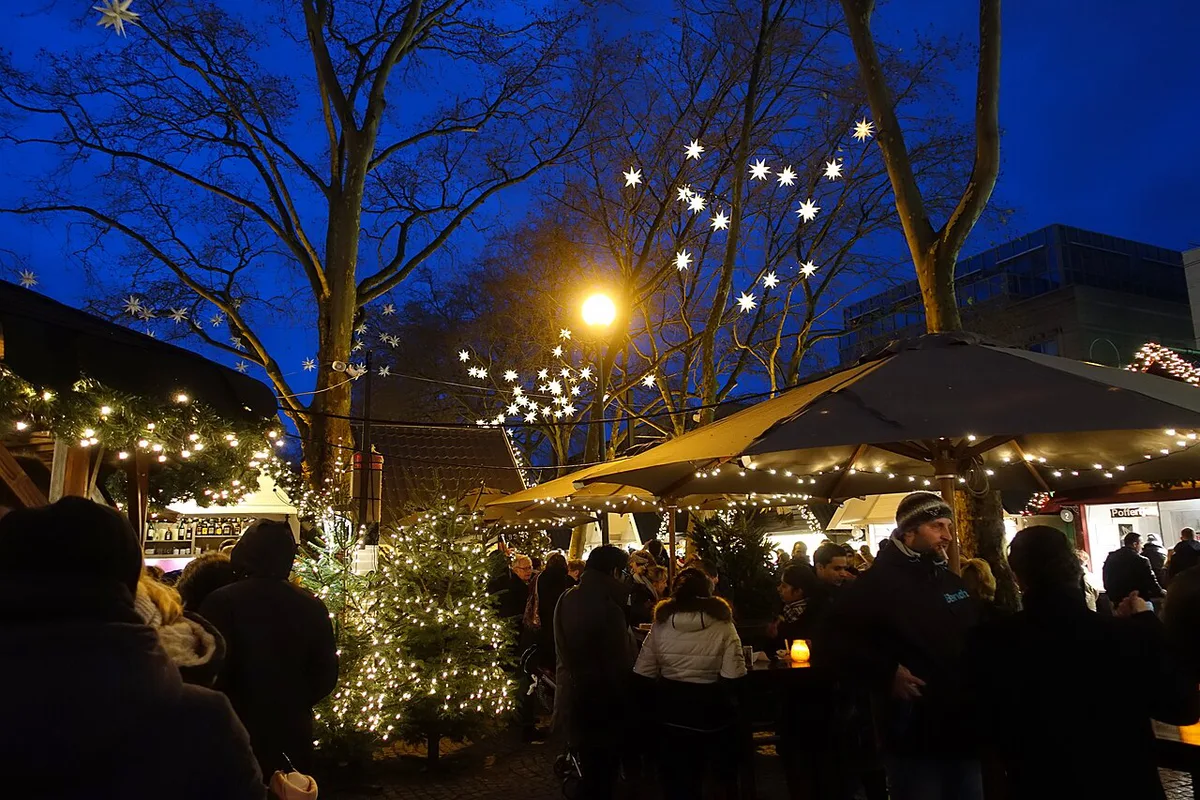
- Germany's Christkindlmarkt season also begins in late November, with several major markets opening the week before the first Advent Sunday.
- December
- Nuremberg Christkindlesmarkt follows a fixed rule, opening the Friday before the first Advent Sunday and running to 24 December.
- Dresden Striezelmarkt follows a similar fixed rule, opening the Wednesday before the first Advent Sunday and running to 24 December.
- Munich's Christkindlmarkt on Marienplatz follows the same pattern, opening the week before the first Advent Sunday, while Tollwood Winter Festival runs on the Theresienwiese from late November to 31 December.
Why Some Festival Dates Move Every Year
Several major festivals on this calendar are movable, meaning their dates shift every year with Easter instead of landing on a fixed day. Cologne Carnival's street season runs from Weiberfastnacht, the Thursday before Ash Wednesday, through Karnevalsdienstag. Düsseldorf and Mainz run parallel Rosenmontagszug parades on the same movable calendar. Rottweiler Fasnet's Narrensprung parades fall on Rosenmontag and Fasnetsdienstag mornings, even though its season formally opens on a fixed 6 January. Erlangen Bergkirchweih anchors to Pentecost weekend as well. So do Berlin's Carnival of Cultures and Leipzig's Wave-Gotik-Treffen, another moving target tied to Easter. Because none of these dates repeat on the same calendar day each year, always confirm the current year's dates against the organiser rather than a previous year's listing.
Regional Differences: Bavaria, the Rhineland, and the North
Bavaria anchors Germany's best-known Volksfest tradition, from Oktoberfest in Munich to the Munich Spring Festival on the same Theresienwiese grounds earlier in the year. Stuttgart runs a similar back-to-back rhythm of its own, pairing Cannstatter Volksfest with Stuttgart Wine Village a few weeks apart. Cologne, Düsseldorf, and Mainz carry the Rhineland's Karneval season instead, built around Weiberfastnacht and Rosenmontag rather than a beer tent. Hamburg follows a different pattern again: its Hamburger DOM runs three separate roughly month-long editions a year instead of one single festival week. Further north, Kieler Woche trades beer tents and parade costumes for sailing and open-air concerts, underscoring how differently festival season plays out by region.
Booking, Transport, and Money: Planning Logistics
A few practical rules apply across almost every festival on this calendar, regardless of season or region.
- Book lodging early
- Rooms near Oktoberfest and Wacken Open Air often sell out 6 to 12 months ahead of the dates.
- Lock in accommodation as soon as your travel window firms up, especially for festival-adjacent neighborhoods.
- Check Deutsche Bahn for event travel
- Deutsche Bahn publishes event-timed tickets and regional day passes around major festivals.
- Check bahn.com for current routes and fares before you travel, since offerings change year to year.
- Budget for the Pfand deposit
- Outdoor Volksfeste and beer gardens run on a deposit system called Pfand: you pay extra for the glass or plate when you order.
- You get that deposit back when you return it to a designated counter, and the rate varies by festival and vendor.
- Carry cash as backup
- Card acceptance keeps expanding, but many traditional stalls and smaller regional fairs still run cash-only or cash-preferred.
- As of 2026, third-party ticket listings price a Rock am Ring weekend pass at around €239, a useful benchmark for what a multi-day camping festival costs against a single evening at a Christmas market.
Which Festival Fits Your Trip? A Quick Comparison
Match a festival to your travel style before locking in dates from the month-by-month calendar above.
| Festival | Best For | Vibe | Budget |
|---|---|---|---|
| Oktoberfest | Beer culture and big tents | High-energy, crowded weekends | €€€ |
| Cologne Carnival | Costumes and street parades | Rowdy, cold, campy | €€ |
| Cannstatter Volksfest | A local alternative to Oktoberfest | High-energy, more room to move | €€ |
| Wacken Open Air | Metal fans and camping festivals | Muddy fields, close-knit crowd | €€ |
| Rock am Ring | Rock and metal on a big stage | Loud, multi-day camping | €€€ |
| Berlinale | Film screenings and industry buzz | Urban, indoor, ticketed | €€ |
| Kieler Woche | Sailing and open-air concerts | Coastal, relaxed, largely free | € |
| Nuremberg Christkindlesmarkt | Families and Christmas shopping | Cozy, cold, crowded evenings | € |
Common Mistakes to Avoid
A few planning mistakes come up again and again among first-time festival travelers in Germany.
- Assuming every city celebrates Karneval
- Karneval and Fasching are concentrated in the Rhineland and the southern Fasnet towns, not a nationwide street event.
- Cities like Berlin or Hamburg do not run a comparable street carnival season.
- Arriving late and expecting a seat
- Oktoberfest tents fill fast on weekend afternoons.
- Many tents require advance table reservations made directly with the tent operators.
- Ignoring quiet-holiday restrictions
- Some German states enforce Tanzverbot, a dance and loud-music ban, on certain religious holidays.
- Confirm state rules before planning a party night around one of those dates.
- Treating an announced date as confirmed
- Festivals like Wacken Open Air and Rock am Ring publish exact dates only when the organiser announces them.
- Check the official event site rather than a secondhand calendar before booking flights.
More German Festival Cities
Cities where the festival is reachable by public transport and a normal hotel works.
For trip-planning details, see German National Tourist Board and Google's Event structured-data guidance.
Frequently Asked Questions
What is the biggest festival in Germany?
Munich's Oktoberfest draws the largest crowds of any Volksfest in the country and is commonly described as the world's largest Volksfest. It follows a fixed rule that opens the festival the Saturday after 15 September and runs it 16 to 18 days. The festival closes on the first Sunday in October, a date pushed to 3 October when that Sunday falls on 1 or 2 October.
Which German festivals are best for families?
Christmas markets are the easiest starting point, since Nuremberg's Christkindlesmarkt and Dresden's Striezelmarkt both run through mid-to-late December with crafts stalls and food alongside the mulled wine. Kieler Woche also works well for families, since large parts of its harbor program take place outdoors, with public viewing areas that do not require a ticket.
Are festivals in Germany expensive?
Costs swing widely by festival type. Multi-day music festivals run highest: as of 2026, third-party ticket listings price a Rock am Ring weekend pass at around €239, before camping or travel. Christmas markets sit at the other end, since most, including Nuremberg's and Dresden's, charge no entry fee, so your spend comes down to food, drinks, and souvenirs.
What should you wear to a traditional German festival?
At Bavarian-style Volksfeste like Oktoberfest, Tracht is common and welcome: Lederhosen for men, Dirndl dresses for women, though neither is required. Rhineland Karneval calls for costumes instead, ranging from simple face paint to full themed outfits. Outside those two traditions, ordinary weather-appropriate clothing works fine, since most festivals on this calendar don't have a dress code.
When is the best month for festivals in Germany?
Late spring through early autumn carries the heaviest concentration of events on this calendar, roughly May through October, when most of the announced music festivals and fixed-rule Volksfeste cluster. Winter still has its own dedicated season, since the Christmas markets take over from late November to Christmas Eve.
What does an 'Announced' festival date mean on this calendar?
Announced festivals, including Wacken Open Air and Rock am Ring, have no fixed or rule-based date to derive in advance. Organisers publish each edition's exact dates separately, usually within a general seasonal window described in words. Check the official event site directly before booking flights, hotels, or tickets.