

Kieler Woche: A First-Timer's Guide to Kiel Week
Last updated July 2026, this guide breaks down Kieler Woche for travelers planning a first visit to Kiel. Kieler Woche pairs an international sailing regatta at Schilksee with a citywide festival along the Kiellinie and Rathausplatz, and picking which half matters most changes where you should stay and how you get around. This guide separates the racing calendar from the festival program and flags the accommodation crunch before it flags you.
What Is Kieler Woche? The Fast Answer
Kieler Woche is a dual-purpose event: an international sailing regatta in Olympic and international dinghy classes, paired with a citywide summer festival built around it. Sources describe it as one of the world's largest sailing events and the largest summer festival in Northern Europe. Kieler Woche traces back to 1882, when 20 sailing yachts raced from Düsternbrook and organizers repeated the event annually after its first success. A typical edition draws around 3 million visitors, roughly 5,000 sailors, and about 2,000 ships. These crowds spread across sailing courses in the Kiel Fjord (Kieler Förde) and stages that run from the Kiellinie into the city center. Kieler Woche runs on a fixed rule: nine days from Saturday to Sunday in the last full week of June, with an unofficial Friday-night Soundcheck the evening before the official opening. Applying that rule to 2026 puts the festival window at June 20 to June 28. Treat that date as a projection from the rule, not an organiser-confirmed calendar entry. Check the official Kieler Woche site closer to travel for the confirmed schedule. Opening day itself starts with a ceremony called the Glasen, followed by a traditional walk called the Holstenbummel.
The Sailing Program: Regattas, Classes, and Where to Watch
Racing at Kieler Woche spans Olympic sailing classes and a wider field of international classes, including ILCA 6, ILCA 7, 49er, and 49erFX boats. Four clubs organize the regatta jointly: the Kieler Yacht-Club, the Norddeutscher Regattaverein, the Hamburger Segel-Club, and the Verein Seglerhaus am Wannsee. Kiel Week is also part of the Sailing World Cup rotation, alongside Spain's Trofeo Princesa Sofía, France's Semaine Olympique Française, and the Dutch Allianz Regatta. That rotation is part of why the Olympic-class fleets draw such deep international entries. Most races start from the Olympic Harbor at Schilksee, roughly 10 km north of the city center. The largest fleets then sail well offshore in the Kiel Fjord, out of easy sight from land.
- Schilksee Olympic Harbor: the closest vantage point to the start areas and the athlete hub, good for seeing boats rigged before racing.
- Kiellinie: the only shore-based viewing option, mainly for smaller boat classes racing close to the west bank.
- KielerWoche.TV: the practical way to watch the larger offshore fleets, since most racing happens too far out to see unaided.
Schilksee vs Kiellinie: Where to Base Your Days
Schilksee and the Kiellinie serve two different visitors, and mixing them up is the most common planning mistake for first-timers. Schilksee is the sailing-first destination: a working harbor, thinner crowds, and direct sightlines to competitors and support boats. Kiellinie and the city center are festival-first, with dense crowds, stages, and the International Market, and only occasional glimpses of racing boats near shore. Ferries and buses connect the two areas, but travel time between them means picking a home base rather than shuttling back and forth all day.
| Area | Distance from city center | Vibe | Best for |
|---|---|---|---|
| Schilksee Olympic Harbor | about 10 km north | working regatta harbor, thinner crowds | sailing fans, athlete-watching |
| Kiellinie | along the fjord, in the city center | stages, bars, dense foot traffic | live music, shoreline race glimpses |
| Rathausplatz / International Market | central Kiel | food stalls, cobblestone crowds | culinary variety, short visits |
The Festival on Land: Music, Food, and Culture
Soundcheck opens the festival on the Friday night before the official start, turning stages across the city into an unofficial warm-up party. Public stages then spread across several parts of Kiel for the rest of the week. Music programming is substantial, with competitor listings putting the concert count above 300 free shows in a typical year, spanning international acts, newcomers, and local bands. International Market on Rathausplatz is the culinary center of the festival, with food stalls representing dozens of countries. Expect cobblestones underfoot and dense crowds rather than open walking room, especially in the evening. Gewaltig Leise comedy series runs as a paid alternative to the free outdoor stages, worth budgeting for if free concerts aren't the main draw. Families get a dedicated children's program at the Spiellinie, with painting activities, play areas, and minigames running throughout the festival, plus puppet-show performances at the Kieler Woche Hoftheater. Local food carries its own identity too: look for Kieler Sprotten, the smoked sprat that's a Kiel specialty, alongside the international stalls. German Navy (Marine) also keeps a visible presence during the week, reflecting Kiel's role as a naval port city. Recent editions have also organized around themed pillars such as accessibility and sustainability, reflected in program notes on the official site.
- The Kiellinie, the main stage corridor along the fjord's west bank.
- The Hörn bridge and Germania harbor, a newer stage area east of the center.
- Rathausplatz, Holstenbrücke, and Alter Markt in the historic city center.
The Nautical Highlights: Windjammer Parade and the AIDA Final Display
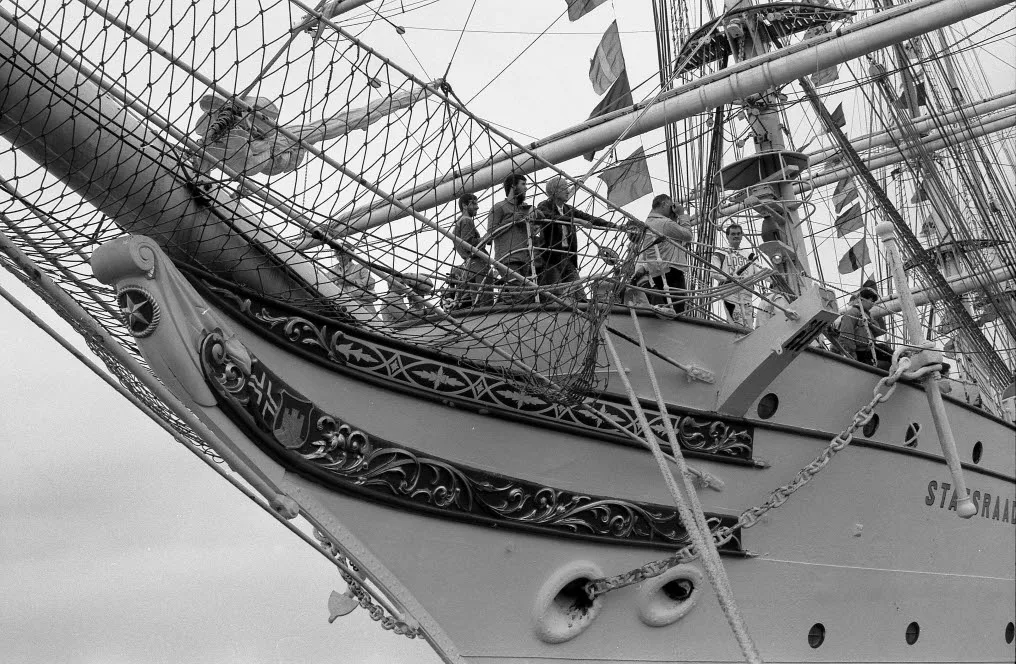
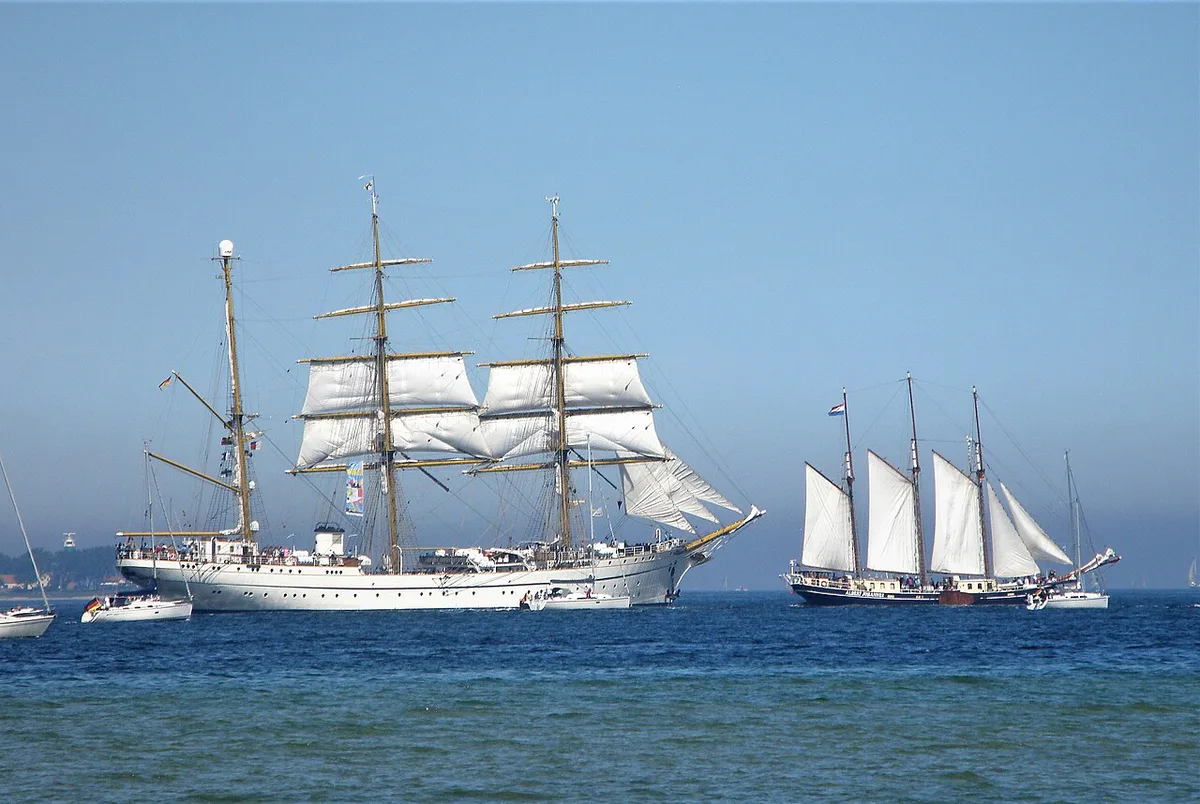
Windjammer Parade, also called the Tall Ships Parade, is the nautical highlight for most visitors. It typically sails on the second Saturday of Kieler Woche, the day before the festival closes. That single event brings more than 100 traditional ships and hundreds of yachts past the fjord shoreline. Booking a spot aboard one of the ships means contacting a participating vessel or tour operator well in advance. Watching from shore costs nothing, and Laboe and Friedrichsort are common vantage points along the fjord for the parade route. Kieler Woche closes with the AIDA final display, a fireworks and light show fired from pontoons and the quays at the Howaldtswerke shipyard around 11 p.m. on the closing Sunday. It's visible across most of the Kiel Fjord, and recent editions have streamed the show live online for anyone not in the city that night.
Planning Your Visit: Accommodation, Transit, and Costs
Accommodation is the real constraint on a Kieler Woche trip, not festival access. Central Kiel hotel rooms routinely book out roughly a year ahead of the festival, so waiting until spring for a June trip is a common and avoidable mistake. Hamburg and Neumünster both sit on Deutsche Bahn's regional network and work as commuting bases for day trips into the festival if Kiel itself is full. Kieler Woche Ticket covers local transit for the week; check the official Kieler Woche site for current pricing before travel, since festival ticket terms change year to year. Förde-Fährlinie ferry runs between Reventlou and Schilksee and doubles as a scenic alternative to the bus, putting you on the fjord instead of stuck in festival traffic. Bus and ferry frequency both increase during festival week, though the exact timetable shifts year to year, so confirm current schedules through Kiel's transit operator or the festival's own service page. Most of Kieler Woche costs nothing to attend: the sailing courses, the festival stages, and the Windjammer Parade shoreline are all free to watch. Spending happens at the International Market and festival food stalls, where meals cost more than a supermarket lunch in Hamburg or Neumünster. Budget the week around food and a paid Gewaltig Leise ticket if you want one, rather than around admission, since there mostly isn't one.
- Rain gear: Kieler Woche weather is unpredictable even in June, and waterproof layers matter more than a jacket for warmth.
- Flat, closed shoes: the Kiellinie is a long asphalt stretch, and the International Market's cobblestones are uneven underfoot.
- A portable charger: dense crowds and long days away from a hotel room drain phones fast.
- Small cash amounts: food stalls at the International Market are easiest to navigate with cash on hand.
Traditions and Souvenirs: Posters, Plaques, and the Glasen Ceremony
Every edition of Kieler Woche has its own official poster, a tradition dating back to 1948. A jury invites a small group of graphic designers to compete for the year's corporate design, and an invitation alone carries prestige in the design world. Past commissions include Anton Stankowski in 1962 and Wim Crouwel in 1998, and winning designs get applied across festival merchandise that collectors track from year to year. Enamel plaques are the other collectible: Kieler Woche has issued them as competitor mementos since before World War Two, and older editions now circulate among collectors. Organizers have also sold off the year's flags and banners once they come down from lamp posts and construction fencing. It's a small souvenir option that only appears in the festival's closing days. Festival opens with the Glasen, a traditional maritime bell ceremony, followed by the Holstenbummel, a ceremonial walk through the city center that marks the unofficial start of the street-level festival.
How Kieler Woche Compares to Other German Festivals
Kieler Woche is a northern, maritime counterpart to Germany's beer-hall festival culture. Munich's Oktoberfest draws its identity from Bavarian beer tents, not sailing, and runs on a completely different calendar and season. Stuttgart’s Volksfest follows a similar tent-and-beer format in Stuttgart, also outside Kieler Woche's maritime focus. On scale, Kieler Woche sits closer to Germany's largest music and cultural gatherings than to a regional fair. Wacken’s metal festival concentrates its crowd around metal music over a few days, a narrower musical focus than Kieler Woche's citywide mix of free stages. The Nürburgring festival runs as a single-site rock festival at the Nürburgring, again a different model from Kieler Woche's spread-out city program. Cologne’s carnival shares Kieler Woche's street-level, citywide energy, but runs on carnival's movable pre-Lenten calendar instead of a fixed June week. Winter events look nothing like Kieler Woche's sailing-and-sun format. Nuremberg Christkindlesmarkt runs through a late-year Advent market built around mulled-wine stalls, not sailing or regattas. Dresden Striezelmarkt follows the same late-year Advent format, with its own historic market square instead of a fjord. For culture-focused travel rather than festival crowds, Berlin's film festival is Germany's film-industry equivalent, held in February rather than June. Building a full-year German festival calendar around events like these helps decide whether Kieler Woche's sailing focus fits a trip better than a beer tent or a Christmas market. Sailing access and free citywide music make Kieler Woche a stronger fit for travelers who want an active, outdoor week over a seated beer-tent format.
How to Plan a Sailing Day at Schilksee
Arrive at Schilksee Olympic Harbor before the fleets leave their berths. This is when visitors can see sailors rigging boats, checking sails, and moving through the launch area. Once racing begins, many courses lie too far into Kiel Fjord for clear viewing from land.
Check the official daily schedule before leaving central Kiel. Start times and course assignments can change because of wind conditions. KielerWoche.TV is useful for following offshore competition after the boats disappear from shore.
- Use the Förde-Fährlinie from Reventlou for a scenic journey along Kiel Fjord.
- Take a festival bus when ferry capacity or weather makes the water route less convenient.
- Allow separate time for the Kiellinie because Schilksee is about 10 kilometres north of the city centre.
Schilksee suits visitors interested in race preparation and the working regatta atmosphere. Return to central Kiel later for the International Market and evening concerts rather than repeatedly crossing the city.
Explore more Germany guides
For trip-planning details, see Kiel Week (official) and Official regional tourism.
Frequently Asked Questions
When is Kieler Woche 2026?
Kieler Woche runs on a fixed rule: nine days from Saturday to Sunday in the last full week of June, plus a Friday Soundcheck the night before. That rule places the 2026 edition at June 20 to June 28. Treat this as a rule-derived estimate rather than a confirmed date, and check the official Kieler Woche site before booking travel.
Is Kieler Woche free to attend?
Most of Kieler Woche is free: the sailing courses, festival stages along the Kiellinie, and the Windjammer Parade shoreline don't charge admission. Spending happens at food stalls in the International Market and on any tickets for the paid Gewaltig Leise comedy series.
Where should you stay for Kieler Woche?
Central Kiel hotel rooms often book out around a year ahead of the festival, so late planning is risky. Hamburg and Neumünster both sit on Deutsche Bahn's regional network and work well as commuting bases if Kiel is full.
What's the difference between Schilksee and the Kiellinie?
Schilksee is the Olympic Harbor and sailing hub, about 10 km north of central Kiel, where most races start. Kiellinie is the city-center shoreline where festival stages cluster, with glimpses of the smaller boat classes racing near shore.
How do you get between Schilksee and the city center?
Förde-Fährlinie ferry connects Reventlou and Schilksee and works as a scenic alternative to the bus. Kieler Woche Ticket covers local transit for the week; confirm current pricing on the official Kieler Woche site before travel.
What is the Kieler Woche Soundcheck?
Soundcheck is the unofficial kickoff on the Friday night before the official Saturday opening. Stages across the city run as a warm-up, and it draws crowds even though the festival hasn't officially started.