

Nuremberg Christmas Market Guide: Dates and Local Tips
Last updated July 2026, the Nuremberg Christmas market remains one of Germany's oldest and best-known Christkindlesmarkts. About 180 wooden stalls fill the Hauptmarkt square beneath the gothic Frauenkirche, and the opening date shifts every year because it's tied to the Advent calendar rather than a fixed day. This guide covers the four connected markets, the Christkind tradition, food and drink, crowd timing, and where to stay near Nuremberg's Old Town.
Nuremberg Christmas Market Dates: The Advent Rule for 2026 and 2027
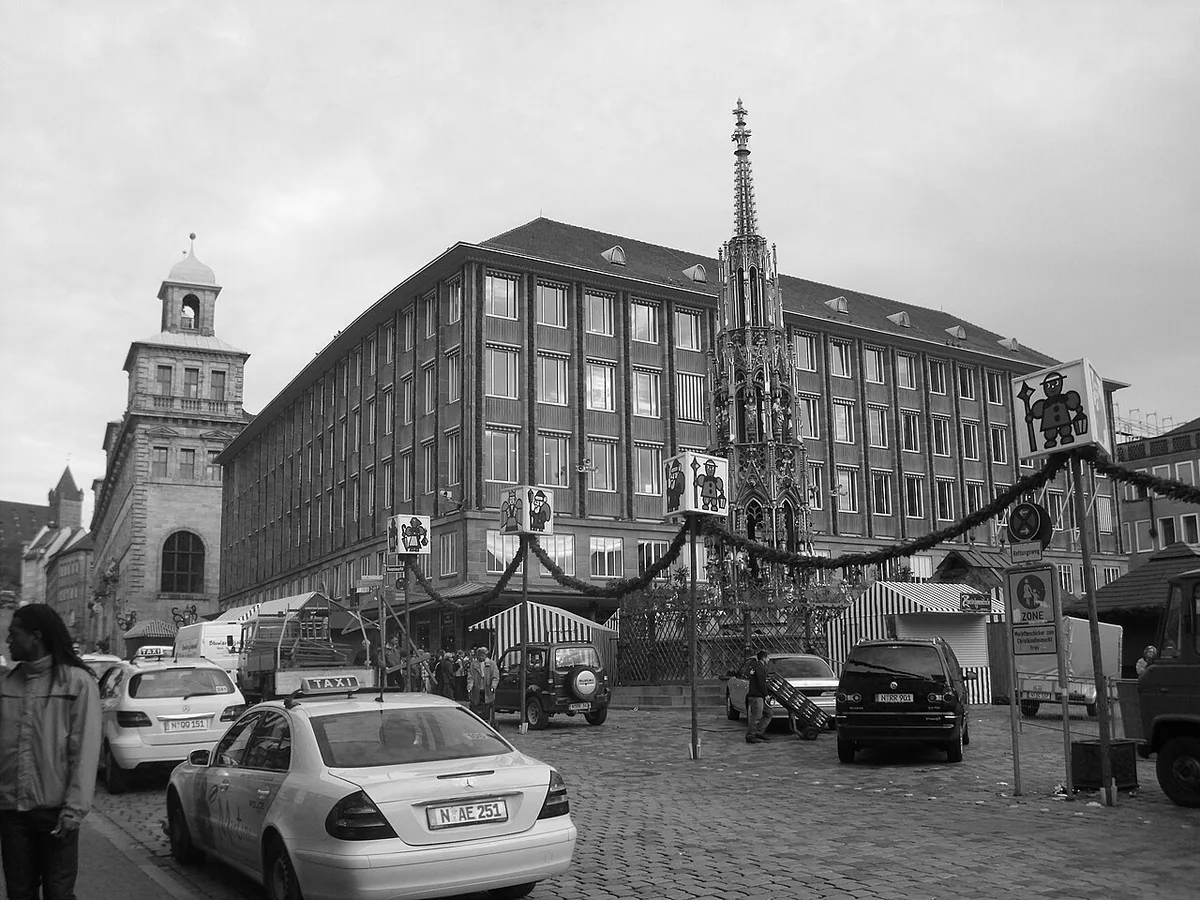
Nuremberg's market follows a fixed rule rather than a fixed date. It opens on the Friday before the first Sunday of Advent and runs through 24 December every year. Applying that rule to the calendar puts the next edition at 27 November to 24 December 2026, with the following year's edition falling 26 November to 24 December 2027. Treat both as derived from the rule rather than an organiser guarantee, and confirm the exact day on christkindlesmarkt.de before locking in travel dates. Entry to all four markets is free; only extras like a horse-drawn stagecoach ride around the Hauptmarkt carry a separate cost, posted at the ride itself. Opening day centers on a prologue delivered from the Frauenkirche balcony by the Christkind. Expect the Hauptmarkt to be at its most crowded during that ceremony, so arrive early for a sightline or save your first visit for a quieter day.
- Standard hours: 10:00 AM to 9:00 PM, daily
- Christmas Eve hours: 10:00 AM to 2:00 PM only
- Opening ceremony: a prologue delivered from the Frauenkirche balcony, scheduled for 5:30 PM on opening day
Navigating the Four Markets: Christkindlesmarkt, Sister Cities, Children's, and Regional
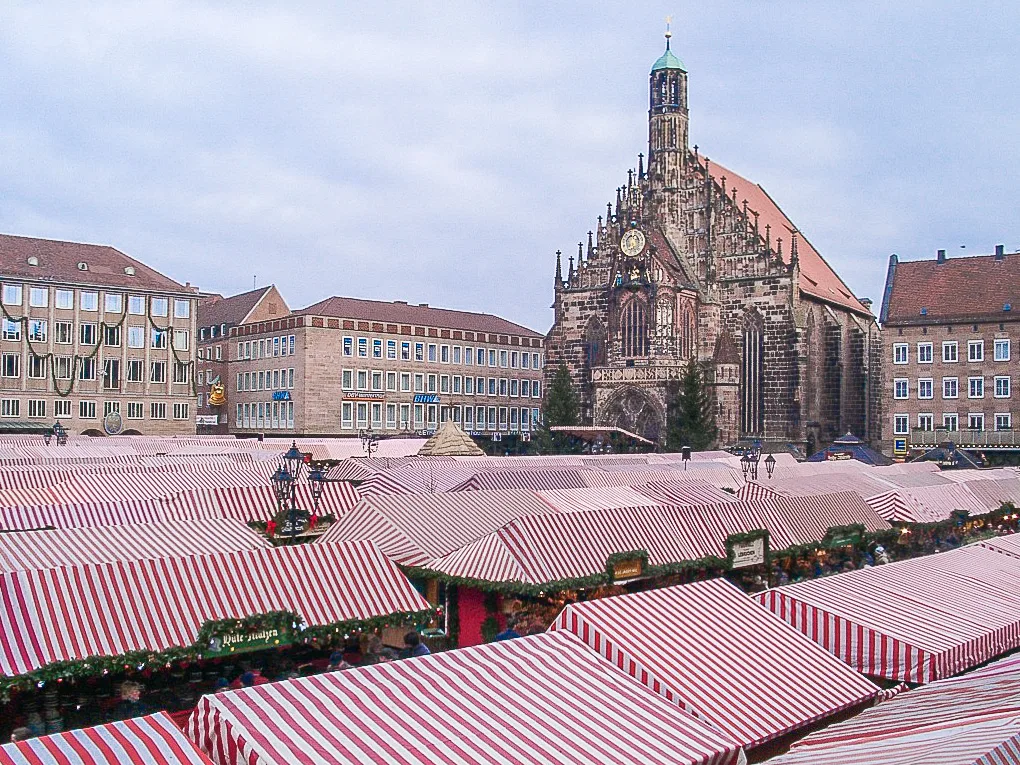
Four connected markets fill Nuremberg's Old Town each December, all within roughly a five-minute walk of each other. Christkindlesmarkt itself occupies the Hauptmarkt in front of the Frauenkirche, while three smaller markets branch out from there. Nuremberg's tourism board also publishes four themed self-guided tours through the main market, pointing out details like stand 86's handmade teddy bears and booth 22's alpaca-wool hats and gloves. Sister Cities Market goods change by stall, drawing from several of Nuremberg's partner cities. The Children's Market adds craft workshops and a spot to take photos with Santa Claus and the Christkind during set hours. Each market has a distinct focus, so budgeting time for all four is worth it even on a short visit.
| Market | Address | Known For |
|---|---|---|
| Christkindlesmarkt | Hauptmarkt, 90403 Nürnberg | About 180 wooden stalls, traditional crafts, Nuremberg gingerbread, and Zwetschgenmännle prune-people figures |
| Sister Cities Market | Rathausplatz 1, 90403 Nürnberg | 24 stalls representing Nuremberg's partner cities, including Scotland, Italy, Ukraine, and Nicaragua |
| Children's Market | Hans-Sachs-Platz 1, 90403 Nürnberg | A carousel, a Ferris wheel, a steam train, and craft workshops |
| Original Regional Market | Next to St. Sebaldus Church, 90403 Nürnberg | Local producers selling honey, wool, beeswax candles, and jams |
The Christkind: Nuremberg's Gift-Bringer Tradition
Nuremberg's Christmas figure is the Christkind, not Santa Claus, and the distinction matters to local identity. That tradition traces to the 16th-century Reformation, when Martin Luther shifted household gift-giving away from St. Nicholas Day on 6 December toward Christmas Eve, favoring a Christ-child figure over the veneration of saints. An actor originally played the role. A local woman has been elected to it since 1969, chosen every two years through public nomination, a public vote among finalists, and a final jury round. In Germany's more Catholic regions, the Christkind tends to remain the favored gift-bringer, while more Protestant or secular areas have leaned toward the Americanized Santa Claus. She keeps a schedule of public appearances during the market season, including delivering the opening prologue; check the official Christkindlesmarkt site closer to your visit for exact days and locations.
- Must be a native Nuremberger, born there or a long-term resident
- Between 16 and 19 years old
- At least 5 feet 3 inches tall (160cm)
- Free from vertigo, since the role includes appearances above crowds
What to Eat and Drink at the Nuremberg Christmas Market
Sausage stalls anchor the food scene, and Nuremberg's bratwurst tradition stretches back more than 700 years. Elisenlebkuchen, the city's namesake gingerbread, appears at nearly every stall alongside Spekulatius almond cookies. Restaurants around the city often serve the same sausages in sit-down portions of six or more with potato salad or sauerkraut, if you'd rather skip the market stalls for a table. Menu boards list prices in euros. A mug of Glühwein typically costs a bit more than a bratwurst roll, and most stalls charge a refundable Pfand deposit on the mug that's returned when you bring it back.
- Drei im Weckla: three marjoram-seasoned Nuremberg sausages in a bread roll, usually topped with mustard
- Elisenlebkuchen: Nuremberg's namesake gingerbread, sold at nearly every stall
- Glühwein and Heidelbeere Glühwein: standard and blueberry mulled wine
- Feuerzangenbowle: a rum-soaked sugar loaf punch poured near the Pegnitz River, billed as the world's largest of its kind
Crowd Strategy: Midweek Mornings vs Weekend Nights
Weekend evenings draw the heaviest crowds, and demand-driven pricing at nearby hotels tends to climb along with them. Weekday mornings, especially Tuesday and Wednesday, are calmer and easier to move through the Hauptmarkt stalls. Morning visits also mean shorter lines at food stalls, since evening crowds concentrate around Glühwein stands as temperatures drop. Nuremberg's own airport, served largely by budget carriers, makes the city an easy weekend add-on for regional travelers, which is part of why weekends run busier than weekdays. For scale, Nuremberg's market draws crowds comparable to Munich's Oktoberfest, another major Bavarian gathering known for packed weekends. If a slower pace matters more than opening-night atmosphere, plan around a weekday and skip the Friday opening ceremony.
Getting There: Airports, Trains, and Payment
Nuremberg Airport (NUE) sits about 3 miles (5km) north of the city center and connects downtown by U-Bahn. Munich Airport (MUC) offers more international routes but sits roughly 100 miles (160km) to the south, linked to the city by Munich's regional train network. A direct ICE train connects Munich and Nuremberg in about an hour, which makes a same-day or overnight add-on workable from either base. Nuremberg's Hauptbahnhof sits just south of the historic center. It's a rail junction for northern Bavaria, and the Verkehrs-Aktiengesellschaft Nürnberg (VAG) runs the U-Bahn, tram, and bus network covering the rest of the city. Check bahn.de for national train times and vag.de for local transit tickets before you go. Left-luggage lockers at the station help travelers arriving with bags before a hotel check-in. Apple's own map listing for the market shows it accepts Apple Pay and contactless cards, though smaller stalls often still prefer cash, so carry euros as backup.
Where to Stay: Old Town vs Hauptbahnhof
Old Town (Altstadt) puts you within walking distance of all four markets and Nuremberg's historic core, though rooms there cost more and sell out first. Hotels named across multiple travel accounts include Sorat Hotel Saxx, right on the Hauptmarkt square, and Dürer-Hotel, near the Kaiserburg castle. Hotel Agneshof offers a quieter central location with family-sized rooms, and Centrum Apartments provides kitchen-equipped stays within walking distance of every market. Staying near the Hauptbahnhof instead trades a short tram ride for easier access to regional day trips; Leonardo Royal Hotel is one option close to the station. Hotel rooms close to the market can fill up six to nine months before a December weekend, so lock in lodging as soon as your travel dates are set.
Beyond the Stalls: Sightseeing, Shopping, and Day Trips
Nuremberg's Old Town holds enough sightseeing to fill the hours between market visits. Kaiserburg, the Imperial Castle, overlooks the city center, and St. Sebald Church sits a short walk from the Original Regional Market stalls. Documentation Center exhibits at the former Nazi Party Rally Grounds cover the era's causes and consequences, in a permanent show titled Fascination and Terror. Skip-the-line tickets for it are available through standard tour-booking platforms if you'd rather not queue. Shoppers can also visit the Käthe Wohlfahrt Christmas store, a year-round fixture for German Christmas decorations. Travelers weighing a second Christmas-market stop often add Dresden Striezelmarkt, which follows its own Advent-linked opening rule. December is only the start of Germany's festival calendar, and Nuremberg's market fits into a bigger annual pattern worth knowing before planning a return trip. The German festival calendar tracks recurring events across the year, from beer tents to carnival parades to open-air music. Cologne’s carnival opens its street season on 11 November and peaks between Weiberfastnacht and Karnevalsdienstag, moving each year with Ash Wednesday. the Cannstatter Volksfest in Stuttgart runs 17 days each autumn, starting the Friday after the last Saturday in September. The Berlin International Film Festival is announced for 11 days each February, with dates published roughly a year ahead. Wacken’s open-air event, a metal festival, is announced for three days in late July or early August. The Nürburgring festival gathers at the Nürburgring for three days in early June, a weekend historically timed to Pentecost. Kiel Week fills nine days, Saturday to Sunday, in the last full week of June.
Explore christmas market in other cities
For trip-planning details, see Nuremberg Christkindlesmarkt (official) and Official regional tourism.
Frequently Asked Questions
When does the Nuremberg Christmas market open in 2026?
Nuremberg's market follows an Advent-linked rule: it opens the Friday before the first Sunday of Advent and runs to 24 December. Applying that rule puts the 2026 edition at 27 November to 24 December, a date derived from the rule rather than an organiser guarantee. Confirm it on christkindlesmarkt.de closer to your trip, since the opening day shifts every year.
Is the Nuremberg Christmas market free to enter?
Entry to all four markets is free. Extras like a horse-drawn stagecoach ride around the Hauptmarkt carry a separate cost, posted at the ride itself, so budget a little beyond food and drink if you want to add one. Food and Glühwein prices are posted in euros at each stall.
What is the difference between the Christkind and Santa Claus?
Christkind is a young, blonde, gold-robed figure tied to the Reformation and Martin Luther's shift away from St. Nicholas Day gift-giving. Santa Claus, the more Americanized gift-bringer, is more common in Germany's Protestant and secular regions, while the Christkind remains central to Nuremberg's identity. She opens the market with a prologue delivered from the Frauenkirche balcony.
Should you fly into Nuremberg or Munich for the Christmas market?
Nuremberg Airport sits about 3 miles north of downtown with U-Bahn access, though it has fewer international routes. Munich Airport, roughly 100 miles south, offers more flight options and connects to Nuremberg by a direct ICE train that takes about an hour. Compare fares to both before booking, since the train makes either base workable.
Where should you stay for the Nuremberg Christmas market?
Old Town (Altstadt) puts every one of the four markets within walking distance but sells out first and costs more. Hauptbahnhof-area hotels, such as Leonardo Royal, trade a short tram ride for easier access to regional day trips and typically stay available a little longer. Either way, book six to nine months ahead for a December weekend.
Can you pay by card at the Nuremberg Christmas market?
Apple's own map listing for the market shows it accepts Apple Pay and contactless cards, and that acceptance has been growing. Many smaller stalls still run cash-only, though, so carry euros as a backup along with a card.