
Dresden Christmas Market: A Guide to Striezelmarkt
Last updated July 2026, this guide covers the Dresden Christmas market and its Striezelmarkt centerpiece for the coming Advent season. It walks through the pyramid, the candle arch, and the practical details of getting around the old town. Dresden's market traces its roots to 1434 and follows a fixed annual rule: it opens the Wednesday before the first Advent Sunday and runs through Christmas Eve.
Striezelmarkt: The Heart of the Dresden Christmas Market
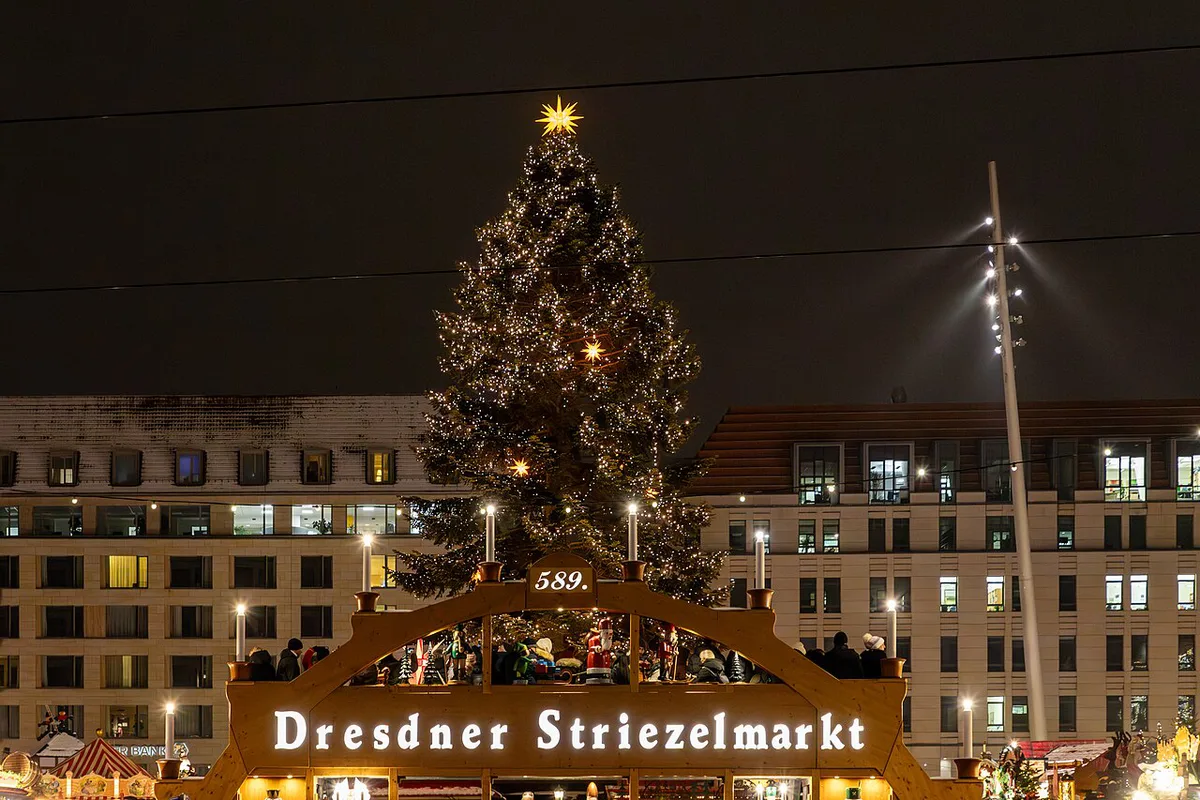
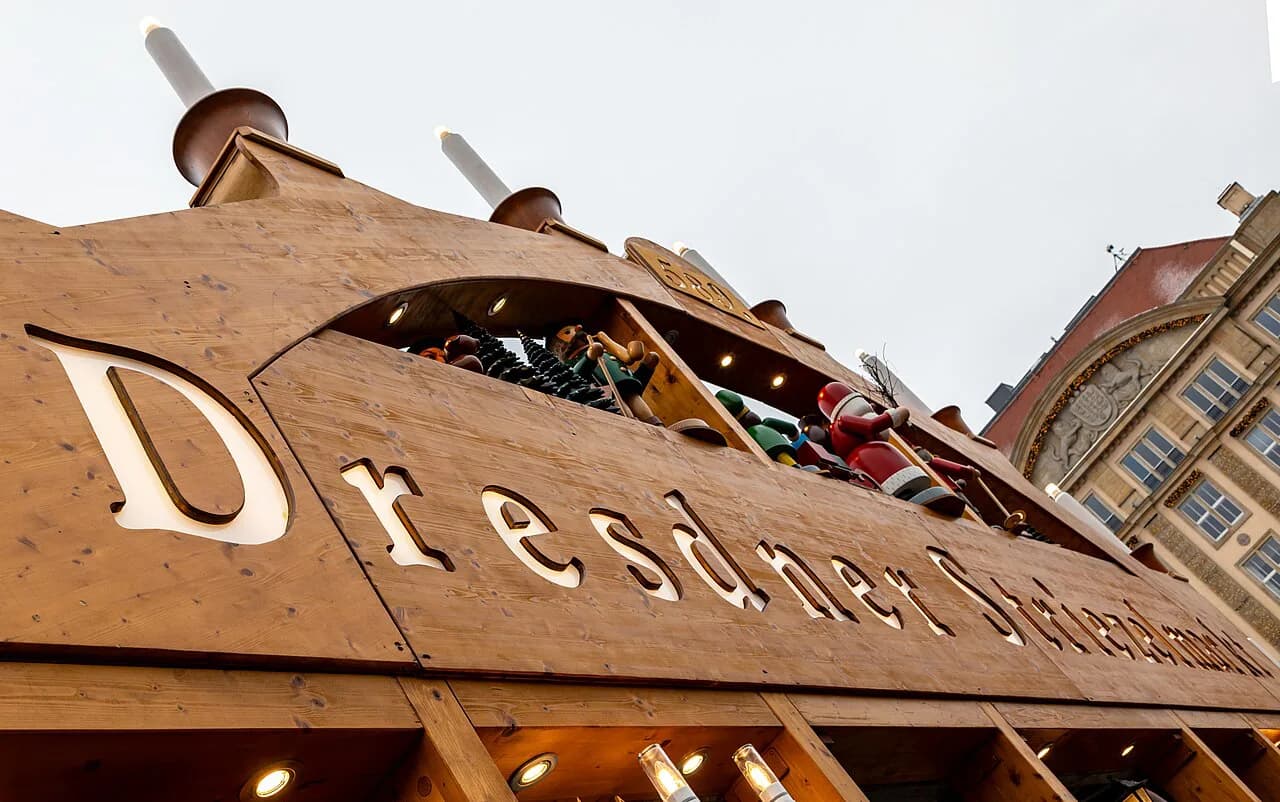
Striezelmarkt anchors Dresden's Christmas season on the Altmarkt square, directly opposite the Kulturpalast on Wilsdruffer Straße. Local tourism sources and Dresden's own market website describe it as Germany's oldest Christmas market. Records trace the first one-day event to 1434, held under Friedrich II, Elector of Saxony. Its 2026 edition marks the market's 592nd year running, according to the city's market website. More than 200 stalls fill the square; some counts put the number closer to 240. Vendors sell Erzgebirge woodcarvings, baked stollen, and mulled wine. A children's area anchors one corner of the square, with a puppet theatre, a carousel, and a miniature railway running through market hours. A large wooden Advent calendar house stands at the back of the market, opening one painted door each day through December, with a puppet show behind it. On Fridays, a costumed Father Christmas visits the square, a tradition noted in market accounts. Three features define the market's skyline.
- Erzgebirge step pyramid: about 48 feet (14.61 meters) tall, billed by the city as the tallest of its kind
- Schwibbogen candle arch: roughly 44 feet wide and more than 16 feet tall, described by the city as the largest walk-in version anywhere
- Center spruce tree: about 66 feet tall, cut each year from the Tharandt forest outside Dresden
Beyond the Altmarkt: How Dresden's Market Spreads Across the City
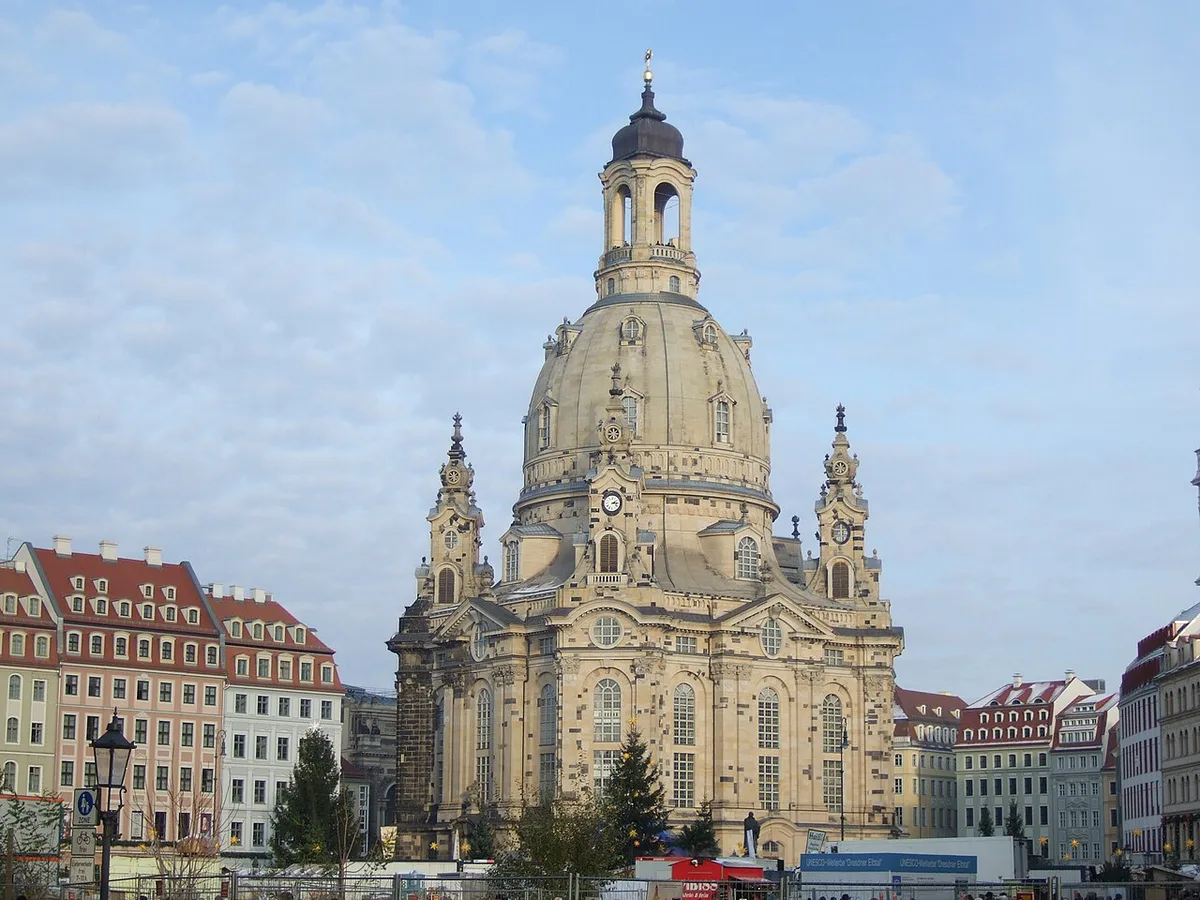
Striezelmarkt is not the only place in Dresden with Christmas stalls, even though it is the flagship. Stalls also line Prager Straße, the pedestrian route linking the Hauptbahnhof to the old town center. Squares near the Frauenkirche church, a short walk from the Altmarkt, carry additional stalls too. Across the Elbe, the Neustadt district on the river's north side draws its own share of visitors. Nearly every window in the old town carries a lit Schwibbogen during Advent, according to market historians, extending the market's visual character well beyond the stalls themselves. Weekday mornings are calmest at Striezelmarkt itself. Weekend afternoons draw the heaviest footfall, especially on the two Saturdays before Christmas. Smaller stalls elsewhere in the city offer a quieter alternative when the Altmarkt is packed.
What to Eat and Drink at the Market
Dresden Christstollen anchors the market's food identity, alongside Pulsnitz gingerbread and mulled wine. The stollen's loaf shape is meant to resemble the entrance to a mine tunnel, a nod to the region's silver and tin mining history predating the cake itself. Bakers in Pulsnitz, a town about 31 miles (50 km) from Dresden, have made the spiced Pfefferkuchen since a 1558 decree first allowed it there. Recipes traditionally skip fresh ginger, relying instead on nutmeg, cinnamon, cloves, and allspice, then get filled with jam and coated in chocolate. Look also for the Pflaumentoffel, a small prune figure shaped like a chimney sweep and sold as a souvenir rather than for eating. Children once sold them from trays at Striezelmarkt, a practice market organizers banned in 1910. Glühwein, the market's mulled wine, is poured from stalls throughout the square. Most stalls charge a deposit for the ceramic mug and refund it in cash when the mug comes back. Check the amount posted at the counter, since it varies by vendor.
The Stollen Seal: How to Spot Authentic Dresdner Christstollen
Dresdner Christstollen carries Protected Geographical Indication status. Only stollen baked within the Dresden region under set standards can use the name. Genuine loaves carry a seal depicting Augustus II, Elector of Saxony and King of Poland, tied to the cake's medieval origin story. That seal separates regionally baked Dresden stollen from mass-produced imitations sold under a similar name elsewhere. Supermarket loaves sold under the Dresden name outside the region do not carry the seal and are not bound by the same recipe standards. Buying from a Striezelmarkt stall, or a bakery displaying the seal, is the more reliable route to the regional version.
Ornaments and Souvenirs Rooted in Erzgebirge Craft
Erzgebirge woodcarving traditions supply much of what Striezelmarkt sells. Miners in the Ore Mountains turned to carving after silver and tin mining declined, and many mining-era symbols still appear on ornaments today.
- Nutcrackers: painted like soldiers, a style popularized worldwide partly through Tchaikovsky's Nutcracker ballet; woodturner Wilhelm Friedrich Füchtner is credited with the original 19th-century design
- Räuchermann (smoking man): a hollow wooden figure that burns incense through its mouth, first sold at the market in the 19th century, with variations including old women in rocking chairs and figures dressed for dozens of occupations
- Schwibbogen: window-sized candle arches sold as souvenirs, echoing the market's giant walk-in version
Getting to Dresden and Around the Market
Dresden Airport sits about 6 miles (just under 10 km) north of the city center and connects by regional train to the city's two main stations. Trains from Berlin or Prague each take roughly two hours to reach Dresden Hauptbahnhof. Those arriving without a car can buy a single VVO ticket covering trams, buses, ferries, and the funicular for the whole visit.
- Dresden Hauptbahnhof: the main station, south of the old town, about a 15-minute walk from Striezelmarkt
- Dresden Neustadt: the second main station, on the river's north side
- VVO (Verkehrsverbund Oberelbe): the regional network covering trams, buses, ferries, and the funicular on one ticket
- Driving: garages such as Altmarkt-Galerie and Centrum Galerie sit within walking distance; street parking is limited during market hours
When to Go: Dates, Hours, and Avoiding Crowds
Striezelmarkt follows a fixed rule rather than a locked calendar date. It opens the Wednesday before the first Sunday of Advent and runs through December 24 every year. Applying that rule to 2026 puts the opening around November 25, with the market closing December 24. Treat that as a date derived from the recurrence pattern, not an organizer confirmation, and check the current schedule on Dresden's official Striezelmarkt site before finalizing travel. This same Advent-anchored pattern shapes several other German markets. Germany's full festival calendar tracks Advent-anchored, movable, and announced events across the year.
- Opening day: shorter hours, typically around 4 to 9 p.m.
- Regular days through December 23: typically 10 a.m. to 9 p.m.
- December 24: shorter hours, typically 10 a.m. to 2 p.m.
Where Dresden Fits in Germany's Festival Calendar
Dresden's market is one entry in a much longer German festival calendar. Travelers combining trips across seasons should note how differently each event's dates are set. Nuremberg Christkindlesmarkt runs on a similar Advent-anchored rule, opening the Friday before the first Advent Sunday rather than Dresden's Wednesday, through December 24. Oktoberfest and Cologne Carnival anchor very different systems. Oktoberfest follows a fixed rule tied to mid-September, while Cologne Carnival moves every year with Ash Wednesday. The table below rounds out the picture with festivals covered elsewhere on this site.
| Festival | City | 2026 timing pattern |
|---|---|---|
| Nuremberg Christkindlesmarkt | Nuremberg | Fixed rule: opens the Friday before the first Advent Sunday, runs to December 24 |
| Munich Oktoberfest | Munich | Fixed rule: opens the Saturday after September 15, runs 16 to 18 days |
| Cologne’s carnival | Cologne | Movable: Weiberfastnacht (Thursday before Ash Wednesday) through Karnevalsdienstag |
| Stuttgart’s Volksfest | Stuttgart | Fixed rule: 17 days from the Friday after the last Saturday in September |
| Kiel’s sailing week | Kiel | Fixed rule: nine days, Saturday to Sunday, in the last full week of June |
| Berlinale Film Festival | Berlin | Announced: 11 days in February, dates published about a year ahead |
| Wacken’s metal festival | Wacken | Announced: three days, Thursday to Saturday, late July into early August |
| The Nürburgring festival | Nürburg | Announced: three days in early June at the Nürburgring |
Beyond the Market: Winter Landmarks Worth a Detour
Brühl's Terrace, built in the 18th century above the Elbe, is often called the balcony of Europe and makes a short detour from the market for river views. Climbing the Kreuzkirche tower, a short walk from the Altmarkt, gives an elevated view down over Striezelmarkt's stalls and pyramid. Dresden's former royal residences, including the Zwinger Palace and its Grünes Gewölbe (Green Vault) treasury, hold much of the art the Electors of Saxony collected. Zwinger Palace, the Baroque showcase built for the Saxon court, sits a short walk from the Altmarkt. Check current winter opening hours before planning a same-day visit alongside the market.
Which Dresden Christmas Market Is Right for You?
Dresden’s markets have distinct settings, so choosing by atmosphere can save time and avoid unnecessary backtracking.
- Striezelmarkt: Choose the Altmarkt flagship for Saxon traditions, Erzgebirge crafts, family attractions, and the city’s largest concentration of stalls. Weekday mornings are best for lighter crowds.
- Augustusmarkt: Cross the Elbe to Neustadt for white pagodas, international food, and a more contemporary atmosphere. Its location suits visitors combining the market with Neustadt’s restaurants and nightlife.
- Stallhof Medieval Market: Visit the Royal Palace courtyard for costumed traders, historic crafts, blacksmith demonstrations, and hot mead. Admission may apply on weekends, while arrangements can vary by season.
Neumarkt, beside the Frauenkirche, works well for traditional crafts in a grand Baroque setting. Winter Lights on Prager Straße is the easiest option after arriving at Dresden Hauptbahnhof.
A practical route starts at Prager Straße, continues through Striezelmarkt and Neumarkt, then crosses Augustus Bridge to Neustadt. Save Stallhof for later if its evening program interests you.
Explore christmas market in other cities
For trip-planning details, see Dresden Striezelmarkt (official) and Official regional tourism.
Frequently Asked Questions
When does the Dresden Christmas market open in 2026?
Striezelmarkt runs on a fixed rule rather than a locked calendar date: it opens the Wednesday before the first Advent Sunday and closes December 24 every year. Applying that rule to 2026 points to an opening around November 25. Treat that as a date derived from the recurrence pattern, and confirm the final schedule on the official Striezelmarkt site closer to the season.
How old is the Striezelmarkt, and is it really Germany's oldest Christmas market?
Records trace the market's first one-day event to 1434, and Dresden's own tourism office and multiple travel sources describe it as Germany's oldest Christmas market. Its 2026 edition marks its 592nd year running, according to the city's market website.
Is Dresden's Christmas market free to visit?
Browsing Striezelmarkt's stalls carries no admission charge. Food, drinks, and goods are priced per stall, and the market itself does not gate entry to the Altmarkt square. Confirm current details on the official market site since specific arrangements can shift year to year.
How do you get from Dresden Airport to the Christmas market?
Dresden Airport connects by regional train to the city's two main stations, Hauptbahnhof and Neustadt. From Hauptbahnhof, Striezelmarkt on the Altmarkt is roughly a 15-minute walk, with trams available for a faster or luggage-friendly option.
How can you tell if Dresden Christstollen is authentic?
Genuine Dresdner Christstollen carries a seal depicting Augustus II, Elector of Saxony and King of Poland, tied to its Protected Geographical Indication status. Only stollen baked within the Dresden region under set standards can carry that seal and name, which distinguishes it from imitations sold elsewhere.
How does the mug deposit (Pfand) system work at the market?
Most Glühwein and hot drink stalls add a deposit to the price of the ceramic mug. Return the mug to the same stall, or sometimes any stall, and the deposit comes back in cash. The exact amount is posted at each stall counter and can vary between vendors, so check before ordering if you plan to keep or swap mugs as souvenirs.