

Festivals in Cologne: Carnival, Pride, and the Christmas Markets
Last updated July 2026, this guide to festivals in Cologne covers the three events verified for the city: Carnival's movable fifth season, the July ColognePride parade, and the Advent-to-December Christmas markets. Each follows its own recurrence pattern, from Carnival's Easter-linked dates to the markets' fixed Advent rule. Crowd behavior, transport disruption, and one etiquette mistake specific to the city can shape how each trip actually goes, and each gets its own section below.
Festivals in Cologne: The Three Dates on Every Calendar
Cologne's confirmed festival calendar centers on three recurring events, each governed by a different kind of date rule rather than one fixed day. Carnival's street celebrations move with Easter every year, counting back from Ash Wednesday. ColognePride's organizers announce exact dates each spring, typically landing in early July. Christmas markets follow a fixed civic rule tied to the first Sunday of Advent. For the wider national picture, the Germany festival calendar covers how Cologne's dates fit alongside other cities' seasons.
| Festival | Timing | Vibe | Cost |
|---|---|---|---|
| Cologne Carnival | Season opens 11 November; street days move with Easter, Weiberfastnacht to Shrove Tuesday | Costumed street parades, pub crawls, neighborhood processions | Street carnival is free; ticketed Sitzungen cost extra |
| ColognePride | Organizer-announced, roughly two weeks in early July | Citywide parade and community programming, closing with the CSD-Demonstration on a Sunday | Parade is free; some affiliated events are ticketed |
| Cologne Christmas Markets | Opens the Monday before the first Advent Sunday, runs to 23 December | Market stalls, food and drink stands around the historic center | Entry is free; pay per item at stalls |
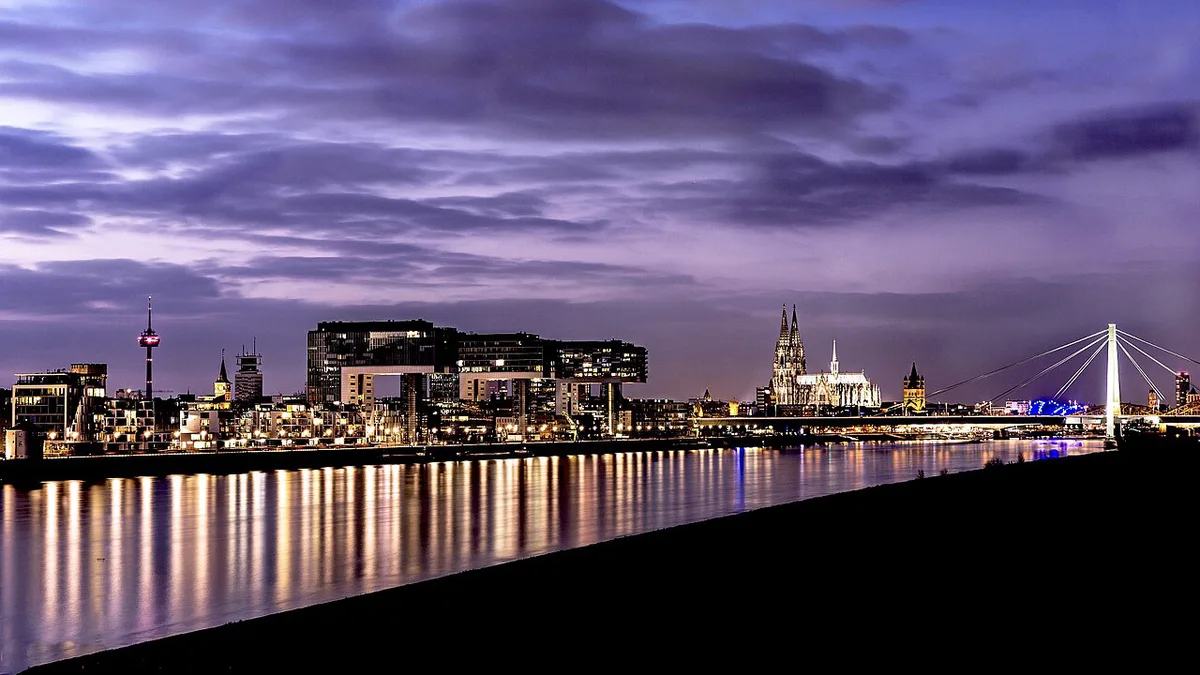
Cologne Carnival: Weiberfastnacht Through Rosenmontag
Carnival season, known locally as Fastelovend, formally opens on 11 November each year. Its street celebration starts on Weiberfastnacht, the Thursday before Ash Wednesday, and runs through Karnevalsdienstag six days later. Because the season tracks Easter, exact dates shift annually rather than landing on the same calendar day. Weiberfastnacht itself kicks off at 11:11 a.m. in the Alter Markt, where costumed crowds gather before spreading into the Altstadt and Südstadt districts for the rest of the day and night. Men wearing ties face a specific hazard. The tradition of women cutting them off with scissors is still active, so leave good ties at the hotel.
On Carnival Saturday, the association Kölsche Funke rut-wieß vun 1823 stages its open-air Funkenbiwak session on the Neumarkt. Buying a Funkenstange glass there gets free Kölsch refills at the beer stands. The alternative Geisterzug, or ghost parade, runs the Saturday evening one week before Carnival proper. It carries political themes, changes its route annually, and needs no advance registration to join. Smaller neighborhood Veedelszüge parades also run through that same weekend, ahead of Rosenmontag.
Rosenmontag itself is Carnival's largest single event, with a few practical points worth knowing before you go:
- Route length: about 8 kilometers (5 miles) through the city center, rolled since 1823.
- Led by the Blaue Funken, followed by floats, foot groups, dance groups, and marching bands.
- Signature closing moment: D'r Prinz kütt, the arrival of the Carnival Prince.
- Check the Cologne Carnival festival committee's own route announcement each year for the current path and street closures, since it changes annually.
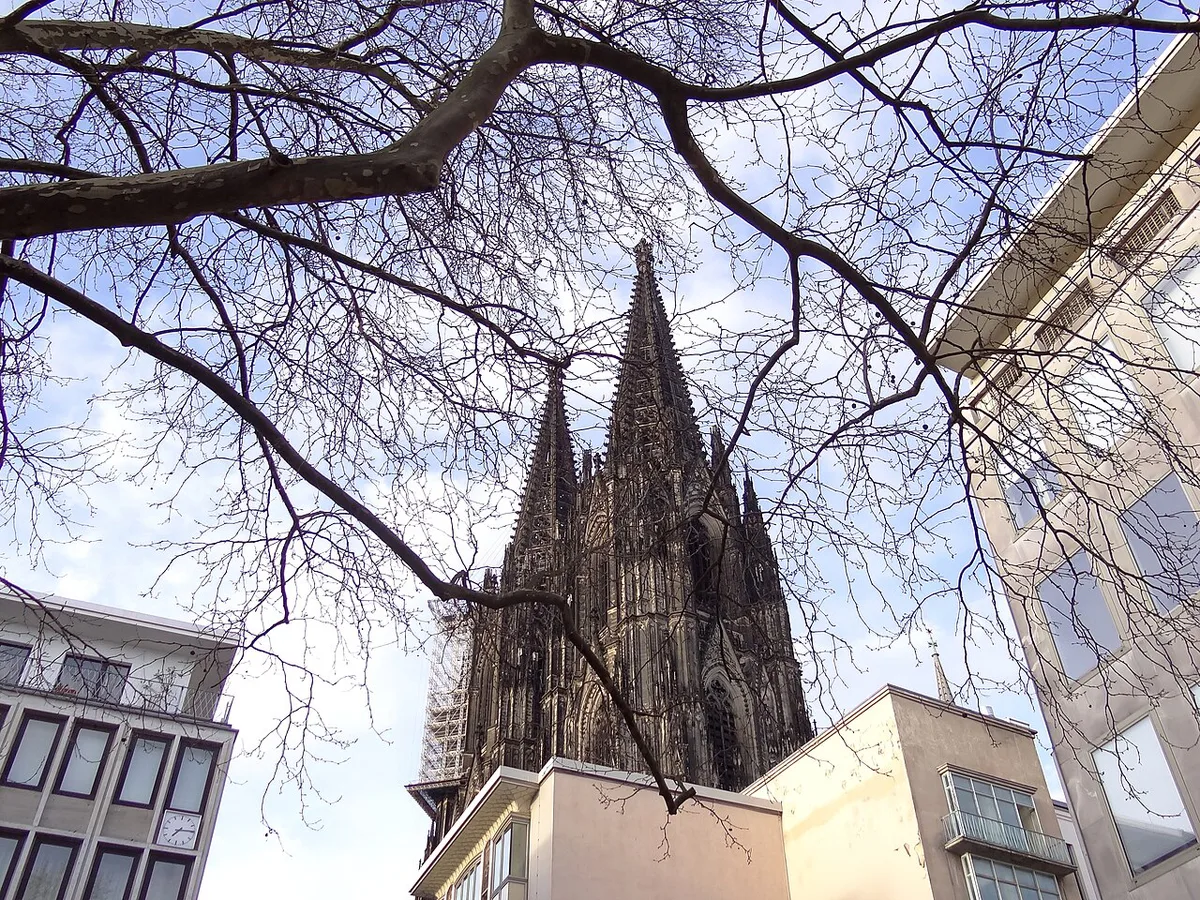
Cologne Carnival by the Numbers
A handful of figures from the Cologne tourist board give a sense of scale before you plan around crowds:
- 480 registered Carnival associations operate across the city.
- More than 100 of those associations coordinate through the official Cologne Carnival festival committee.
- An average parade day sends around 330,000 kilograms of sweets, 700,000 chocolate bars, and 220,000 boxes of pralines into the crowd.
- Rosenmontag alone accounts for about 300 tonnes of thrown sweets (Kamelle) and 300,000 flowers (Strüßjer).
- More than a million visitors line the Rosenmontag route most years.
- The Geisterzug's alternative-parade tradition dates back to 1860, though it has run as an official part of street Carnival only since 1991.
Violet Tuesday, the Nubbel, and the Veedel-vs-Altstadt Choice
Veilchendienstag, or Violet Tuesday, is the last day of the street carnival. Its largest neighborhood parades march through Nippes, Ehrenfeld, and Mülheim, drawing up to 200,000 spectators along the sidewalks according to the Cologne tourist board. These Veedel parades run at a smaller, more local scale than the citywide Rosenmontag route. That evening, pubs across the city hold the Nubbelverbrennung. Burning a straw-stuffed effigy called the Nubbel symbolically carries off the season's excesses before Ash Wednesday. Notable burning ceremonies take place next to St. Agnes Church, in Nippes, in Südstadt, in Kwartier Latäng, and in the Altstadt. Ask at a neighborhood pub about its own Nubbel ceremony, since most run informally rather than on any published schedule.
Violet Tuesday's neighborhood parades attract up to 200,000 spectators compared to Rosenmontag's million-visitor crowds, making these Veedel events materially less intense alternatives for those preferring smaller-scale celebration.
Choosing a Veedel parade over the Altstadt trades some scale for shorter walks and thinner crowds at the barriers. The Altstadt and Südstadt districts draw the heaviest Weiberfastnacht crowds, and Rosenmontag's route concentrates the single largest audience in the city center. Nippes, Ehrenfeld, and Mülheim instead spread Violet Tuesday's crowds across three separate neighborhood parades.
Cologne Carnival Etiquette and Practical Warnings
Cologne has one Carnival cheer, and getting it wrong marks you as an outsider fast. Shout Kölle Alaaf, never Helau. That greeting belongs to Mainz and Düsseldorf, and Cologne's carnival-goers do not appreciate hearing it here. Alaaf traces back to a medieval toast and functions as a short declaration that Cologne comes first during the season.
Expect a Bützje or two: a quick peck on the cheek is standard Carnival contact, not a flirtation attempt. Public institutions and many businesses close for the core Carnival days. Driving through the center is largely pointless once the Veedelszüge and Rosenmontag routes lock down major streets, so plan to walk or use transit instead. February in Cologne runs cold and often wet, so dress in layers under any costume rather than relying on adrenaline alone. Carnival weekend compresses hotel demand into a few days each year, so book accommodation as early as possible, ideally months ahead, rather than waiting for the week itself.
Street carnival itself needs no ticket. Only the indoor Sitzungen, the costume balls and comedy sessions, require paid admission, and pricing varies by association and venue. Check each Carnival association's own site for current session costs rather than assuming a standard rate. If you need step-free or reduced-crowd viewing along the Rosenmontag or Veedelszüge routes, check the festival committee's site for its current accessibility information.
ColognePride: Cologne's July Celebration
ColognePride is one of Cologne's three confirmed annual festivals, running for about two weeks in early July according to organizer announcements. Exact dates are set fresh each year rather than fixed on the calendar, so check current listings before booking travel. Programming culminates in the CSD-Demonstration, the parade that closes the celebration, always held on a Sunday. That parade is free to attend and moves through the city center alongside community events. Some affiliated club nights and parties layer paid tickets on top of the free public parade. Visitors weighing Cologne's Pride scale against the capital's own calendar can check the Berlin festivals guide for how timing and scale compare.
Cologne Christmas Markets: The Festival of Advent
Christmas markets in Cologne follow a fixed civic rule: they open the Monday before the first Advent Sunday and run through 23 December. The exact opening day shifts by a few days each year depending on where Advent Sunday falls, though the rule itself stays fixed rather than announced. As with most German Christmas markets, entry is free; visitors pay only for food, drink, mulled wine, and stall purchases. The markets cluster around the historic center near the cathedral, making Cologne's market season compact and walkable compared with cities where markets scatter across several neighborhoods. Book center-city hotels well ahead of December weekends, since the same compressed-demand pattern that hits Carnival applies here too.
Getting Around During Cologne's Festivals
Cologne's Hauptbahnhof sits directly beside the cathedral, so arriving by train drops you within walking distance of the Altstadt and most festival viewing points. KVB trams and the wider transit network are the practical way to move around during any of the city's three festivals, especially when core streets close to traffic. Parking near the Altstadt or the Rosenmontag route becomes unusable once barriers go up, and driving into the center during Carnival week is not realistic. Build in extra walking time between tram stops and viewing points, since crowd density around the cathedral and Alter Markt slows movement during peak hours. None of Cologne's three festivals involve camping; they stay compact and urban. If a wider German festival itinerary also includes a camping-based event, the Wacken camping and arrival guide covers that logistics separately.
Rosenmontag's route stretches 8 kilometers through the city center while crowds pack the barriers, so the distance combined with congestion near the cathedral means planning significantly more walking time than a normal city route.
Common Mistakes to Avoid at Cologne's Festivals
A handful of avoidable errors trip up first-time visitors every year:
- Shouting Helau instead of Kölle Alaaf - Helau belongs to Mainz and Düsseldorf, not Cologne.
- Assuming street carnival needs a ticket - it is free, and only indoor Sitzungen require paid admission.
- Underestimating February weather - Carnival runs cold and often wet, so layer up under any costume.
- Ignoring the tie-cutting tradition - Weiberfastnacht crowds still cut men's ties, so dress with that in mind.
- Waiting too long to book - Carnival weekend and December market weekends both compress hotel demand into a few days.
For trip-planning details, see Cologne official tourism and Festkomitee Koelner Karneval (official).
Explore guides in other cities
Frequently Asked Questions
When does Cologne's Carnival season begin each year?
The Carnival season formally opens on 11 November. Its street phase, from Weiberfastnacht to Karnevalsdienstag, moves with Easter every year, so exact dates shift annually rather than falling on one fixed day.
What does Kölle Alaaf mean, and why avoid Helau in Cologne?
Kölle Alaaf is Cologne's Carnival cheer, tracing back to a medieval toast. Helau belongs to Mainz and Düsseldorf instead, and using it in Cologne signals unfamiliarity with local custom.
Is Cologne's street carnival free to attend?
Yes. Public street celebrations, including Weiberfastnacht, the Veedelszüge, and the Rosenmontag parade, cost nothing to watch. Only the indoor Sitzungen, ticketed costume balls and comedy sessions, require payment.
What is the Nubbel, and why does Cologne burn it?
The Nubbel is a straw-stuffed effigy hung outside pubs during Carnival. Cologne burns it on Violet Tuesday night to symbolically carry off the season's excesses before Ash Wednesday.
When is ColognePride's parade?
Organizers announce ColognePride's dates each year, typically a window of about two weeks in early July. The celebration closes with the CSD-Demonstration parade on a Sunday, though the specific date is set annually.
When do Cologne's Christmas markets open?
Markets open on the Monday before the first Advent Sunday and run through 23 December. Because Advent's start shifts slightly each year, the opening day moves too, even though the underlying rule stays fixed.