
Düsseldorf Karneval: Dates, Traditions, and Getting Around Safely
Last updated July 2026, this guide covers Düsseldorf Karneval for travelers weighing the Rhineland's two biggest carnival cities. Düsseldorf's version centers on biting political satire, dark Altbier, and an Altstadt built for street parties, distinct from Cologne's larger scale. Every headline date moves with Easter each year, so this guide names the anchor points and tells you where to confirm the exact calendar.
The Fifth Season: What Sets Düsseldorf Karneval Apart
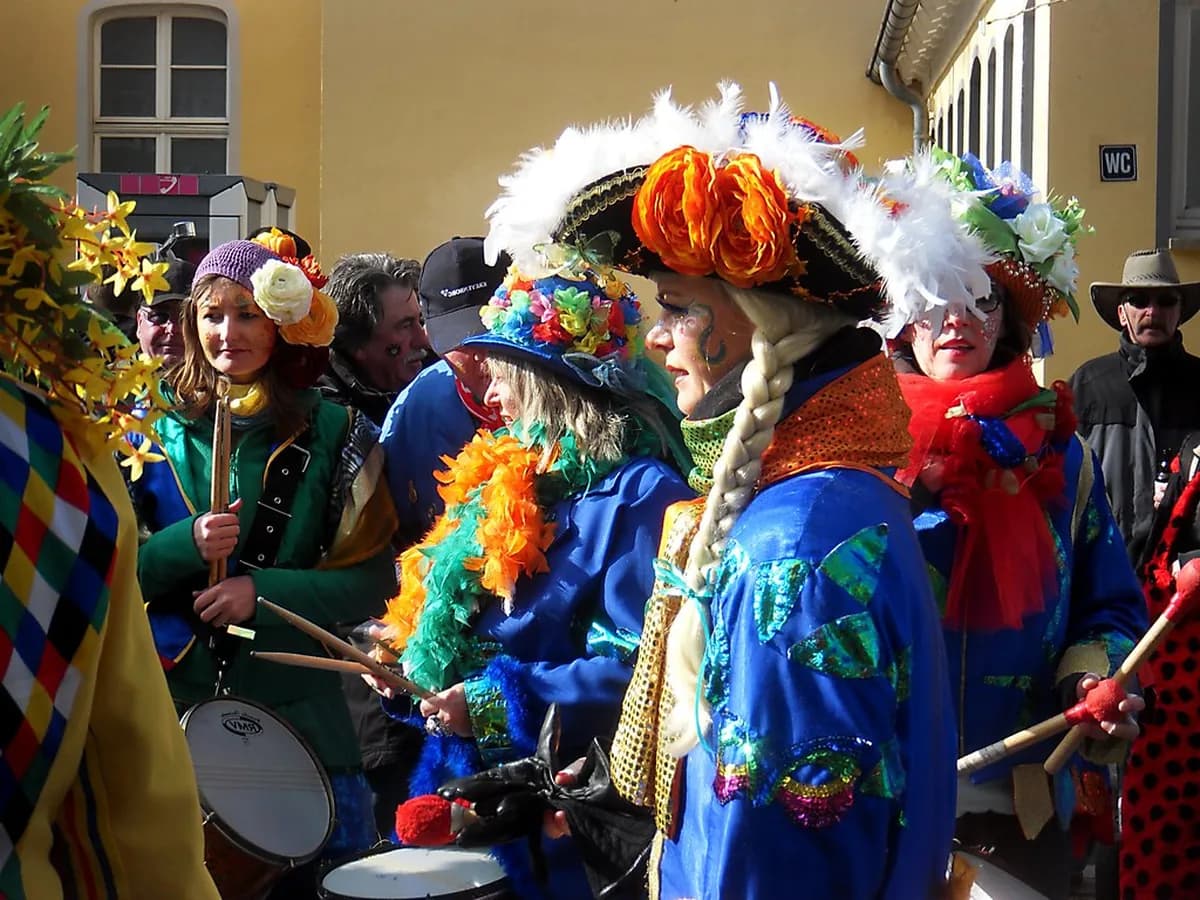
Düsseldorf Karneval is one of the Rhineland's major carnival celebrations, built around what Germans call the fifth season. The season opens every year on 11 November at 11:11 a.m., when the jester Hoppeditz awakens from a mustard pot at Marktplatz to deliver a satirical speech about city politics. More than 300 carnival sessions and costume balls fill the calendar between that opening and Ash Wednesday. Cologne Carnival follows the same Weiberfastnacht-to-Karnevalsdienstag calendar and opens its own session on the same November date. Düsseldorf's identity centers instead on the Rosenmontagszug's political caricature floats, built by artist Jacques Tilly. Local pubs pour dark Altbier instead of Cologne's lighter Kölsch, a distinction worth knowing before you order a round in the Altstadt. Visit Düsseldorf's official events calendar tracks the full session schedule, and the German National Tourist Board covers how this fits into Germany's wider carnival landscape. If your dates fall outside the Rhineland calendar entirely, Swabian-Alemannic traditions like Rottweil's Narrensprung season follow a different costume, call, and rhythm. Its season opens 6 January rather than 11 November, according to the city of Rottweil. Baden-Württemberg's regional tourism board covers that Swabian-Alemannic Fasnet calendar separately from Rhineland Karneval.
Carnival Sessions and the Prince Couple
Between the November opening and the February peak days, carnival societies host costume balls and sessions across the city. A typical evening includes a Büttenrede speech, dance troupes, and carnival songs. Each season crowns a Düsseldorf prince, who appears with his lady Venetia at sessions and later rides in the Rosenmontagszug. A Children's and Youth Procession runs a few days before Rosenmontag, giving families a lower-key alternative to the main parade's crowds, according to Visit Düsseldorf's event listings.
Key Dates and Traditions: From Hoppeditz to Ash Wednesday
Every Düsseldorf Karneval milestone after the November opening is movable, because the whole calendar anchors to Ash Wednesday and therefore to Easter. Listing a specific date here would be wrong within a year, so treat the milestones below as fixed reference points instead. The Comitee Düsseldorfer Carneval publishes the confirmed session calendar each autumn. Checking it before booking flights or hotels is worth the effort, since flight and hotel prices shift with the confirmed dates.
- Hoppeditz Awakening: 11 November at 11:11 a.m. at Marktplatz, when the jester emerges from a mustard pot to open the session.
- Altweiberfastnacht: the Thursday before Ash Wednesday, when the street carnival opens in the Altstadt.
- Carnival Sunday (Kö-Treiben): the Sunday before Ash Wednesday, an informal costume walk along Königsallee.
- Rosenmontag: the Monday before Ash Wednesday, home to the Rosenmontagszug parade.
- Karnevalsdienstag and Ash Wednesday: Shrove Tuesday closes the street carnival, and Ash Wednesday's Hoppeditz burial ends the session.
Altweiberfastnacht: Women's Carnival Day Etiquette
Altweiberfastnacht, also spelled Weiberfastnacht, opens the street carnival on the Thursday before Ash Wednesday. Women historically storm Düsseldorf's Rathaus and take symbolic charge of the city for the day. A well-known local tradition has women cutting the ties off men they meet in the Altstadt. Business travelers should leave an expensive tie at the hotel that day. Casual dress or a simple costume piece works better than formalwear. Pubs open earlier than usual, and the Altstadt's narrow lanes fill up fast.
Carnival Sunday on the Kö and the Rosenmontagszug
Carnival Sunday brings an informal street carnival to Königsallee, known locally as Kö-Treiben. Costumes here trend elaborate and hand-made, rather than the simple wigs common earlier in the week. The wide boulevard also makes it easier to see and be seen than the packed Altstadt lanes. Rosenmontag is the main event the next day. The Rosenmontagszug draws roughly 8,000 costumed participants across some 85 walking groups. Around 100 floats and up to 30 marching bands move through the city center, according to figures published by the Comitee Düsseldorfer Carneval. Several floats each year come from satirist Jacques Tilly, whose caricatures of political figures and current events are the detail Düsseldorf Karneval is best known for beyond the Rhineland. Arriving early secures a curbside spot before the crowds build. Riders throw Kamelle (sweets) and Strüssjer (small bouquets) into the crowd, so bring a bag. Street viewing along the entire route is free and first come, first served. Paid grandstand seating costs more than a reserved café table on the same streets, and exact prices change each year. Check the Comitee Düsseldorfer Carneval's ticket page before the season's grandstand tickets go on sale.

Getting Around: Road Closures and the Rheinbahn on Rosenmontag
Rose Monday triggers a three-phase road closure around the parade route, coordinated with the Düsseldorf police. The parade itself runs along streets that include Corneliusstraße, Hüttenstraße, Königsallee, and Friedrichstraße. Parking bans apply along the whole route, and towing is strict. Rheinbahn adds capacity on the day, and the city recommends bus and train over driving. Much of the Altstadt turns pedestrian-only during the biggest carnival days anyway. Timings shift slightly each year, so confirm the current closure map through Visit Düsseldorf's official events calendar before you plan a route by car.
The Rosenmontagszug draws roughly 8,000 costumed participants, but road closures beginning at ~7:30 a.m. make Rheinbahn capacity essential and require confirming the exact parade route beforehand.
| Phase | Approx. Start | What Closes |
|---|---|---|
| Phase 1 | ~7:30 a.m. | Merowinger Straße closes toward the city center; police manage the Südring crossing |
| Phase 2 | ~8:00 a.m. | Areas near the assembly point, including the Kö-Bogen Tunnel and Berliner Allee, close as traffic diverts south |
| Phase 3 | ~8:30 a.m. | The full parade route closes; from 10:00 a.m. the Rheinalleetunnel closes toward Düsseldorf |
| Reopening | ~7:00 p.m. | Roads reopen gradually once the assembly point is cleared and cleaned |
Staying Safe: Glass-Free Zones and Where to Find Help
Düsseldorf enforces a glass-free zone, or Glasverbot, across the Altstadt on the big carnival days, so drinks move to cans or plastic once the street carnival opens. Taxi stands relocate for the duration, including the stand at Burgplatz. Police adjust safety measures through the week based on crowd size. Ask any uniformed officer for help, or head toward a marked first-aid point. Check Visit Düsseldorf's current safety notices for exact first-aid locations each year, since placements can shift with the route.
What to Eat and Drink: Altbier, Kölsch, and Carnival Snacks
Düsseldorf's signature carnival drink is Altbier, a dark, top-fermented beer served in small glasses that keep getting refilled until you set a coaster on top. That is a deliberate contrast with Cologne, where Cologne Carnival revelers drink the lighter, paler Kölsch instead. Guided brewery walks through the Altstadt typically run about two hours across five or so traditional breweries, letting you compare the two styles side by side. Halve Hahn, a rye roll with cheese, is a Rhineland pub staple worth ordering between parades. Berliner, a jam-filled doughnut, and Mutzenmandeln, a sugar-dusted fried pastry, both show up at carnival stalls throughout the season.
Where to Stay: Altstadt, Friedrichstadt/Bilk, or a Cologne Base
Altstadt puts you inside the loudest part of Düsseldorf Karneval, within walking distance of Marktplatz, the Kö, and most pub crawls. Rates rise during the fifth season's peak days, so book ahead. Friedrichstadt and Bilk sit closer to the parade's southern staging area and offer a calmer, more residential base with easier access to the route itself. Cologne is a genuine alternative when Düsseldorf availability runs out. The train ride between the two cities takes roughly 30 minutes, so a Cologne hotel still allows a same-day trip to the Rosenmontagszug. The tradeoff is a longer night home after the parade, plus less spontaneous access to Altweiberfastnacht's early hours. Visit Düsseldorf also sells a DüsseldorfCard bundling transit with discounts of up to 100% across more than 80 attractions and tours, which can help offset lodging costs if you base outside the Altstadt, according to Visit Düsseldorf. Rooms across all three areas sell out weeks ahead of the peak days, so lock in dates as soon as your travel plans firm up.
| Factor | Düsseldorf Karneval | Cologne Carnival |
|---|---|---|
| Signature draw | Political satire floats by Jacques Tilly | A larger citywide session scene |
| House beer | Dark Altbier | Pale Kölsch |
| Carnival call | Helau | Alaaf |
| Travel between cities | About 30 minutes by train | About 30 minutes by train |
Common Mistakes to Avoid at Düsseldorf Karneval
A few avoidable mistakes come up again and again among first-time visitors to Düsseldorf Karneval. Skip these, and the fifth season runs a lot smoother. For a broader view of how these traditions compare across Germany, this German carnival guide is a useful next stop.
- Wearing an expensive tie on Altweiberfastnacht: it may not survive the day.
- Shouting Alaaf instead of Helau: Alaaf belongs to Cologne Carnival, not Düsseldorf.
- Driving into the city center after the first road-closure phase begins on Rosenmontag: use the Rheinbahn instead.
- Ignoring the glass-free zone: carry drinks in cans or plastic once the Altstadt clears its glass.
- Assuming every carnival day has a parade: only Rosenmontag has the Rosenmontagszug, and Carnival Sunday on the Kö is a costume walk, not a procession.
- Ordering Kölsch out of habit: Düsseldorf pubs pour Altbier instead.
Before You Go: A Quick Planning Checklist
A short pre-trip checklist keeps first-time visitors from scrambling once the fifth season's peak days hit Düsseldorf. Confirm the exact dates against the Comitee Düsseldorfer Carneval calendar as soon as they publish, since every headline day shifts with Easter. Book Altstadt or Friedrichstadt lodging as early as possible, since rooms sell out weeks ahead. Pack a costume piece and a bag for Kamelle. Carry some cash, since Altstadt pubs can see card-machine backlogs during peak hours. Leave the good tie at home if you are traveling on Altweiberfastnacht.
Where to Watch the Rosenmontagszug
Königsallee offers broad sightlines and a festive backdrop, but its central sections fill early. Arrive well before the procession and expect limited movement once spectators line the barriers.
Friedrichstraße and Hüttenstraße are practical alternatives for visitors staying in Friedrichstadt or Bilk. These streets lack the Kö’s postcard setting, but they can simplify the walk back to southern neighborhoods.
Do not assume the parade enters every part of the Altstadt. Marktplatz and Burgplatz remain major gathering areas, yet the confirmed route can change between editions. Check the Comitee Düsseldorfer Carneval route map before choosing a station or hotel.
- Choose Königsallee for atmosphere, costumes, and wide views.
- Consider Friedrichstraße or Hüttenstraße for easier access from southern accommodation.
- Stand near an open square or side street if anyone in your group needs more space.
- Pick one side of the route before closures begin because crossing points become restricted.
Families should avoid the densest junctions and keep children behind the front barrier line. Bring a bag for Kamelle rather than stepping forward to collect sweets.
Explore more Germany guides
Frequently Asked Questions
When is Düsseldorf Karneval in 2026?
Düsseldorf Karneval's core days are movable and tied to Ash Wednesday, so no fixed calendar date holds from year to year. The season opens every 11 November at 11:11 a.m. The main street carnival days run from Altweiberfastnacht through Karnevalsdienstag the week before Ash Wednesday. Check the Comitee Düsseldorfer Carneval's calendar closer to your travel dates for the confirmed schedule.
Should you shout Helau or Alaaf in Düsseldorf?
Use Helau, often heard as Düsseldorf Helau. Alaaf is the Cologne Carnival greeting. Using it in Düsseldorf marks you as an outsider who has not done the homework.
Is Düsseldorf Karneval bigger than Cologne Carnival?
Cologne's celebration spreads across more venues and sessions citywide. Düsseldorf concentrates its identity on the Rosenmontagszug's satire floats and the Altstadt's pub scene instead. Base yourself in Düsseldorf for a tighter, satire-driven trip, or in Cologne for greater scale and more session choices.
What should male travelers know about Altweiberfastnacht?
Leave an expensive tie at the hotel. Local tradition has women cutting off men's ties in the Altstadt on Altweiberfastnacht, the Thursday before Ash Wednesday, as part of the city hall takeover tradition.
How do you get around Düsseldorf during Rosenmontag road closures?
Use the Rheinbahn rather than a car. Road closures start in phases from around 7:30 a.m., and much of the Altstadt becomes pedestrian-only during peak carnival days. Public transit and walking are the most reliable options.
Is Düsseldorf Karneval suitable for families with children?
Yes, with some planning. A Children's and Youth Procession runs a few days before Rosenmontag as a lower-key alternative to the main parade's crowds. Altweiberfastnacht's later Altstadt hours and the Glasverbot-era street party suit adults better.
Which streets does the Rosenmontagszug parade follow?
Recent editions have run the route along Corneliusstraße, Hüttenstraße, Königsallee, and Friedrichstraße. Confirm the current year's exact route and any diversions through Visit Düsseldorf or the Comitee Düsseldorfer Carneval before you pick a viewing spot.