

4 Verified Events for Carnival in Germany: Karneval or Fastnacht?
Last updated July 2026, this carnival in Germany guide separates Rhineland Karneval from Swabian-Alemannic Fastnacht before you choose a destination. Four verified events reveal the difference between parade-centered celebrations in Cologne, Dusseldorf, and Mainz and masked guild tradition in Rottweil. You will also learn how the movable calendar, regional greetings, costs, costumes, and peak days affect your trip.
Carnival in Germany Means 2 Distinct Traditions
English-language guides often place every German pre-Lent celebration under one label. That shortcut hides the most important planning decision. Rhineland Karneval and Swabian-Alemannic Fastnacht use different formats, visual traditions, and local vocabulary. Cologne, Dusseldorf, and Mainz represent the Rhineland branch in this verified inventory. Rottweil provides the contrasting Fastnacht choice. The words Karneval, Fastnacht, Fasnet, and Fasching are therefore not interchangeable branding. They can signal a different regional structure. Your preferred experience should decide the destination before hotel prices or train routes enter the calculation.
| Decision point | Rhineland Karneval | Swabian-Alemannic Fastnacht |
|---|---|---|
| Verified choices | Cologne Carnival, Dusseldorf Karneval, and Mainzer Fastnacht | Rottweiler Fasnet |
| Core format | Large street celebrations, costume gatherings, club programs, and satirical parades | Traditional guild participation, masked figures, and tightly defined local customs |
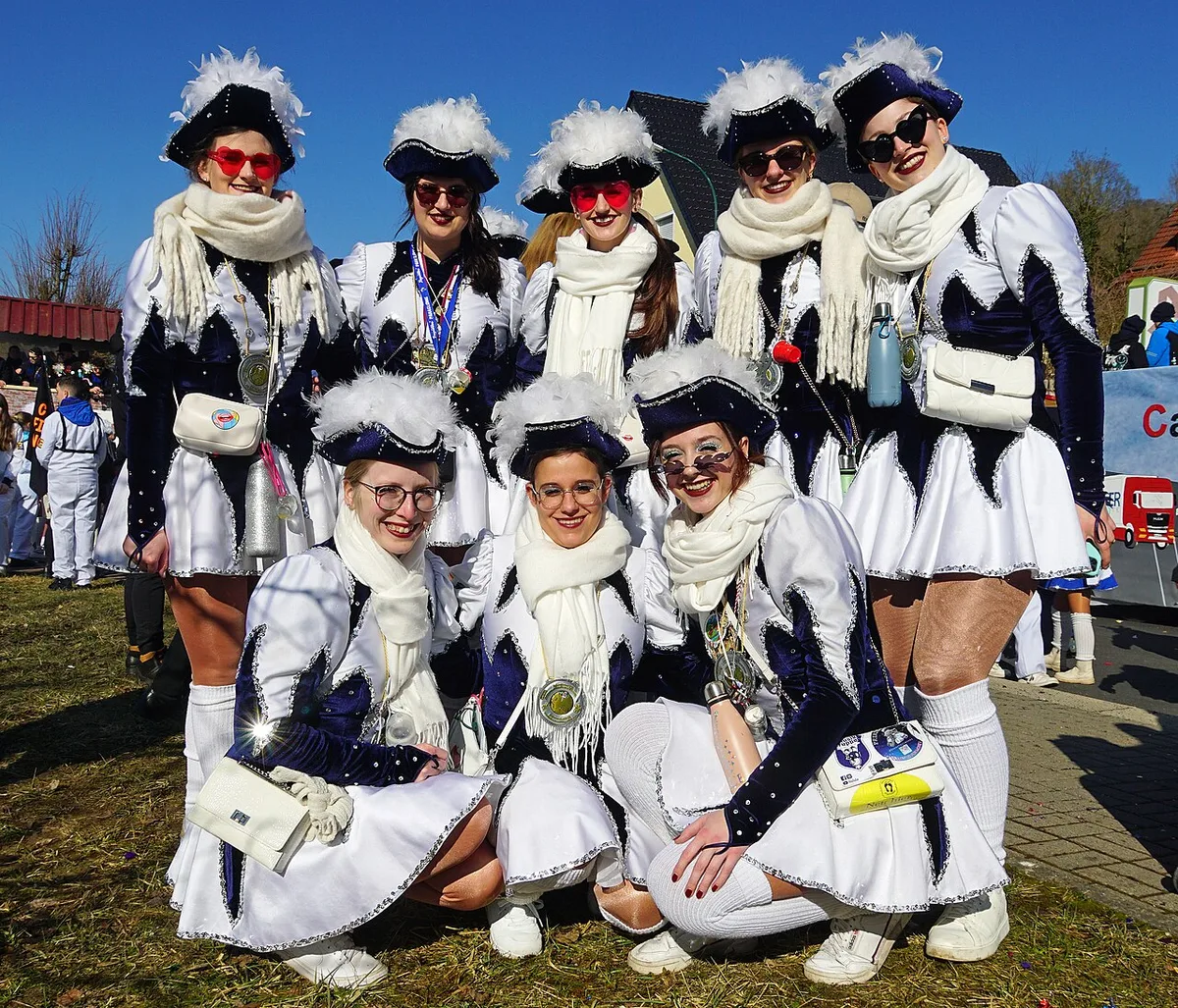
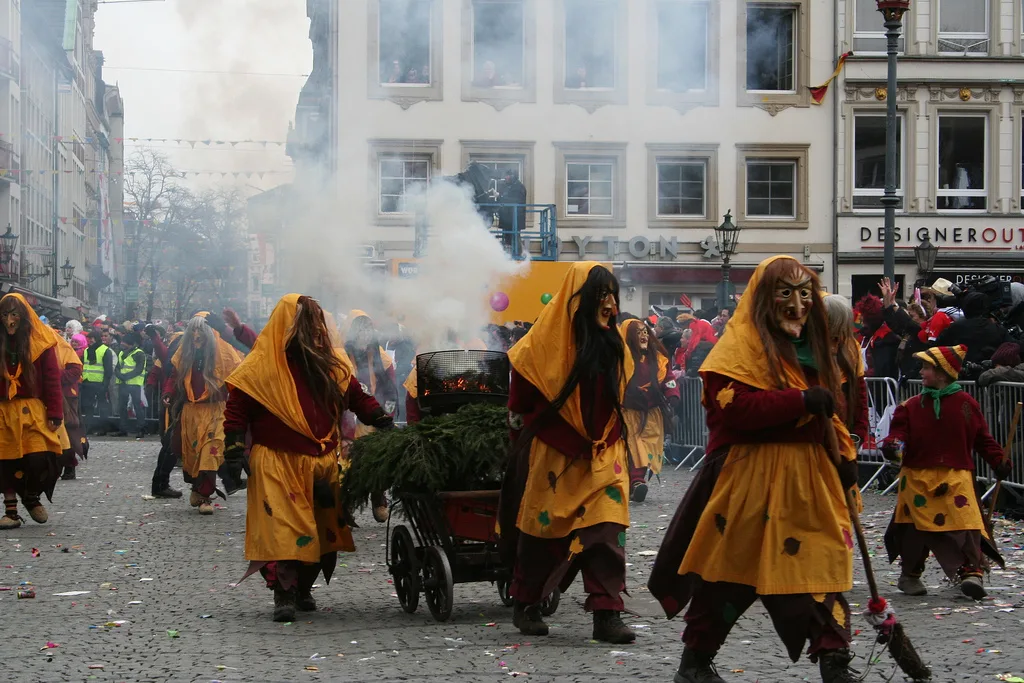
| Visual language | Colorful costumes, decorated floats, marching groups, and thrown Kamelle | Carved wooden masks, inherited figures, and more formal procession roles |
| Peak period | The 6 days from the Thursday before Ash Wednesday through Shrove Tuesday | Rottweil centers its Narrensprung on Monday and Tuesday mornings |
| Best fit | Travelers prioritizing street participation, political humor, and a broad social program | Travelers prioritizing masks, guild tradition, and close observation of local ritual |
| Main planning risk | Choosing a city without learning its greeting, schedule, and crowd pattern | Treating a structured tradition like an open costume party |
4 Verified Carnival in Germany Events and Who Each Suits
These four choices belong to the closed verified inventory for FestJourney. Each one has a traceable recurrence rule. Three follow the Rhineland model, although their humor and local identity differ. Rottweil belongs to a separate tradition and should not be presented as a smaller version of Cologne. Use the event descriptions as a decision tool, then verify the next program with the named official source. Movable dates depend on Easter, so a copied calendar from an earlier edition cannot confirm the next one.
- Cologne Carnival
- Cologne Carnival runs from Weiberfastnacht, the Thursday before Ash Wednesday, through Karnevalsdienstag. Its session season opens on 11 November, while the street dates move with Easter.
- Choose Cologne for large parades, the Dreigestirn of Prince, Peasant, and Virgin, thrown Kamelle, and the local call “Kölle Alaaf.” Rose Monday is the principal parade day.
- Consult the official Cologne committee for the next route, program, access information, and confirmed event notices.
- Dusseldorf Karneval
- Dusseldorf Karneval runs from Altweiber to Karnevalsdienstag, with the Rosenmontagszug on Shrove Monday. Every street date moves with Easter rather than remaining fixed.
- Political satire is the clearest reason to choose Dusseldorf, while “Helau” is the correct local greeting. Read the Dusseldorf Karneval guide before comparing parade days.
- Confirm the next program through the official carnival committee. Its announcements should control your final arrival and departure plans.
- Mainzer Fastnacht
- Mainzer Fastnacht covers the street-carnival period from the Thursday before Ash Wednesday through Shrove Tuesday. Its Rosenmontagszug on Shrove Monday is the centerpiece.
- Mainz suits travelers interested in political and literary humor within the Rhineland model. The city uses “Helau,” despite the event name containing Fastnacht rather than Karneval.
- Do not classify Mainz with Rottweil solely because both event names use a Fastnacht form. Program confirmation remains essential because every peak-week date moves with Easter.
- Rottweiler Fasnet
- Rottweiler Fasnet begins its season on 6 January. Its verified peak is the Narrensprung on Rosenmontag and Fasnetsdienstag mornings, with both dates moving according to Easter.
- Wooden masks, traditional figures, and guild organization make Rottweil the clearest alternative to Rhineland parade culture. Observation and local protocol matter more than improvised party behavior.
- Review the Rottweil Fasnet guide, then check the Rottweil city source for confirmed times, procession information, and visitor instructions.
The 6-Day Movable Calendar Before Ash Wednesday
Peak street dates cannot be carried forward from one year to the next. Cologne Carnival, Dusseldorf Karneval, and Mainzer Fastnacht all move with Easter. Ash Wednesday supplies the calendar anchor. Count backward from that religious date instead of assuming the celebration always occupies the same February weekend. Rottweiler Fasnet also uses movable Monday and Tuesday observances. Official organizers remain the final authority for start times, routes, closures, and ticketed sessions. The 6-day sequence below explains the general Rhineland flow without presenting an unconfirmed future date.
Carnival in Cologne starts on 11 November, but street activities follow Easter's moving date. Travelers should expect festival activity from the fall through spring depending on Easter's timing.
| Day | Typical role | What you should decide |
|---|---|---|
| Thursday | Weiberfastnacht or Altweiber opens the street-carnival phase. Symbolic city-hall takeovers and tie cutting are associated with the day. | Arrive before daytime activity begins. Leave a valued tie at the hotel and check local closure notices. |
| Friday | Club programs, pub gatherings, and scheduled performances continue after Thursday’s opening. | Use the official program because formats differ by city. Never assume every gathering offers walk-up entry. |
| Saturday | Smaller local parades and neighborhood activity may offer an alternative to the largest central procession. | Compare the published route with your accommodation. Confirm any access restrictions before leaving. |
| Sunday | Neighborhood and school-oriented processions can create a more manageable family option than Monday. | Check the specific program for family suitability. Bring a sturdy bag if participants throw Kamelle. |
| Monday | Rosenmontag is the Rhineland parade climax. Rottweil instead holds a morning Narrensprung within its own tradition. | Choose one fixed viewing plan. Crowds and closures can make spontaneous movement difficult. |
| Tuesday | Smaller final parades lead toward the end of street carnival. Cologne’s Nubbel ritual occurs before Ash Wednesday. | Plan your return before late activity begins. Do not assume normal transport or business schedules resume immediately. |
Choose Between 4 Events by Experience, Not Fame
A useful choice starts with format rather than a generic ranking. Cologne offers the broadest version described in the supplied material. Its appeal comes from large-scale street participation, established carnival figures, neighborhood activity, and the Rose Monday procession. Dusseldorf puts sharper emphasis on political satire. That distinction can matter more than overall parade size. Mainz also combines a Rhineland street program with political humor, but its local language and identity remain separate. Rottweil changes the question entirely. Its morning Narrensprung, masks, and guild framework reward careful observation. Families should compare Sunday neighborhood programs in the Rhineland with the published rules for Rottweil. Adults seeking the densest street atmosphere will usually focus on Thursday or Monday. Photographers should verify restrictions and respect participants rather than interrupting a procession for a posed image.
| Priority | Strongest match | Reason |
|---|---|---|
| Large Rhineland street program | Cologne Carnival | Multiple peak days lead toward the Rose Monday procession. |
| Political satire | Dusseldorf Karneval | Satirical parade floats are a defining part of the supplied event brief. |
| Political and literary humor | Mainzer Fastnacht | Mainz provides a distinct Rhineland interpretation and uses “Helau.” |
| Masks and guild tradition | Rottweiler Fasnet | The Narrensprung and traditional figures differ fundamentally from Rhineland parade culture. |
Greetings, Costumes, Kamelle, and Local Etiquette
Regional vocabulary is practical knowledge, not decorative trivia. Cologne uses “Kölle Alaaf,” while Dusseldorf and Mainz use “Helau.” Calling “Helau” in Cologne marks you as unfamiliar with a well-known local distinction. Rottweil belongs to the southern Fasnet tradition, where the supplied brief associates “Narri-Narro” with regional greetings. Follow the crowd only after hearing the call clearly. Costumes also require judgment. Rhineland celebrations favor committed fancy dress, but crowded pubs make oversized accessories inconvenient. Avoid offensive themes and anything that blocks another person’s view. Rottweil’s masks and traditional figures belong to organized local practice. A visitor costume should never imitate a protected guild role without guidance. Thursday’s tie-cutting custom is easy to avoid by leaving formal neckwear elsewhere. Friendly cheek kisses described in Cologne material never remove the need for consent.
| Situation | Practical response |
|---|---|
| Cologne greeting | Use “Kölle Alaaf.” Do not substitute Dusseldorf or Mainz’s “Helau.” |
| Rhineland costume | Wear a practical full costume, but avoid bulky pieces in confined venues. |
| Traditional masks | Treat organized figures as participants in a local custom, not as photo props. |
| Thrown Kamelle | Carry a sturdy bag. Wait for a safe opening before retrieving anything from the ground. |
| Thursday tie cutting | Do not wear a valued tie if you want to avoid participating in the custom. |
Costs, Booking, Transport, and Crowd Planning
Street parades are described as free in the supplied planning brief. Some pubs may charge €10–€25 for entry, but that range is not a universal tariff. Ask the venue directly before joining a line. The same brief warns that hotels in Cologne and Mainz can rise by 200–300% during peak demand. Treat that figure as a planning warning rather than a promised rate. Booking 6 or more months ahead can improve your choices around the movable week. Refundable terms are especially useful until organizers publish the relevant program. Deutsche Bahn can connect the destination cities, but busy periods increase disruption risk. Local carnival transport products may be offered, although availability can change. Check the current city operator instead of relying on an old ticket name. Glass-free zones may also be designated in central areas. Official maps and municipal notices should decide what you carry.
| Budget or logistics item | Brief-supported benchmark | Your action |
|---|---|---|
| Street parade viewing | Free in the supplied brief | Budget separately for food, lockers, toilets, and local transport where applicable. |
| Possible pub cover | €10–€25 | Confirm the current charge, entry conditions, and accepted payment method with the venue. |
| Peak hotel pressure | The brief warns of possible 200–300% increases in Cologne and Mainz | Compare refundable rooms before committing to a nonrefundable booking. |
| Booking lead time | 6 or more months suggested | Reserve early, then revisit the booking after the organizer publishes its program. |
| Rail and local transit | No fixed fare or frequency supplied | Check Deutsche Bahn and the relevant city operator for the exact travel day. |
| Official cost checks | No universal event price list supplied | Use organizer pages for sessions and individual venues for cover charges. |
Build the Trip Around Official Confirmation
Begin with the recurrence rule, then wait for program details before making rigid plans. Easter determines the peak street period for all four events in this guide. Cologne adds its separate session opening on 11 November. Rottweil begins its season on 6 January, but its named Narrensprung still follows the movable Monday and Tuesday pattern. Next, select the single activity that justifies your trip. That might be a Rose Monday procession or one of Rottweil’s morning observances. Reserve refundable accommodation near a route supported by the published program. Geography should come from official maps, not assumptions about station exits or parade direction. Recheck transport, road closures, security zones, and venue entry rules during the final week. The German National Tourist Board can provide broader destination context. Event organizers and municipal sources should control event-specific decisions.
Booking during Cologne and Mainz's peak weeks means you may face hotel rates 200–300% higher than base price. Early reservation with flexible cancellation provides the best protection against both cost and schedule surprises.
| Planning stage | Decision |
|---|---|
| Before booking | Choose Karneval or Fastnacht and identify the movable calendar anchor. |
| After organizer confirmation | Match accommodation and transport to the published program. |
| During the final week | Recheck closures, security rules, transit notices, and venue conditions. |
| On arrival | Follow local signage and keep one essential event as the day’s priority. |
Make the Final 2-Way Choice
Choose the Rhineland when you want costumes, public satire, thrown sweets, and a multi-day street program. Cologne, Dusseldorf, and Mainz then offer three distinct versions of that model. Select Rottweiler Fasnet when masks, guild practice, and the Narrensprung are the main reasons for traveling. Neither tradition is a substitute for the other. This 2-way distinction prevents the most common planning mistake: booking one format while expecting the customs of the other. Once you decide, let the verified recurrence rule set your travel window. Let the official program determine every exact time and route.
Cologne’s Nubbel Burning on Shrove Tuesday
Cologne’s final night includes the Nubbelverbrennung, a ritual that closes the street carnival before Ash Wednesday. The Nubbel is a straw figure displayed above participating pubs during the festivities. It becomes a symbolic scapegoat for excesses committed during carnival.
Late on Shrove Tuesday, groups lower the effigy and carry it outside in a short procession. A mock funeral speech lists the Nubbel’s supposed offenses. The figure is then burned in a controlled outdoor setting, allowing participants to blame it for their carnival misbehavior.
The best-known gatherings occur around pubs in Cologne neighborhoods rather than along one central parade route. Kwartier Latäng, the student district around Zülpicher Straße, is a prominent area for the ritual. Times and access arrangements vary by venue, so check the participating pub’s announcement. Expect dense late-night crowds and possible street restrictions. Keep behind barriers, follow fire-safety instructions, and plan your return transport before local services become busy.
Frequently Asked Questions
What is the difference between Karneval and Fastnacht in Germany?
Rhineland Karneval centers on costume gatherings, club programs, satirical floats, and large street parades. Swabian-Alemannic Fastnacht emphasizes traditional figures, carved masks, guild organization, and defined procession customs. Cologne, Dusseldorf, and Mainz represent the first model here. Rottweil provides the verified Fastnacht alternative.
When does carnival in Germany take place?
Peak dates move with Easter. Cologne begins street carnival on Weiberfastnacht and ends on Karnevalsdienstag. Dusseldorf runs from Altweiber through Karnevalsdienstag. Mainz follows Thursday before Ash Wednesday through Shrove Tuesday. Rottweil holds its Narrensprung on Rosenmontag and Fasnetsdienstag mornings. Check organizers before booking exact travel days.
Does German carnival always begin on 11 November?
Cologne Carnival’s verified session season opens on 11 November. Its main street days still move with Easter and begin on Weiberfastnacht. Rottweiler Fasnet instead begins its season on 6 January. Do not apply Cologne’s opening date to every German regional tradition.
Which German carnival event is best for a first visit?
Cologne suits a first trip focused on a broad Rhineland street program. Dusseldorf is the stronger match for political satire, while Mainz adds political and literary humor. Rottweil is the better choice when masks and guild tradition matter more than a large party format.
Is carnival in Germany suitable for families?
Families can consider smaller weekend and neighborhood programs before the largest Monday procession. Suitability changes by route and time, so check the official schedule for the chosen city. Keep children away from moving groups and dense curbside areas. Bring a sturdy bag for Kamelle and agree on a meeting point.
How much should you budget for German carnival?
The supplied brief describes street parades as free and cites possible pub covers of €10–€25. It also warns of hotel increases reaching 200–300% in Cologne and Mainz. Those figures are planning benchmarks, not guaranteed prices. Confirm accommodation, venue, and transport costs directly before purchase.
What should you shout during carnival in Cologne and Dusseldorf?
Use “Kölle Alaaf” in Cologne. Dusseldorf uses “Helau,” as does Mainz. Avoid shouting “Helau” in Cologne because the regional distinction matters locally. Listen before joining a less familiar call, especially when attending Rottweil’s different Fasnet tradition.
German Carnival City by City
Two different traditions, both anchored to Easter.