

Oktoberfest Munich: The Complete Guide to Dates, Tents, and Costs
Last updated July 2026: Oktoberfest Munich runs on a fixed rule, not a fixed date, so the exact days shift slightly every year. The rule puts the 2026 edition at September 19 through October 4 on the Theresienwiese, the meadow just southwest of Munich's city center. This guide covers which days to pick, how to land a table without a reservation, and what a Maß actually costs once you're inside a tent.
Oktoberfest Munich 2026: Dates, Location, and the Wiesn at a Glance
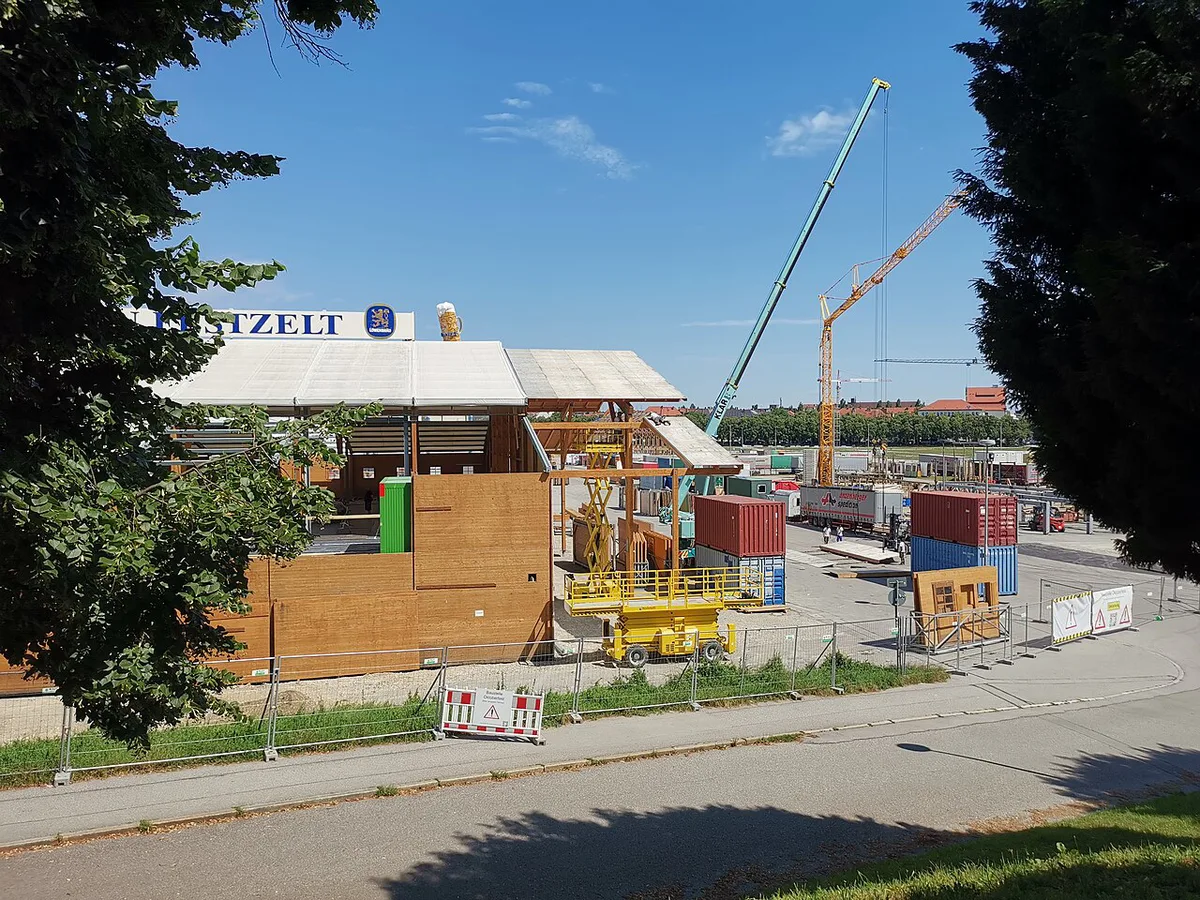
Munich's own festival calendar runs on a rule, not a fixed calendar date, and 2026 marks the 191st edition, according to the city's official Oktoberfest site. The rule opens the festival on the Saturday after September 15 and closes it on the first Sunday in October, a span of 16 to 18 days. It extends to October 3 only when that Sunday falls on October 1 or 2. Applying the rule to 2026 puts the dates at September 19 through October 4, on the Theresienwiese, a 42-hectare meadow in southwest Munich named for Princess Therese of Saxony-Hildburghausen. The first Oktoberfest, in 1810, celebrated the wedding of Crown Prince Ludwig and Princess Therese with a horse race on that same meadow. Locals call the festival the Wiesn, short for that meadow, and treat it as a Volksfest, a folk festival with fairground rides and history, rather than only a beer festival. Recent editions have drawn crowds as large as 7.2 million visitors, with around 7.4 million liters of beer served across the full run, according to festival record-keeping. Across all the tents and beer gardens, the grounds offer roughly 120,000 seats, staffed by around 13,000 workers each year. Unlike movable events such as Cologne’s carnival, which moves every year with Ash Wednesday, Oktoberfest's own rule ties it to a fixed weekday sequence instead. See the German festival calendar for how the Wiesn's dates line up against the country's other major annual events.
Strategic Timing: Choosing the Best Days to Visit
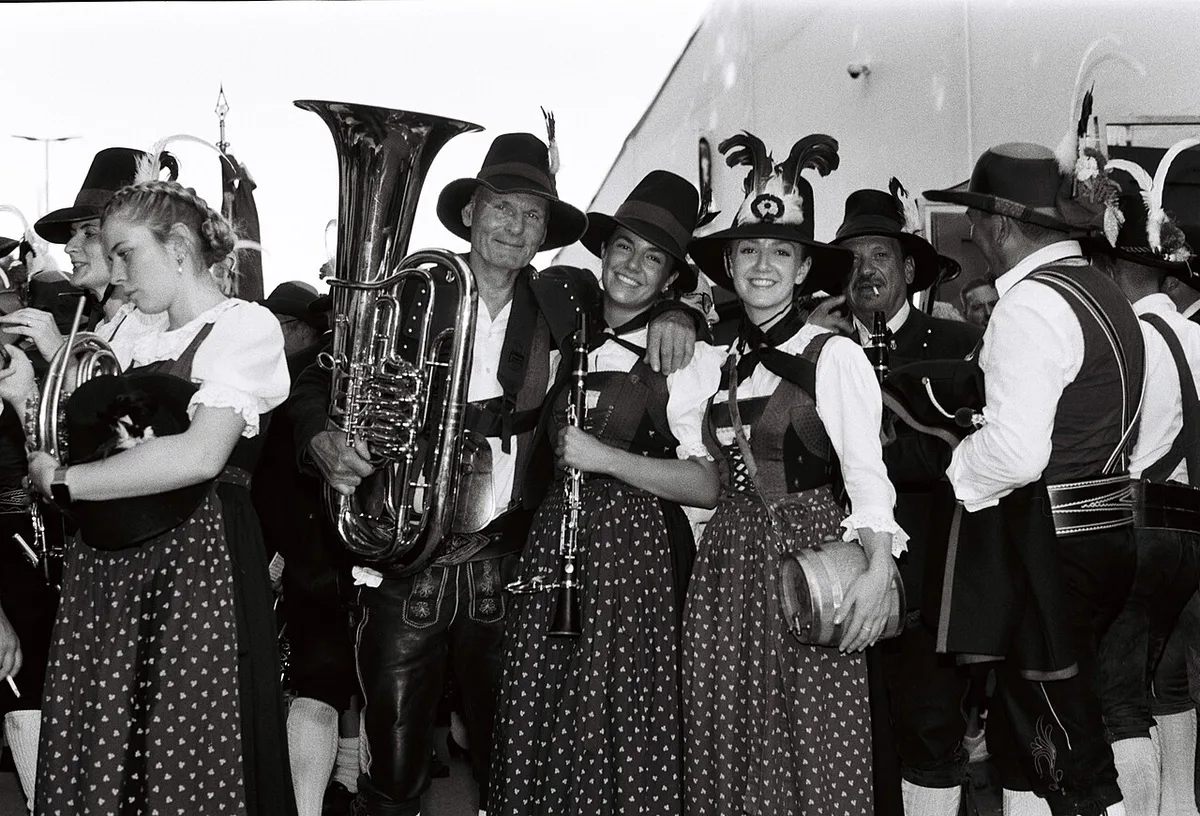
Saturdays are the festival's hardest days, especially the opening Saturday and the festival's other weekend dates. Tents often reach capacity by midday, security may pause entry, and finding a seat without a reservation gets close to impossible. Sunday through Thursday give far more reliable walk-in access, particularly if you arrive soon after tents open. Two set-piece events reward a specific-day visit. In our editorial assessment, the first Sunday is the single best day to visit, pairing the parade with a full afternoon of tent access. Because 2026's closing weekend includes October 3, German Unity Day, expect that Saturday to carry both a national-holiday crowd and the festival's own final-weekend rush. Stuttgart runs its own beer festival on a closely overlapping schedule. It opens the Friday after the last Saturday in September and runs 17 days into October's second weekend. The Stuttgart’s Volksfest guide covers that alternative if Munich's dates don't fit your trip.
| Day | Crowd Level | Table Access | Atmosphere |
|---|---|---|---|
| Opening Saturday | Very high; some tents pause new entries | Reserved sections fill by late morning; walk-in seats are scarce | High energy, brass bands, first-day excitement |
| Any other Saturday | High | Walk-in seats mostly gone by midday | Loud, crowded, long lines for everything |
| Tuesday (typical weekday) | Moderate | Walk-in tables available if you arrive before 10:00 | Relaxed pace, easier conversation, still full by evening |
- Opening parade (Saturday): breweries and tent hosts parade from the city center to the Theresienwiese before the mayor taps the first keg at Schottenhamel.
- Costume and Riflemen Parade, the Trachten- und Schützenzug (first Sunday): participants in traditional dress march from the city center to the grounds, historically several thousand strong.
- Bräurosl gathering (first Sunday): the tent traditionally hosts Munich's largest Oktoberfest-season gay gathering, known informally as Gay Sunday, with a smaller follow-on gathering the next Monday at Fischer-Vroni.
The Tent Guide: Big Tents, Small Tents, and Oide Wiesn
Fourteen major tents anchor the festival, each brewed by one of Munich's big breweries or run by a private operator, holding anywhere from about 5,000 to 10,000 guests apiece. More than 20 smaller tents fill in around them, ranging from roughly 60 to 900 seats and built around a single theme such as poultry, fish, or wine. Only beer brewed within Munich's city limits may be served at Oktoberfest, a long-standing rule that applies to all six major breweries pouring at the big tents. Schottenhamel hosts the opening ceremony each year, where the mayor taps the first keg at noon and declares, O'zapft is! Tents generally open at 10:00 on weekdays and 9:00 on weekends and public holidays, staying open until about 22:30 most nights. Two tents, Käfer Wiesn-Schänke and Weinzelt, run later than the rest, staying open until 1:00, with last call near 00:15. For a slower pace, the Oide Wiesn sits inside the grounds as a historical section, added for the festival's 200th anniversary in 2010, with vintage rides and three smaller, quieter tents. Every tent, big or small, follows the same Quiet Oktoberfest rule. Only traditional brass music plays until 18:00, with afternoon volume capped at 85 decibels. After that, the sound shifts toward faster party and Schlager sets for the evening.
The Reservation Myth: How to Get a Table Without Booking
There is no way to reserve your way into every tent, and most Oktoberfest visitors never touch a reservation form. Every big tent keeps an unreserved section open for walk-ins, and it usually fills first thing in the morning. Arriving before 10:00 on a weekday gives you the best odds of finding an open bench in that section. Reservations exist mainly for groups pre-purchasing set food-and-drink packages for a fixed morning or evening session. Each tent sets its own minimum party size and paperwork for that process. If a bench looks full but has open seats, asking to share is normal festival etiquette. Steer clear of third-party ticket resellers who claim to guarantee entry or tables. Official tents never sell entry tickets, and the grounds themselves are free to walk into. Once you land a table, plan to stay for a full session rather than hopping between tents. In our editorial assessment, giving up a seat midday rarely means getting one back.
Getting There and Staying Nearby
Hotels cluster most densely around Hauptbahnhof, Munich's main station, about a ten-minute walk from the Theresienwiese entrances. That density is why rooms near Hauptbahnhof book out first and price up fastest as the festival approaches. Ostbahnhof, on the opposite side of the city center, tends to run quieter and cheaper, at the cost of a longer U-Bahn or S-Bahn ride to the grounds. Staying further out in the suburbs works too, provided you check the S-Bahn schedule back to your hotel before booking, since late-night frequency drops off. For reaching the grounds, the U4 and U5 U-Bahn lines run directly to the Theresienwiese station, but that stop gets seriously congested at peak entry and exit times. Walking in from the Hackerbrücke S-Bahn stop is a reliable alternative when the Theresienwiese station backs up. The MVV app covers real-time departures across both networks and is worth downloading before you land.
Budgeting the Wiesn: What Things Actually Cost
Walking onto the Theresienwiese costs nothing; you only pay for what you eat, drink, or ride. The Oide Wiesn's €1 entry is the one admission fee found anywhere on the grounds. Inside the tents, a Maß, the one-liter mug that's the standard beer serving, has recently run in the €13 to €15 range depending on the tent and the year. A half chicken, or Hendl, from a tent kitchen typically costs less per portion than a single Maß, though exact menu prices vary by tent and are posted at each stand. Many tents and stalls run cash-only or heavily favor cash, especially at smaller booths and rides. Carrying enough euros for the day beats relying on a card reader that may not exist at a given stall. A cash withdrawal before you arrive at the grounds saves time standing in an ATM line once inside.
| Item | Typical Cost |
|---|---|
| Main grounds entry | Free |
| Oide Wiesn entry | €1 |
| Maß (1-liter beer) | €13 to €15 |
Etiquette and Mistakes First-Timers Make
Dirndls and Lederhosen are traditional Bavarian dress, not a costume theme, and wearing them respectfully is standard rather than optional at Oktoberfest. Standing on a bench to toast or sing along is normal and even expected once a table starts singing. Standing on the table itself is not tolerated, and security staff will ask you to get down or leave. Smoking is banned inside every tent, a rule fully enforced since 2011. Security checks bags at every entrance, and the size limit runs to roughly 8 by 6 by 4 inches, or 20 by 15 by 10 centimeters, with anything larger denied entry. Large backpacks, weapons, and glass containers brought from outside are typically on the banned list, so confirm the current rules on the official Oktoberfest site before you pack a bag.
- Cash in small bills, since many tents and stalls don't take cards
- Photo ID, since tents may check age during busy periods
- A portable power bank, since phone networks get overloaded and outlets are scarce
- Comfortable, closed-toe shoes for standing and walking on uneven grass all day
Beyond the Theresienwiese: Exploring Munich and Germany's Festival Year
A day away from the tents fits easily into any Oktoberfest trip. Marienplatz, Munich's central square, anchors the old town's shopping and sightseeing and sits a short U-Bahn ride from the Theresienwiese. The Englischer Garten, one of the largest urban parks in the world, offers a quieter contrast to tent noise, with beer gardens of its own for a lower-key round. The Hofbräuhaus, Munich's best-known beer hall, stays open year-round, giving visitors who skip Oktoberfest reservations a taste of the same beer-hall tradition on any date. Oktoberfest is one stop on a much longer German festival year worth planning around. Nuremberg's Christkindlesmarkt opens the Friday before the first Advent Sunday and runs to December 24 each year. Dresden's Striezelmarkt follows a similar rule, opening the Wednesday before the first Advent Sunday and running to December 24 as well. In heavy-metal circles, Wacken’s metal festival is announced each year for three days, Thursday to Saturday, around late July or early August. The Nürburgring festival gathers rock and metal acts at the Nürburgring for three days in early June, historically the Pentecost weekend, once the organizer confirms dates. Film travelers time trips around the Berlin International Film Festival, 11 days in February with dates the festival typically publishes about a year out. On the water, Kiel Week runs nine days, Saturday to Sunday, in the last full week of June.
For trip-planning details, see Oktoberfest (official) and Official regional tourism.
Plan Your Oktoberfest Visit
Separate the event decision from the practical work of admission, tent access, reservations and accommodation.
- Oktoberfest Tent Reservations
- Do You Need Tickets for Oktoberfest? Entry & Reservations
- whether Oktoberfest is worth it
- Where to Stay for Oktoberfest
- 9 Best Oktoberfest Tents by Vibe, Food and Access
- Oktoberfest Food Menu
- What to Wear to Oktoberfest
- Why Is Oktoberfest in September? History Explained
- How to Get to Oktoberfest 2026
- Oktoberfest with Kids
Explore guides in other cities
Frequently Asked Questions
When is Oktoberfest 2026?
Oktoberfest runs on a fixed rule rather than a fixed calendar date. It opens the Saturday after September 15 and closes the first Sunday in October, a span of 16 to 18 days. Applying that rule to 2026 puts the festival at September 19 through October 4 on the Theresienwiese.
Do you need a reservation to get a seat in a beer tent?
No. Every big tent keeps unreserved seating for walk-ins, and most visitors never book anything in advance. Arriving on a weekday before 10:00 gives the best odds of finding an open seat.
What is the Oide Wiesn?
The Oide Wiesn is a historical section inside the festival grounds, added for the 200th anniversary in 2010. It has vintage rides and three smaller, quieter beer tents, with a €1 entry fee separate from the free main grounds.
How much does a beer cost at Oktoberfest?
A Maß, the one-liter mug that's the standard beer serving at Oktoberfest, has recently run in the €13 to €15 range. The exact price depends on the tent and the year, so check menus posted at the entrance.
What should you wear to Oktoberfest?
Dirndls and Lederhosen are traditional Bavarian dress rather than a costume, and wearing them respectfully is standard practice. Comfortable, closed-toe shoes matter as much as the outfit, since you'll be standing and walking on grass all day.
Is Oktoberfest family-friendly?
Oktoberfest sets aside official family days with reduced fairground ride prices, according to the festival's own event calendar, though the specific date shifts each year. The Quiet Oktoberfest rule also caps tent music at 85 decibels until 18:00, keeping early hours calmer for younger visitors.