
Is Oktoberfest Worth It? The Real Costs, Crowds, and Logistics
Last updated July 2026. Is Oktoberfest worth it once free beer-tent entry meets €14-plus steins, table-reservation minimums, and hotel rates that spike across Munich? The answer depends on budget, tolerance for crowds, and how the festival's 16- to 18-day window lines up with your travel dates. This guide breaks down real costs, tent-by-tent trade-offs, and the logistics that decide whether a day at the Wiesn earns its price tag.
The Verdict: Is Oktoberfest Worth It?
Oktoberfest earns its reputation for atmosphere, tradition, and scale, and the honest verdict is a qualified yes. It suits travelers who enjoy crowds, beer culture, and communal singing inside a festival tent. It is a harder sell for strict budget travelers or anyone who finds a room of 6,000-plus people stressful. Oktoberfest runs under a fixed rule: it opens the Saturday after September 15 and continues for 16 to 18 days, closing on the first Sunday of October. That closing date shifts to October 3 when the first Sunday would otherwise land on October 1 or 2. A simple day-count rule helps decide how long to stay.
| Persona | Best fit | Why |
|---|---|---|
| Budget Backpacker | One day, standing room | Skipping table reservations and ordering sparingly keeps spending near the low end of the daily range. |
| Luxury Traveler | Three days, tent reservations | Table minimums and central hotels raise costs sharply, but reserved seating removes the access problem. |
| Cultural Enthusiast | An Oide Wiesn day | Lower entry cost and traditional programming outweigh the appeal of the loudest main tents. |
- One day: enough to sample a single tent and the funfair, though it can feel rushed.
- Three days: time for a large tent, a small tent, and the Oide Wiesn without exhausting the budget or the body.
- Five days: most guides call this excessive; consecutive days of one-liter steins and rich food take a toll.
The Real Cost of a Day at the Wiesn
Entry to the festival grounds and every beer tent costs €0, and that free-entry claim is accurate as far as it goes. Realistic daily spending lands closer to €100 to €150 per person once two to three beers, one meal, and a funfair ride are added. A one-liter Maß runs €14 to €15, and tipping the server is standard practice because it brings faster refills; that pushes the effective price to €15 to €20 per beer. Food adds up quickly: a half-chicken Hendl costs roughly €18 to €25, a sausage plate runs about €11, and a large pretzel is €6 to €9. Reserving a table is technically free, but most tents require a food-and-drink voucher worth about €50 per person, or roughly €400 to €500 for a table of eight to ten.
| Approach | What's included | Approx. cost per person |
|---|---|---|
| Standing-room day | Free entry, self-paced snacks, one or two Maß near a standing spot | €30-50 |
| Table reservation day | Pre-purchased food-and-drink voucher (~€50 minimum), a full Hendl, two to three Maß | €90-130 |
- One Maß: €14-15 base price.
- Add a standard tip: €15-20 effective total per beer.
- Two rounds plus a pretzel: roughly €40-50 before a main dish.
- A full Hendl added to that round: pushes a single sit-down visit past €60.
Choosing Your Experience: Tents and Personalities
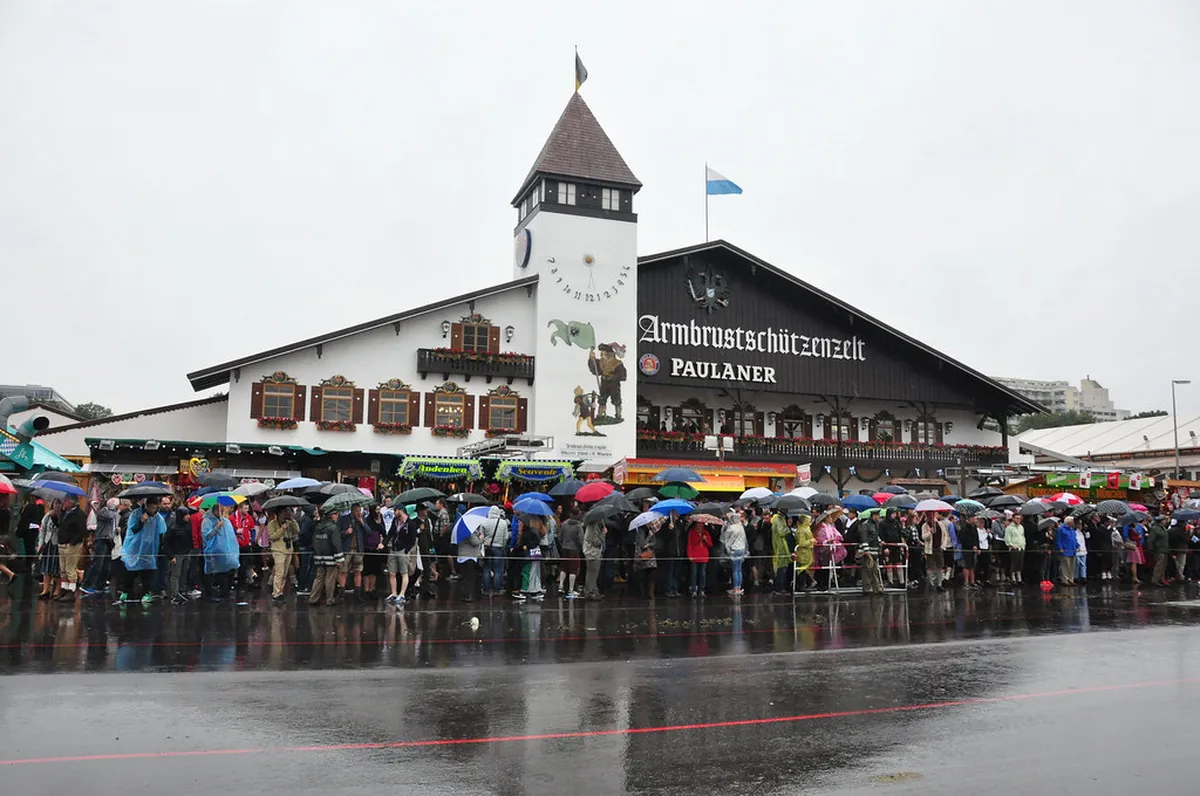
Fourteen main tents and more than twenty smaller ones give Oktoberfest very different moods depending on where you sit. Large tents draw the loudest, most crowded rooms and match the classic party image most people picture. Small tents trade some of that energy for calmer service and food that regularly outranks the big tents. The Oide Wiesn sits apart from both: a historical festival area with its own low entry fee and a slower, family-oriented pace. Travelers who want the festival to anchor a broader trip, rather than the whole trip, can pair an Oide Wiesn afternoon with central Munich sightseeing the same day.
Large tents charge similar prices—roughly €18 to €25 for a Hendl—yet small tents deliver better food quality and calmer service. This parity in spending but superiority in experience makes small tents the better value for travelers seeking quality over the classic loud party atmosphere.
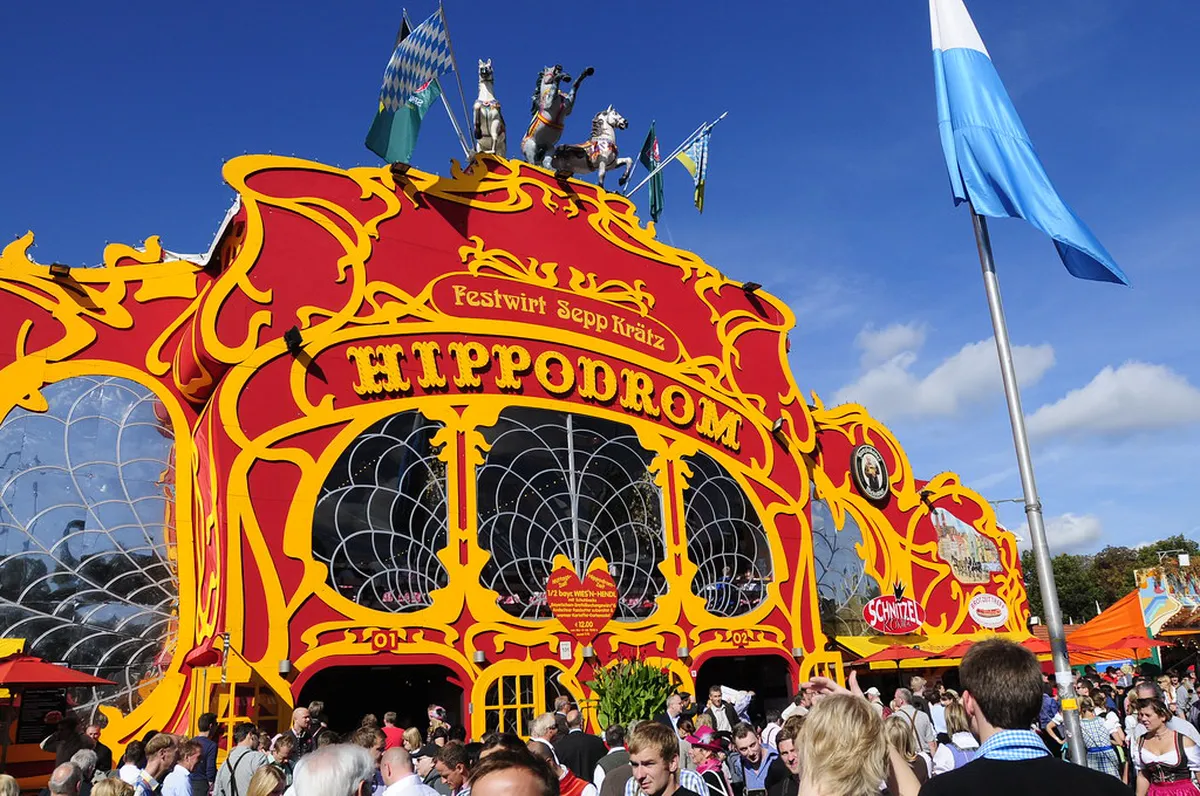
- Large tents (Hacker-Pschorr, Schottenhamel): loud, crowded, built for the classic party image of the festival.
- Small tents (Käfer, Glöckle Wirt): calmer rooms, easier table access, and food quality that often beats the large tents.
- Oide Wiesn: the historical area, with a €4 entry fee and a slower pace built around older rides and traditional music.
Logistics: Timing and Access Trade-offs
Timing changes the entire calculation of whether Oktoberfest is worth it. Weekday mornings and early afternoons draw smaller crowds than weekend evenings, when the busiest tents lock their doors once they reach capacity. Most tents also enforce a strict rule: no seat, no beer. Servers take orders from tables only, so standing near the entrance rarely gets a drink poured. This single policy is the top reason travelers who arrive late feel the festival was not worth the trip. Käfer and Weinzelt stay open until 1:00 AM, well past the 10:30 PM close of most other tents. Moving toward Käfer by around 9:30 PM, ahead of the mass exit from the closing tents, improves the odds of getting in.
Realistic daily spending of €100 to €150 per person depends on table access. Weekend evenings risk tent lockouts where the 'no seat, no beer' policy prevents ordering; weekday mornings before 3pm offer better odds of securing a seat and spending that money.
| Timing | Crowd level | Seating ease | Atmosphere |
|---|---|---|---|
| Weekday, before 3pm | Low to moderate | Free tables usually available without a reservation | Traditional music, weekday lunch-set menus |
| Weekday evening | Moderate to high | Harder without a reservation | Mixed traditional and party atmosphere |
| Weekend, especially Saturday night | Highest of the week | Reservation strongly recommended; doors can close at capacity | Loud, anthem-driven singalongs in the large tents |
Essential Etiquette and Survival
A few rules separate a smooth day at the Wiesn from an expensive mistake.
- Shoes: skip open-toed sandals. Broken glass and spilled beer on tent floors make exposed toes a real injury risk.
- Steins: leaving with a tent's glass mug counts as theft and carries a heavy fine, even if it seems like a souvenir.
- Traditional outfits: a Dirndl or Lederhosen is optional. Secondhand shops around Munich sell authentic pieces for less than a cheap costume-store version.
- Dirndl bow: tradition ties the bow on the left for single wearers and the right for those in a relationship; a bow tied in back generally signals a waitress or widow.
Where to Stay and Getting Around
Accommodation is the cost competitors mention least and travelers feel most. Munich hotel rates climb sharply during the festival window, and late bookings can end up costing several times the off-season rate for the same room. A detailed breakdown of neighborhoods and price tiers is covered in where to stay for Oktoberfest. Staying within walking distance of the Hauptbahnhof cuts transit time but usually costs more than a room farther out. Commuting from a nearby town such as Augsburg or Rosenheim can lower lodging costs, at the expense of a longer trip back after a night in the tents. Munich's MVV transit network is the practical way to reach the Theresienwiese. Roads around the grounds close to regular traffic during peak hours, which makes Uber and taxis unreliable options right at the festival gates.
Final Checklist: Five Questions to Ask Before You Book
Run through these questions before committing to dates, tents, or a hotel.
- Can the budget absorb roughly €100 to €150 per person per day beyond hotel and travel costs?
- Is the trip planned for a weekday, when seating is easier, or a weekend, when crowds and reservation requirements peak?
- Is a table reservation confirmed, or is the plan to rely on standing-room access and early arrivals?
- Does the itinerary include a stop at the Oide Wiesn for a lower-cost, more traditional day?
- Is lodging booked early enough to avoid the steepest rate increases, or would commuting from a nearby town make more financial sense?
How Munich Beer Tent Reservations Work
Oktoberfest has no central reservation system. Each beer tent manages bookings through its own official website, with separate rules, release dates, and time slots.
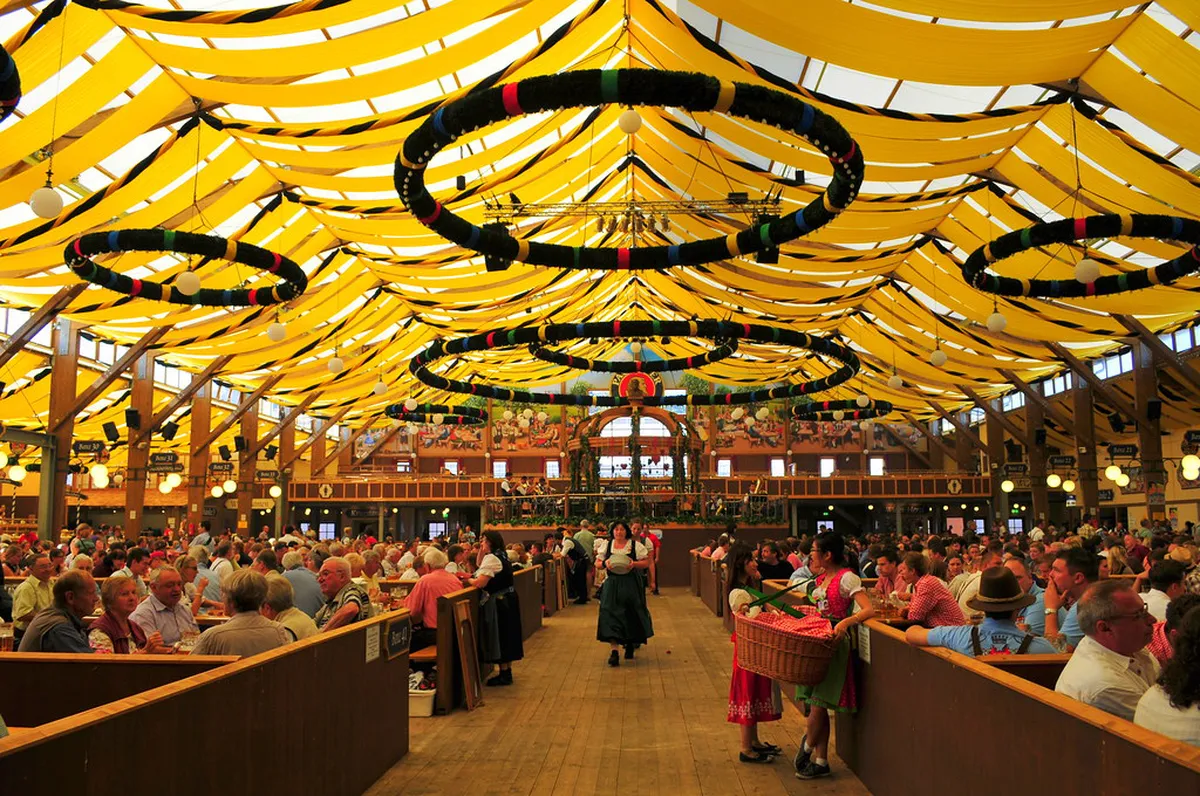
Most reservations cover an entire table of eight to ten people for a fixed session. The booking itself is usually free, but guests must purchase food-and-drink vouchers in advance. Those vouchers are then redeemed inside the assigned tent.
- Book directly with the tent, not through unofficial resellers.
- Check whether vouchers require advance collection or can be shipped.
- Confirm the session’s start and end times before planning other activities.
- Bring the reservation confirmation and arrive before the stated deadline.
A reservation does not provide an all-day table. Tents commonly divide busy days into lunch, afternoon, and evening sessions. Staff clear reserved tables when the next session begins.
Travelers without reservations still have a reasonable chance on weekday mornings. Arrive before lunch, choose a less famous tent, and ask staff where unreserved tables are located. Weekend evenings are much harder because entrances can close when tents reach capacity.
For trip-planning details, see Oktoberfest (official) and Munich official tourism.
For the wider planning view, compare dates and recurrence rules in Germany’s festival calendar.
Frequently Asked Questions
Is Oktoberfest free to attend?
Yes. Entry to the Theresienwiese grounds and every beer tent costs €0. Nearly all festival spending comes from beer, food, and optional table reservations once inside.
How many days at Oktoberfest are enough?
Three days works well for most visitors: enough time for a large tent, a small tent, and the Oide Wiesn. A single day covers the basics, and five straight days of steins and rich food is more than most guides recommend.
Do you need a table reservation to get served?
Not always, but most tents follow a no seat, no beer rule, so standing near the entrance rarely gets a drink poured. Reservations are technically free but require a food-and-drink voucher worth around €50 per person.
What is the Oide Wiesn, and is it worth visiting?
It's the historical section of the festival grounds, with its own €4 entry fee, older rides, and a calmer, more traditional pace than the main tents. It suits travelers who want the culture without the loudest crowds.
Is it cheaper to stay outside Munich during Oktoberfest?
Often, yes. Munich hotel rates rise sharply during the festival window, and commuting from a nearby town such as Augsburg or Rosenheim can reduce lodging costs. That savings comes with a longer trip back after a late night in the tents.