

Why Is Oktoberfest in September?
Last updated August 2026. Why is Oktoberfest in September? Munich’s celebration began in October 1810, but its start later moved forward for more favorable autumn conditions. The historic name remained, and the fixed modern rule still carries Oktoberfest into October.
Why Oktoberfest Is in September but Still Ends in October
Two facts explain the apparent mismatch between Oktoberfest’s name and its dates. October identifies the celebration’s historical origin. September reflects how its schedule evolved after the event became longer. Under the modern rule, Oktoberfest lasts 16 to 18 days. It opens on the Saturday after September 15 and closes on the first Sunday in October. An extension applies when that Sunday falls on October 1 or October 2. In those cases, the festival continues through October 3. Most festival days consequently fall in September, although every scheduled edition still reaches October. Calling the event misnamed therefore misses half the story. Its name records where the tradition began, while its calendar accommodates a longer event. Travelers should use the official Oktoberfest website when checking the published program. Do not assume that the word “October” identifies the opening month. For broader logistics after understanding the calendar, continue with the Munich Oktoberfest guide.
The name traces to a wedding on October 12, 1810, followed by the horse race on October 17. That documented origin is firmer than the secondary theory that beer stocks caused the later move into September.
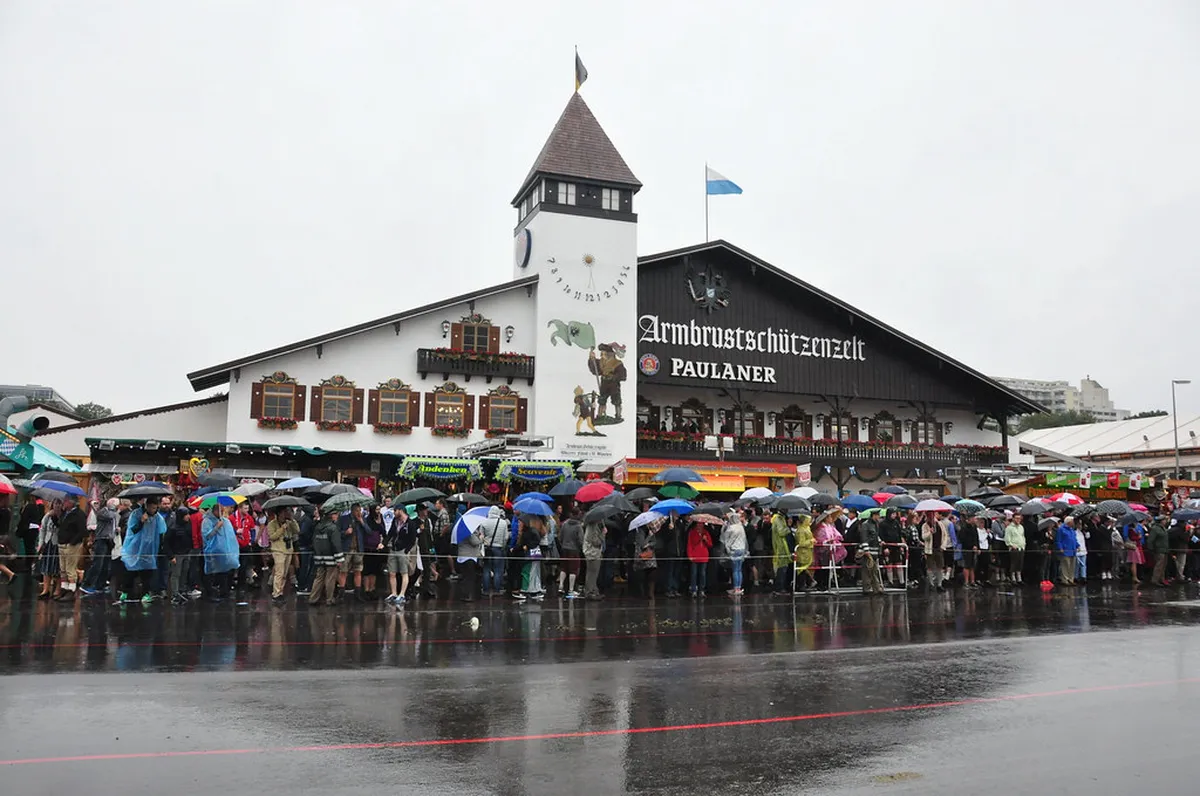
Oktoberfest Originally Began in October 1810
Oktoberfest’s name becomes logical once you return to its origin. Crown Prince Ludwig married Princess Therese of Saxe-Hildburghausen on October 12, 1810. Munich residents joined a public celebration connected with the marriage. A horse race concluded the festivities on October 17. Those October dates established the historical foundation behind the name. Celebrations took place on fields later known as Theresienwiese, meaning Therese’s meadow. Munich usage commonly shortens that name to “Wiesn.” Today, Wiesn can refer to both the grounds and Oktoberfest itself. The official festival source is the appropriate place to verify the event’s published history and current information. One detail sometimes creates confusion in historical summaries. October 12 was the wedding date, while October 17 was the concluding race. Those dates describe connected parts of the original celebration rather than competing origins. Oktoberfest was repeated after 1810 and developed beyond that initial format. Its October beginnings remained central even after more festival days shifted into September.
Why the Festival Moved Earlier into September
Expansion changed the practical calendar. A celebration tied to several October days could retain that timing more easily than a festival lasting over two weeks. As Oktoberfest grew, its opening moved earlier into the autumn. The supplied history does not support reducing that change to one precisely documented decision on one date. It is better understood as an evolution over later decades. Accounts commonly identify more favorable seasonal conditions as the main scheduling rationale. Late September offered a better chance of warmer weather and longer usable evenings than later October. A historical overview from the Culinary Institute of America also identifies daylight and the chance of warmer conditions as reasons for the move. That comparison does not guarantee sunshine, dry days, or mild nights. It only explains why organizers would favor an earlier part of autumn for an expanded outdoor event. Today’s 16-to-18-day rule preserves the result. September supplies most of the available days, while the closing rule maintains an October connection.
Better Weather Was a Rationale, Not a Promise
Weather explanations need careful wording. Moving from later October toward the second half of September improves the calendar’s seasonal odds. It does not turn every festival day into warm weather. Rain, cool evenings, and changing conditions remain possible during a 16-to-18-day Munich event. Pack for variation instead of treating the historical rationale as a forecast. Opening weekend can feel different from the final October days within the same edition. Check a current forecast shortly before departure rather than relying on seasonal assumptions. Clothing also needs to work beyond tent interiors. Adaptable layers and weather-conscious footwear are practical even when traditional dress forms part of your plan. The Oktoberfest clothing guide helps you make that decision without assuming late September will stay warm. This distinction matters because history explains why dates changed. Only a current forecast can guide what you carry on a particular day.
Why It Is Still Called Oktoberfest
Oktoberfest was not renamed because its established name points back to the October 1810 celebration. Moving the opening earlier did not erase that origin. October also remains part of the current schedule. A normal edition closes on the month’s first Sunday, subject to the October 3 extension rule. “Septemberfest” would describe where most modern days fall, but it would lose the historical reference. No supplied evidence supports theories about a calculated branding decision. The clearer explanation is continuity. One name connects the wedding celebration, the Theresienwiese setting, and the later expanded event. Date and name therefore answer different questions. The name tells you where the tradition started. The recurrence rule tells you when to travel. Keeping those functions separate resolves the seeming contradiction without speculation.
How Modern Oktoberfest Dates Work
FestJourney’s verified recurrence rule provides a repeatable way to read the calendar. Oktoberfest opens on the Saturday after September 15. Closing day is the first Sunday in October unless the October 3 extension applies. When that Sunday lands on October 1 or October 2, the event continues through October 3. This produces a run of 16 to 18 days. Exact numerical dates change because weekdays move from year to year. Applying the fixed rule, rather than treating the result as a separate organizer announcement, derives the next edition as September 19 through October 4, 2026. That derived span contains 16 calendar days. Check the official annual program before booking around a ceremony, tent event, or temporary access arrangement.
| Period | Development | Meaning for the name |
|---|---|---|
| October 1810 | Marriage celebration began on October 12, with the concluding horse race on October 17 | Establishes the October origin |
| Later development | The celebration expanded and began earlier for more favorable seasonal conditions | Moves most festival days into September |
| Modern recurrence | A 16-to-18-day run opens after September 15 and finishes in early October | Preserves both the historic name and an October connection |
How to Calculate Oktoberfest Dates from the Rule
You can estimate a future edition without relying on vague phrases such as “late September.” Four calendar checks produce the working span. Treat the result as rule-derived until you compare it with the organizer’s published calendar. Annual programs and operating details still require confirmation.
- Find September 15 on the relevant calendar. Select the first Saturday that comes after it as opening day.
- Find the first Sunday in October. Use that date as the normal closing day.
- Check whether that Sunday is October 1 or October 2. If so, extend the calculation through October 3.
- Count opening and closing dates inclusively. The verified rule produces a duration between 16 and 18 days.
- Confirm the published program separately. A recurring date rule does not establish ceremony schedules, reservation policies, or transport changes.
What September Timing Means for Your Munich Plans
The historical answer should change one practical habit: plan from exact dates, not the festival’s name. September usually contains most available days. Your best dates still depend on the current program, preferred tent, accommodation total, transport arrangements, and weather forecast. No current accommodation prices were supplied for this article. Compare live totals for the exact nights you need rather than relying on an unsourced average.
Plan the stay around the rule: opening follows September 15, while an October 1 or October 2 first Sunday extends the festival through October 3. Then compare accommodation and transport totals for those exact nights, because no universal booking deadline is supported.

- Dates: verify the organizer’s published calendar before purchasing transport or nonrefundable accommodation. Use the recurrence rule as a planning check, not a substitute for current notices.
- Program priorities: confirm current details if an opening tradition or scheduled activity matters to you. Do not assume that every day follows the opening-day program.
- Tent choice: review Munich tent options before choosing dates. A preferred venue can matter more than the difference between September and October.
- Accommodation: compare the full stay total across your candidate dates. The supplied evidence contains no reliable rate that should be presented as a current price.
- City access: consult Munich’s official visitor guidance for current city information. Check temporary transport or access instructions again near departure.
- Weather: use a current forecast for your chosen days. Historically favorable timing does not remove the need for rain protection or layers.
- Food planning: the festival food overview explains common choices after you finish the date decision. Keep menu expectations separate from the historical calendar question.
- Final check: review live organizer information before leaving. Current rules, programs, and access arrangements can change independently of the fixed recurrence pattern.
Is Beer the Reason Oktoberfest Starts in September?
Beer history is sometimes presented as the main explanation, but the supplied evidence does not justify that conclusion. Some accounts connect the season with Märzen beer and older storage cycles. That material can provide cultural context, yet it does not establish that beer stocks caused Munich’s calendar shift. The stronger chronology starts with the October 1810 marriage celebration. Oktoberfest was then repeated, expanded, and moved earlier for more favorable conditions. Its modern 16-to-18-day rule continues to place most days in September. Treat the beer explanation as a secondary theory unless an authoritative brewing archive directly connects it to the scheduling decision. Avoid claims about brewing restrictions, harvest deadlines, or surplus beer without stronger documentation. None of those details is needed to answer why Oktoberfest is in September.
Four Calendar Mistakes to Avoid
Several shortcuts create unnecessary booking errors. Each one confuses the historical name with the operational calendar. Use the fixed rule and current organizer information instead.
- Do not wait until October to arrive merely because the event is called Oktoberfest. Most scheduled days occur in September.
- Do not assume one permanent September opening date. The relevant Saturday changes as weekdays move each year.
- Do not apply the October 3 extension every year. It activates only when the first Sunday in October falls on October 1 or October 2.
- Do not treat historically better weather as a forecast. Check conditions for your exact travel dates.
- Do not let an unverified beer theory replace the documented October 1810 origin and later calendar expansion.
Frequently Asked Questions
Was the first Oktoberfest held in September?
No. The original celebration took place in October 1810. Crown Prince Ludwig married Princess Therese of Saxe-Hildburghausen on October 12. A horse race concluded the festivities on October 17. Those October events explain the name.
Why does Oktoberfest start in September?
The festival became longer and moved earlier for more favorable seasonal conditions. Late September offered a better chance of warmer weather and longer usable evenings than later October. Modern scheduling preserves that earlier start while keeping an October finish.
Does Oktoberfest always end in October?
A scheduled edition under the verified recurrence rule ends in October. Normal closing day is the first Sunday of that month. When the Sunday falls on October 1 or October 2, the festival continues through October 3.
Why was Oktoberfest not renamed Septemberfest?
Its established name records the October 1810 origin. October also remains part of the current calendar. Renaming it for the month containing most modern days would obscure that historical connection.
How long does Munich Oktoberfest last?
The fixed recurrence rule produces a duration of 16 to 18 days. Each edition begins on the Saturday after September 15. Calendar placement and the October 3 extension determine the exact length.
What dates does the rule produce for the next Oktoberfest?
Applying the fixed rule derives September 19 through October 4, 2026, for the next edition. That is a rule-derived calculation, not an organizer-announcement claim. Confirm the published program before making nonrefundable arrangements.
When should travelers book an Oktoberfest trip?
Book only after checking the published annual dates and your preferred program priorities. Compare complete accommodation and transport totals across the exact nights involved. No universal booking deadline or current price is supported by the supplied evidence.
Did Märzen beer cause Oktoberfest to move into September?
Available evidence does not establish that causal link. Märzen and historical beer storage appear in secondary explanations, but they should not replace the documented chronology. The central answer remains the October origin, later expansion, and move toward more favorable seasonal conditions.