
Schubertiade: A Comprehensive Guide to the Legendary Music Festival
The name Schubertiade hearkens back to private music gatherings in the 19th century where friends of composer Franz Schubert would perform and celebrate his lieder and chamber works. Today, the term has become synonymous with a world-renowned festival in Europe, held across several Austrian towns and dedicated almost exclusively to Schubert's output.
This comprehensive guide unpacks the history of the Schubertiade, looks at its modern incarnation in Vorarlberg, introduces its principal venues and concert formats, and offers practical advice for planning a visit. Whether you are a lifelong admirer of Schubert or discovering his world anew, this guide equips you to experience it fully.
What Was a Schubertiade?
A Schubertiade (also spelled Schubertiad) originally referred to an informal gathering held to celebrate the music of Franz Schubert (1797–1828). These events typically took place in private homes or taverns, bringing together friends, musicians, and poets who appreciated the composer's work. Even during his lifetime, such evenings were a forum for performing his newly written songs and piano pieces, often with Schubert himself at the keyboard.
The gatherings served not only as entertainment but also as a vital means of sharing new compositions before publication. They played a significant role in spreading Schubert's reputation beyond Vienna. Although the specifics varied, a typical Schubertiade featured a mix of lieder (art songs) and chamber music, with poetry readings and convivial conversation completing the program.
The Historical Context: Schubertiades in the 19th Century
In the 19th century, Schubertiades were a way for the Viennese middle class to engage with music in an intimate setting. Since these gatherings were private, they lacked the pomp of formal church or court concerts. Music lovers gathered to listen to and play the works of Schubert, often in homes decorated with fresh flowers and lit by candles—creating a cozy, salon-like atmosphere that encouraged direct interaction between performer and listener.
The most famous of these evenings were hosted by figures like the poet Franz von Schober and the singer Johann Michael Vogl, who gave Schubert's songs a broader audience. Occasionally, the composer himself would improvise at the piano, making each Schubertiade a one-of-a-kind experience. Descriptions by those who attended survive, painting a picture of an event that was as much about friendship as it was about music.
The Modern Schubertiade Festival: Origins and Vision
The modern Schubertiade festival owes its existence to the initiative of the German baritone Hermann Prey and the Austrian cultural manager Gerd Nachbauer. Prey and Nachbauer organized the first festival in 1976, intending to create a venue where artists and audiences could dedicate themselves to Schubert's music in an idyllic setting. Since then, the festival has grown into an annual series with multiple editions, supported by the Schubertiade GmbH, which handles organization and ticketing.
Today, the festival comprises several dozen concerts held each year, typically between spring and autumn. It draws prominent international artists and also champions emerging singers and pianists. Its aim remains to present Schubert's music in venues of appropriate intimacy, allowing the subtle interplay between voice, piano, and strings to be appreciated. The festival's archive, accessible on its official website, contains program details and artist lists stretching back to its first year, making it a valuable resource for research.
In 2026, the Schubertiade will celebrate its 50th anniversary with special programs that include archival retrospectives and invitations to renowned ensembles. One highlight is the world premiere of a documentary by the Austrian Broadcasting Corporation (ORF), which is also available for streaming on their platform (ORF ON). The anniversary edition also anticipates new recordings and a number of radio broadcasts carried by European stations.
Venues and Locations: Hohenems and Schwarzenberg
The Schubertiade uses venues in two primary towns in Vorarlberg, Austria: Hohenems and Schwarzenberg. In Hohenems, concerts take place in the Markus Sittikus Hall, a location frequently used for recordings and renowned for its warm acoustic atmosphere. Artists and critics consider it among the best chamber music halls in the world. Its capacity is modest, fostering the close-up experience that Schubert's music requires.
In Schwarzenberg, the Angelika Kaufmann Hall (named after the famous painter) serves as the second principal venue. Set in a village that is part of the Bregenzerwald region, this hall offers a lovely contrast with its wooden interior, typical of local architecture, and provides excellent acoustics as well. Both venues are not overly large, enabling listeners to feel entirely engaged with each performance. For more detail on the venues themselves, you can refer to the official festival website.
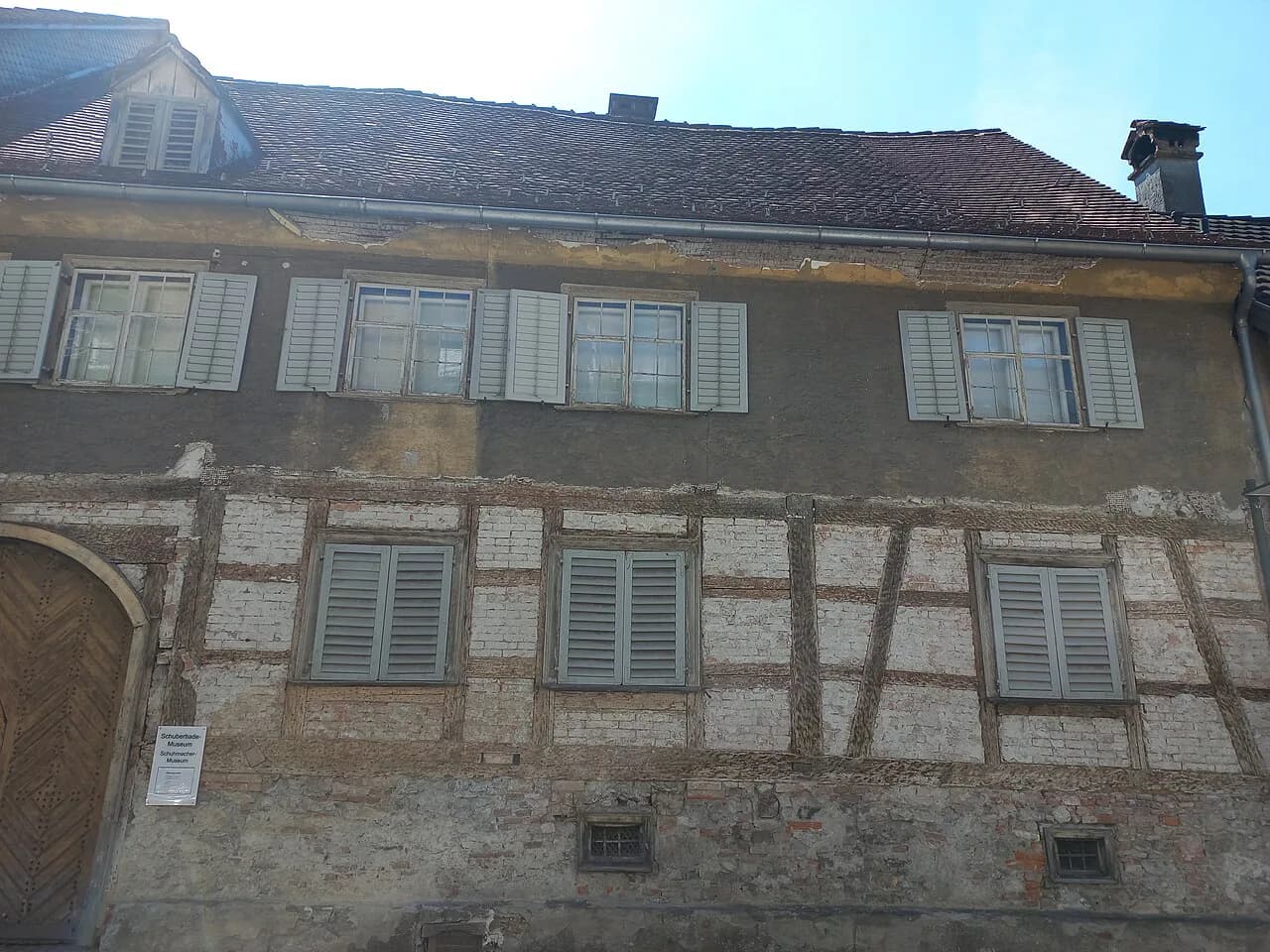
Additionally, the festival operates several museums in Hohenems, including the Franz Schubert Museum and the Schubertiade Museum. These facilities house exhibits about the composer's life and the history of the festival. Other collections include the Elisabeth Schwarzkopf Museum and a gallery dedicated to the tenor Julius Patzak. Visiting these museums is part of a broader experience of the festival's context.
Concert Formats: Lieder Recitals, Chamber Music, and More
The centerpiece of the Schubertiade is the Lieder recital, where a singer and pianist present Schubert's songs, either individually or in cycles such as 'Die Winterreise' or 'Schwanengesang'. These recitals show the fusion of poetry and music, aided by intimate venues that ensure every nuance is audible. Renowned baritones and tenors have regularly appeared, including past legends and today's leading vocalists.
Chamber music forms the other major category, featuring string quartets, piano trios, and mixed ensembles. Works like the 'Trout' Quintet and the string quartets are standard repertoire. The festival also programs piano works, from the 'Moments musicaux' to the late sonatas, given by soloists in recital. Occasionally, orchestral arrangements or choral works appear, though always with a focus on Schubert's music. Each program is carefully curated and often follows a theme.
In addition, the festival includes some special events such as masterclasses and introductory lectures. These provide insights into the performance practice and historical context, appealing to students and connoisseurs alike. The festival season typically begins with a series in early spring and continues through the summer and early autumn.
Artists and Repertoire: What to Expect
The Schubertiade attracts artists from all over the world. Upcoming seasons include such figures as the baritone Andrè Schuen, tenor Christoph Prégardien, and pianists like Paul Lewis. They perform Lieder and chamber music with partners. String ensembles like the Kuss Quartett and the Armida Quartett also frequently appear. Since the festival has a policy of not repeating concerts, each program is unique.
Repertoire centers on Schubert, but the festival also includes works by his contemporaries and successors, such as Beethoven, Schumann, or Brahms, especially in chamber concerts where they might be programmed alongside Schubert for comparison. However, the heart of the program remains his songs and instrumental pieces. Most concerts feature at least one complete song cycle, giving audiences the chance to hear these masterpieces in a coherent way.
As the festival often organizes tours by the same artists, you may have the opportunity to hear a single performer in different venues across the season. Details about casting are always available in the festival's programme booklet, which is published well in advance.
Festival Season: 2026, 2027, and Beyond
The festival operates on a bi-annual cycle, with two distinct seasons in one calendar year. For instance, Schubertiade 2026 and Schubertiade 2027 are separate series, each with its own calendar and program. While specific dates are not published in this guide due to potential changes, the official website offers a comprehensive calendar for both seasons. You can click on 'Concert Calendar' to see all scheduled events.
As of this writing, the festival is announcing programs for 2026 and 2027. For example, in October 2026, there will be several concerts in Hohenems, including a Lieder recital with Andrè Schuen and pianist Daniel Heide. The 2027 programming is being organized, and tickets are already being accepted. Since the 2027 season marks a milestone, expect special anniversary performances.
Planning Your Visit: Tickets, Accommodation, and Transportation
Ordering tickets for the Schubertiade involves a prescribed process, particularly for 2027. Currently, orders cannot be placed via telephone or in person but must be submitted in writing through email, postal mail, or an online order form. The Schubertiade GmbH sorts all requests by date of receipt. Orders are processed from October onward, with priority given to patrons, then those ordering multiple concerts, and finally individual concert tickets.
Because the venues are small (only about 600 seats), demand is high. Those interested should be prepared to secure tickets early, either by joining the Association of Friends and Patrons (which includes privileges) or by sending their request promptly when the program is released. Since the policy may change, it is prudent to check the official site for updates and to read all instructions on the ticket order form.
Accommodation is available in the surrounding villages, but it fills quickly, especially during the main summer season. It is advisable to book a room as soon as your concert plans are fixed. For detailed advice on lodging options, see our dedicated guide on where to stay for schubertiade. Alternatively, for transportation details and arrival options (airports and train connections), consult additional resources.
Beyond the Festival: Museums and Attractions in Vorarlberg
The Schubertiade experience is enriched by a visit to the museums dedicated to the composer and the festival in Hohenems. The Franz Schubert Museum is housed in the building where the composer stayed, and it displays a collection including original letters and first editions. The nearby Schubertiade Museum traces the festival's evolution through interactive exhibits.
Beyond these, Hohenems also has a Jewish Museum documenting the region's Jewish history, and the palace grounds have a Palais with contemporary art exhibits. In the broader Vorarlberg area, you can explore the Bregenzerwald region, known for its Alpine landscapes, traditional architecture, and local cheese making. Plus, festivals such as the Bregenz Festival may coincide with the Schubertiade season, should you want to combine visits.
The Legacy of the Schubertiade: Radio Broadcasts and Recordings
The Schubertiade's reputation is amplified through its broadcast and recording program. Many concerts are recorded live and aired on radio stations across Europe, such as Deutschlandfunk in Germany and Ö1 in Austria. The official website provides a schedule of upcoming radio broadcasts in its 'Radio Broadcasts' section, allowing you to catch performances you couldn't attend in person.
Further, the festival's record label partners often produce CDs from performances held in Markus Sittikus Hall, which is considered an ideal venue for recording. These albums allow audiences worldwide to enjoy the festival's unique sound. Available in shops and from the festival itself, they document the interpretive art of the featured artists.
Tips for First-Time Attendees
If you are attending your first Schubertiade, prioritize your concert choices carefully since seats are limited. Budget time for travel between Hohenems and Schwarzenberg, as they are about a 40-minute drive apart, and some concerts are in different villages. Comfortable clothing is acceptable, though formal options are common among patrons. The venues have no extra charge for programs, but they are not included in the ticket price.
During the intervals, visitors are welcome to move around the foyers where refreshments are available. You may also appreciate an early arrival to explore the town. Remember that the Schubertiade is a cultural event that attracts a refined audience, and latecomers may not be seated until a pause in the program – so allow enough time. Enjoy the unique chance to hear music in setting that has been praised by many as the best way to experience Schubert.
Plan Your Visit
The Schubertiade is more than just a music festival—it is a living tradition that honors the intimacy and community spirit of the original gatherings. From its modest start in 1976 to its current international status, it has become the standard for experiencing Schubert's music in idyllic Alpine settings. Whether you plan to attend the series in 2026 or 2027, or simply desire to explore the music on record, this guide helps you make the most of the experience.
Remember to check the official Schubertiade website for the most current concert dates and ticket policies, as they may change without notice. Before you book, review all practical details, from where to stay to how to get there, to ensure a seamless visit. With careful planning, you can join the ranks of music lovers who travel from across the world to attend this exceptional celebration of Franz Schubert's legacy.
Explore more Schwarzenberg guides
Frequently Asked Questions
What was a Schubertiade?
A Schubertiade was an informal gathering held in the 19th century to celebrate the music of Franz Schubert. These private events often occurred in homes or taverns where friends and musicians would perform his latest lieder and chamber music. They were a means of sharing new compositions and fostering social connections through music.
When and where will the Schubertiade festival be held in 2026?
The Schubertiade festival takes place in Hohenems and Schwarzenberg, Austria. Events for 2026 are scheduled from around September to October, with specific concerts from October 1 to October 5, 2026, including performances in both venues. For a complete and updated schedule, check the official Schubertiade website or the season calendar.
What is Franz Schubert's most famous piece?
Schubert is known for his many masterpieces, with perhaps his most famous work being the song cycle 'Winterreise' (Winter Journey) and his 'Ave Maria'. Among instrumental works, the Symphony No. 8 in B minor, 'Unfinished', and the String Quartet No. 14 in D minor, 'Death and the Maiden', are particularly renowned.
Where is the Schubertiade festival held?
The Schubertiade festival is held in the towns Hohenems and Schwarzenberg in the western Austrian state of Vorarlberg. Concerts take place in two intimate halls: the Markus Sittikus Hall (in Hohenems) and the Angelika Kaufmann Hall (in Schwarzenberg).
How can I order tickets for the Schubertiade?
Tickets are ordered through a written procedure. As of early 2026, for 2027 events, orders must be placed via email, post, or the online order form. Orders are processed starting in October, with priority given to patrons and to those requesting multiple concerts. Always verify the current policy on the official website.