
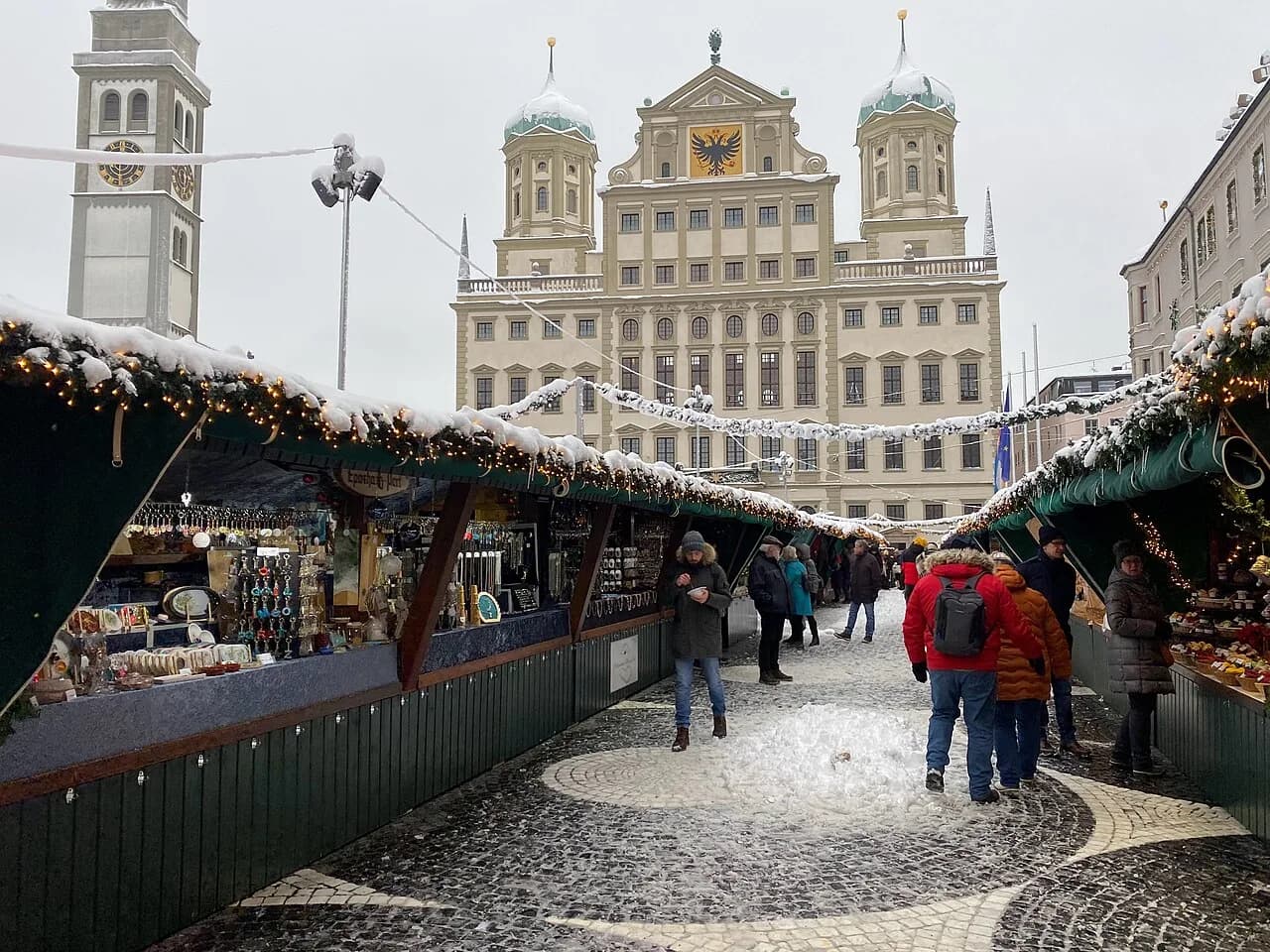
A Food Lover's Guide to Augsburger Christkindlesmarkt
The Augsburger Christkindlesmarkt is one of Germany's oldest Christmas markets, set against the Renaissance backdrop of Rathausplatz and the Perlach Tower. For food lovers, it’s a sensory overload of sizzling sausages, roasting chestnuts, and the sweet scent of mulled wine and gingerbread wafting through the crisp winter air. This guide cuts through the festive chaos to help you prioritize what to eat and drink on your visit.
While every German Christmas market shares staples like glühwein and bratwurst, Augsburg has its own local flavors shaped by Bavarian and Swabian traditions. Expect hearty classics, regional baked goods, and plenty of opportunities to warm up from the inside out. To make the most of your tasting tour, understand the market's layout, ordering quirks, and where to find veggie-friendly bites.
Quick Market Layout: Where the Food Stalls Cluster
The main market stretches across Rathausplatz and spills into nearby streets like Martin-Luther-Platz, Philippine-Welser-Straße, Maximilianstraße, and up toward St. Moritz Church. Most food stalls cluster around the central Rathausplatz, where you'll find the greatest concentration of glühwein stands and sausage grills, while the adjoining lanes offer a more relaxed pace with smaller snack vendors.
Because stalls are tightly packed, it's easy to get overwhelmed by the crowds and the aromas. A smart strategy is to do a quick loop first, noting the queues and menus, then circle back to your top picks. If you’re visiting with a group, designate a meeting point near the town hall steps so everyone can split up and regroup with their finds.
Must-Try Drinks: Glühwein, Non-Alcoholic Options, and the Cup Deposit
A visit to any German Christmas market begins with glühwein, the spiced mulled wine that warms you from the inside out. Traditionally made with red wine, cinnamon, star anise, and sugar, you’ll often find variations like white glühwein or cherry- and blueberry-flavored versions. For a stronger kick, try a classic Schuss—an extra shot of rum or amaretto poured into your mug. If you want to go the extra mile, seek out Feuerzangenbowle, where a rum-soaked sugar loaf is flambéed and melts into the wine, creating a theatrical treat.
When you order a hot drink like glühwein, you pay a deposit for the mug, known as a Pfand. You can either return the mug to get your deposit back or keep it as a souvenir—mugs often feature festive designs with the city and year. For non-alcoholic options, look for Kinderpunsch (a non-alcoholic mulled punch) or heiße Schokolade (hot chocolate) topped with whipped cream, a favorite among families and designated drivers.
Classic Savory Bites: Bratwurst, Frikadella, and More
It wouldn't be a German Christmas market without the unmistakable aroma of bratwurst grilling. These sausages are typically served in a crusty roll with mustard, a simple, satisfying snack that hits the spot on a chilly day. Another German favorite is Frikadella, a pan-fried meatball similar to a hamburger patty, often served on a bun with onions or in a bread roll. For something more substantial, look for Spiessbraten (marinated pork shoulder on a spit) or Flammkuchen, the Alsatian-style thin-crust pizza topped with crème fraîche, onions, and bacon.
If you’re craving something warm and cheesy, Käsespätzle—a Swabian specialty of egg noodles topped with melted cheese and fried onions—is a must. It’s essentially the German Alps answer to mac and cheese, and it’ll fuel you for more browsing. For a lighter option, grilled fish sandwiches are also becoming common at many markets, offering a break from the heavy meats.
Vegetarian and Sweet Treats: From Potato Pancakes to Chestnuts
Vegetarians don’t need to miss out on the savory side of the market. Kartoffelpuffer—crispy potato pancakes—are a classic, served with applesauce or sour cream, and are thoroughly satisfying. You’ll also find Reibekuchen, another form of potato pancake, often dusted with sugar or served with a dollop of apple sauce. Roasted mushrooms in a creamy garlic sauce are another vegetarian-friendly stall staple that’s worth seeking out.
For a sweet and warming snack, roasted chestnuts (Maroni) are a must. The smoky, nutty flavor is the perfect companion to a cup of glühwein, and they're easy to eat while wandering. Candied nuts—typically almonds—are another perennial favorite, tossed in sugar and spices like cinnamon. If you have a bigger sweet tooth, look for Germknödel, a fluffy yeast dumpling filled with plum jam and topped with poppy seeds and vanilla sauce, a comforting South German treat.
Local Augsburg Specialties: Lebkuchen, Stollen, and More
Augsburg and the surrounding region have a rich baking tradition, and the Christmas market is the perfect place to sample local specialties. Lebkuchen—spiced gingerbread, often glazed or filled with nuts—is a must-try, and you’ll find it in various forms, from small hearts to large kuchen. Stollen, the famous fruit-and-marzipan-filled bread dusted with powdered sugar, is another essential holiday treat. These goods often come in beautifully decorated tins, making them great gifts to take home.
Beyond sweets, Augsburg is known for its hearty Swabian cuisine, so keep an eye out for sausages made with local recipes and perhaps a traditional Zwetschgendatschi (plum cake). Many stalls sell their baked goods in decorative packaging, so you can easily pick up edible souvenirs. As with all market goods, quality and selection can vary between stalls, so take a peek at what looks freshly baked and follow the crowds where locals are buying.
How Ordering Works: Deposits, Sharing, and Navigating the Stalls
Ordering at the market follows a simple pattern of tell and you’re served—but there are a few quirks to know. For drinks, you’ll always pay a Pfand deposit; if you’re not planning to keep the mug, return it at the same stand before you leave. Some stalls charge more for your drink if you want to share a mug—it’s usually expected that each person gets their own cup.
When you finish a meal, don't expect to leave your dishes behind—there are no waiters to bus tables. You’ll need to return any borrowed plates or utensils to the stall where you got them, which helps keep the market tidy and reduces waste. It's also customary to tip small amounts (like rounding up to the nearest euro) at stalls, though it’s not mandatory.
Foodie Tips for Families and Groups
Visiting with kids? Look for stalls that offer smaller portions or share-friendly platters. Many vendors have simple options like sausages with a roll that are easy for little hands, and the Kinderpunsch or hot chocolate will warm them up. To avoid meltdowns, plan for a sweet treat break at one of the Lebkuchen stalls—often a big hit with younger visitors.
Groups should set a meeting point and time before splitting up—this makes it easier for each person to visit their preferred stalls without dragging the whole group through every queue. Consider trying a variety of dishes and sharing, so everyone gets a taste without overordering. For further family-friendly tips and practical advice on navigating the market with little ones, check out our guide on visiting the Augsburger Christkindlesmarkt with kids.
Beyond the Main Market: Snack Stalls on Adjoining Streets
While Rathausplatz is the heart of the action, venturing a few steps away offers both smaller crowds and occasionally different food offerings. Martin-Luther-Platz and Philippine-Welser-Straße are known for extending the market experience, with local artisans and sometimes food stalls that specialize in regional delicacies. If the main square feels overwhelming, these adjoining lanes provide a more relaxed setting to enjoy a snack.
Remember that stall lineups can change from year to year, so it’s always a good idea to do a quick reconnaissance of the entire market before committing to your first meal. Stopping by the various Christkindlesmarkt stalls can be part of the fun—you might stumble upon a hidden gem you wouldn’t have found otherwise.
Final Tips for a Tasty Visit
To have the best food experience, come hungry and wear comfortable shoes. The market typically runs from late November through Christmas Eve, but exact dates and hours can vary, so check the official event page before you go. For more planning details, from getting there to choosing your stay, explore our comprehensive guide to how to get to augsburger christkindlesmarkt.
If you’re arriving by train or car, our transportation guide offers practical tips for a hassle-free trip. And before you head over, remember to check out our guide on what to wear to the market—dressing in layers is key to enjoying those long evenings of nibbling and sipping.
Plan Your Visit
With its historic charm and mouthwatering array of foods, the Augsburger Christkindlesmarkt is a culinary highlight of the German Christmas season. Whether you’re warming up with a mug of glühwein, indulging in a hearty bratwurst, or savoring a sweet Lebkuchen, the market offers something to please every palate. Just remember the practicalities: bring cash, hold onto your change with pride, and take a moment to enjoy the festive atmosphere.
Planning your trip is key to making the most of your time. Check the official market dates and hours closer to your visit, and book your accommodation early if you’re staying overnight. For more ideas on how to extend your visit, see our where-to-stay guide for the best neighborhoods and hotels near the market.
Frequently Asked Questions
What food is Augsburg known for?
Augsburg is known for traditional Swabian cuisine, notably hearty dishes like Käsespätzle (cheese noodles) and Zwetschgendatschi (plum cake). During the holiday season, the Christmas market showcases regional specialties such as Lebkuchen (gingerbread) and Stollen (fruit bread), alongside classic German market fare like bratwurst and glühwein.
What food is at a Christmas market?
German Christmas markets typically offer a range of hot drinks including Glühwein (mulled wine) and Kinderpunsch (non-alcoholic punch), plus savory snacks like Bratwurst (grilled sausage), Frikadella (meatball), and Flammkuchen (tarte flambée). Sweet options include roasted chestnuts, candied almonds, and a variety of gingerbreads and pastries.
How should I dress for German Christmas markets?
Dress in warm layers since the markets are outdoors and evenings can be cold. A waterproof outer layer and comfortable, insulated boots are essential. Don’t forget gloves and a hat to keep you cozy as you sip and snack.