

Myfest Kreuzberg: The Essential Guide to Berlin's May Day Festival
Last updated August 2026: Myfest is Kreuzberg's free May Day street festival in Berlin, running near Mariannenplatz and Oranienstraße since 2003. Officials have not confirmed a full-scale return since the last edition in 2019. This guide checks that status first, then covers stage locations, transit routes, and the safety habits worth knowing before 1 May.
Myfest Kreuzberg Berlin: Current Status for 1 May
Myfest has not run as an officially organized festival since 2019, according to Berlin's city tourism site. Organizers have not confirmed a fixed date since. Local social accounts describe repeated cancellations in the years since. Instead, the neighborhood has leaned on smaller, informal Kiez parties spread across individual blocks. Berlin's own event listing is careful to note that neither the city portal nor BerlinOnline Stadtportal GmbH organizes Myfest; Netzwerk Myfest runs the event locally. That distinction matters for verification: official road closures and safety information still route through the district office rather than the tourism site's event page. This uncertainty has persisted for several years, and Berlin's own coverage frames the future as unresolved rather than confirmed for a comeback. Treat any date found online as provisional until it appears on an official channel. Before booking around 1 May, check road-closure notices from the Friedrichshain-Kreuzberg district office, which handles permits for street events in the area. If Myfest itself stays paused, expect Kottbusser Tor and Wrangelstraße to still fill with stalls, sound systems, and crowds. There just will not be one coordinated program covering all of Kreuzberg 36. The scale keeps shifting year to year, so the decision matrix further down this guide can help you weigh a visit. It flags whether a smaller version is still worth the trip. For the wider citywide picture, see this guide to May Day events in Berlin.
If Myfest remains unconfirmed, Walpurgis Night on 30 April offers a nearby bonfires-and-music alternative rather than the street-party format.
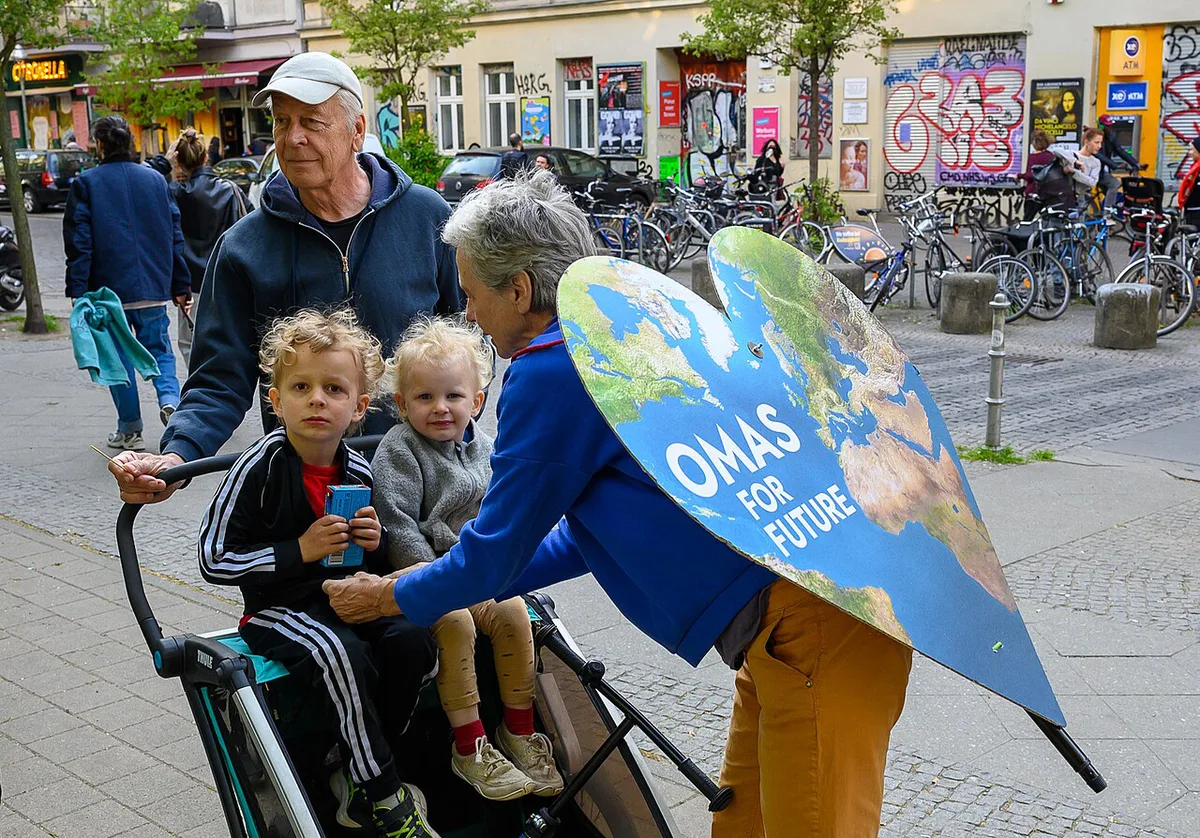
From Riots to a Street Party: The History of Myfest
Kreuzberg's 1 May reputation was built in the 1980s and 1990s, when clashes between demonstrators and police were a near-annual event around Kottbusser Tor. Netzwerk Myfest launched the festival in 2003 as a deliberate counter-program. Organizers designed it around peaceful music and food instead of street battles, spread across the same blocks that used to see confrontations. Myfest grew out of an existing Mariannenplatz gathering that had run informally since 1996, before Netzwerk Myfest formalized the citywide program in 2003. That earlier gathering explains why Mariannenplatz, rather than Kottbusser Tor itself, became the festival's anchor point. 'Myfest' is also wordplay: the English phrase 'my fest' sounds close to the German 'Maifest,' or May festival, when spoken aloud. Police, local politicians, and residents have all credited Myfest with calming 1 May in Kreuzberg since 2003, according to Berlin's own city site. Germany marks 1 May nationally as German Labor Day, or Tag der Arbeit, a public holiday when most shops close. At its peak in the 2010s, organizers ran up to eight stages between Oranienstraße, Heinrichplatz, and Mariannenplatz. Programming mixed political speeches, world music acts, and neighborhood food stalls into one lineup. Attendance was historically cited around 45,000 people a year, making it one of Kreuzberg's largest single-day gatherings before recent editions scaled back or paused.
Where Myfest Happens: Mariannenplatz, Oranienstraße, and the Wrangelkiez
Mariannenplatz, postal code 10997, has been the traditional heart of Myfest, typically hosting a main stage and family-friendly activities on the square itself. Oranienstraße and Heinrichplatz form the densest stretch for food stalls and electronic-music sound systems near Kottbusser Tor. Berlin's own event listing also names Oranienplatz as part of the footprint, alongside Heinrichplatz and Mariannenplatz. Görlitzer Park serves as the overflow zone, known locally as MaiGörli, where picnics and informal groups spread across the lawns when the streets fill up. MaiGörli tends to draw a more informal, picnic-first crowd compared with the staged program at Mariannenplatz. Myfest's footprint also touches Kreuzberg's Wrangelkiez, including Wrangelstraße and Lausitzer Platz. Smaller neighborhood gatherings have continued there even in years when the main Myfest program paused. Expect the exact stage lineup and street closures to be republished closer to the date, since specifics have shifted from year to year. Each zone has its own character, so pick one or two rather than trying to cover all of them in a single afternoon.
- Mariannenplatz (10997 Berlin) – traditional main stage and family-friendly zone
- Oranienstraße and Heinrichplatz – densest food stalls and electronic-music sound systems near Kottbusser Tor
- Görlitzer Park (MaiGörli) – overflow picnics and informal gatherings
- Wrangelkiez, Wrangelstraße, and Lausitzer Platz – smaller neighborhood-run pockets
Getting There: Transit and Walking Routes
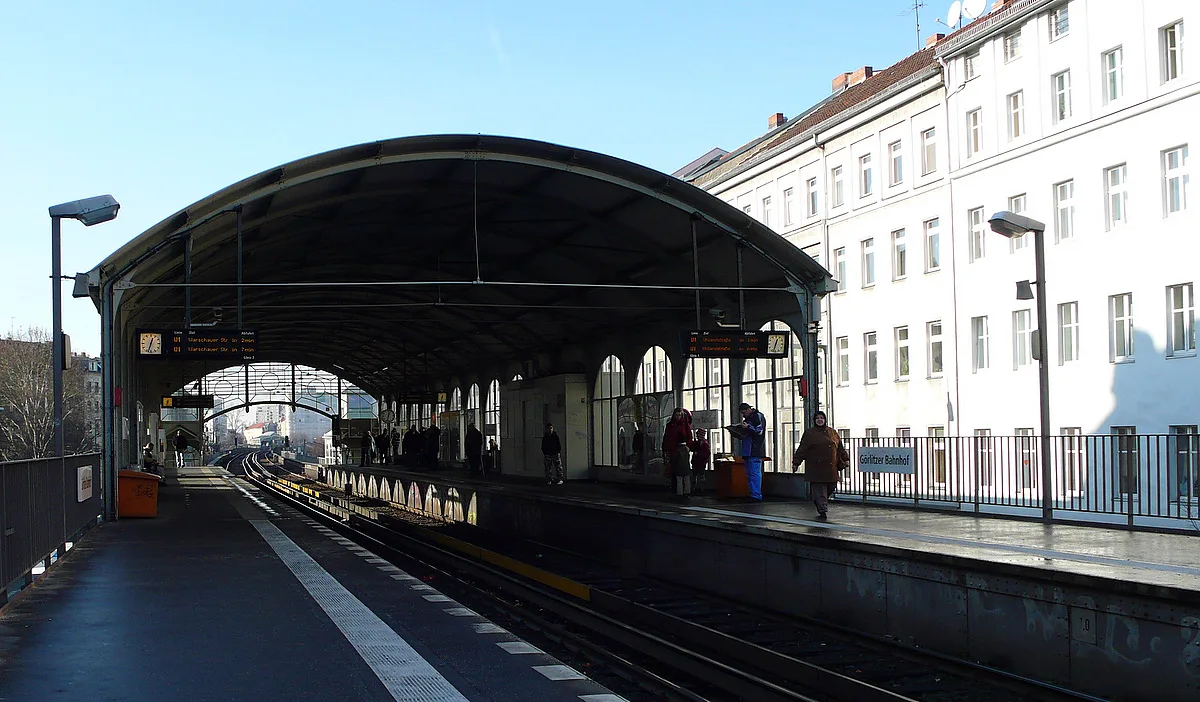
Kottbusser Tor sits on the U1 and U8 lines at the center of the festival footprint. In past years, it has gone exit-only or closed entirely once afternoon crowds peak. Görlitzer Bahnhof station has seen similar restrictions during the busiest hours. Several bus routes serve the area more reliably than the U-Bahn during peak hours. Adalbertstraße and Waldemarstraße also carry bus service through the festival area, according to Berlin's own stop listings. The N60 and N65 night-bus lines matter if plans stretch past the U-Bahn's peak-hour disruptions and into the evening. Cyclists should expect similar restrictions to drivers on the closest blocks during the festival. Because platform crowding is the real risk, not the walk, approach on foot from Moritzplatz or Schlesisches Tor instead of transferring through Kottbusser Tor. If the U-Bahn looks backed up on arrival, backtrack one stop and walk in rather than waiting on a crowded platform. Always check same-day VBB service alerts before heading out, since Berlin's transit operator adjusts routes annually for 1 May. For general arrival logistics into the city, see this Berlin travel guide.
- Bus 140 – Wrangelstr./Mariannenplatz, Mariannenplatz, and Wrangelstr. stops
- Bus 147 – Adalbertstr. and Bethaniendamm stops
- Bus M29 – Rio-Reiser-Platz and Adalbertstr./Oranienstr. stops
- Buses 165, 265, N60, N65 – additional service on the Bethaniendamm/Wrangelstr. corridor
Costs, Food, and the Pfand System
Entry to Myfest is free, with no ticket or gate at the streets involved. Food stalls sell classic Berlin street fare, including Döner, halloumi wraps, and Bratwurst, priced by each vendor independently rather than through a festival-wide menu. Budget roughly what you would at any other Kreuzberg street market. Specific menus and prices vary from stall to stall. None of the competitor listings publish a fixed stall price, so treat any number quoted elsewhere as an estimate rather than an official rate. Bring small cash, since outdoor street stalls often skip card readers. Drinks typically come with a Pfand, a refundable deposit added to the price of a cup or bottle. Vendors apply the deposit system across most of the festival's food and drink stalls, not just at one or two locations. Return the cup or bottle to the same stand, or one working the same brand, to get the deposit back before you leave. A canned or bottled Wegbier, beer bought to drink while walking, is common street-festival etiquette in Berlin, including here.
Should You Go? A Quick Decision Matrix
Myfest and the surrounding Kiez parties suit some travelers far more than others. Match your plans against this quick matrix before deciding whether to spend the afternoon of 1 May in Kreuzberg. None of these trade-offs are dealbreakers alone, but stacking two or three should push a noise-sensitive traveler toward a quieter alternative instead.
| Go if you like... | Skip if... |
|---|---|
| Bass-heavy sound systems and crowd energy | You dislike loud, dense noise for hours |
| Casual street food and a Wegbier in hand | You are managing young children in a stroller |
| Wandering between Mariannenplatz, Oranienstraße, and Görlitzer Park | You have claustrophobia in shoulder-to-shoulder crowds |
| Watching a neighborhood's politics play out in public | You want a quiet, low-key afternoon in Kreuzberg |
Safety, Etiquette, and Mistakes to Avoid
Arrive in the early afternoon, when stages and stalls are running but crowds have not yet peaked. The atmosphere often shifts after dusk, once demonstrations wind down and crowds grow denser and less predictable. Treat Kottbusser Tor as a bottleneck to route around, not through, especially once buses and trains start restricting service. Carry water, since the festival runs on paved streets with little shade for hours at a time. Public toilets get scarce at dense street festivals, so use cafés or restaurants along Oranienstraße before the crowds peak. Keep valuables in a front pocket or zipped bag, since dense crowds are a common setting for petty theft at any large outdoor event. If you need to exit quickly, head toward a side street rather than pushing against the main crowd flow. 1 May in Kreuzberg carries political weight beyond the street party. It also doubles as International Workers' Day, marked by organized demonstrations alongside Myfest's peaceful-celebration message. Loud political provocations or disrespect toward demonstrators are poor form, and in a dense crowd, they can escalate quickly.
Kottbusser Tor on the U1 and U8 lines closes at peak times; arriving early afternoon avoids both transit disruption and peak crowd density.
May Day Alternatives Beyond Myfest
Walpurgis Night falls on 30 April, the night before 1 May. Mauerpark hosts bonfires, a fire show, and music that evening, separate from Myfest itself. If crowds are the main concern, Grunewald's forest trails offer a quieter way to spend the day without leaving the city. Berlin also hosts an organized Revolutionary May Day march on 1 May, following its own route separate from Myfest's footprint. The march draws its own separate crowd and heavier police presence, distinct from Myfest's atmosphere. Both alternatives sit well outside Kreuzberg's festival footprint, so pick one only if avoiding crowds matters more than the neighborhood's street-party energy. None of these alternatives require advance tickets, matching Myfest's own free, walk-up format. For a fuller spring events lineup, browse the Berlin festival calendar before locking in dates.
For the wider city context, see our complete Berlin tourism attractions guide.
Frequently Asked Questions
Is Myfest happening in Kreuzberg this year?
Myfest has not run as a fully organized festival since 2019, and no fixed date has been confirmed since, according to Berlin's official tourism site. Expect Kreuzberg to still fill with smaller, informal Kiez parties around Kottbusser Tor and the Wrangelkiez even if the citywide program stays paused. Check the Friedrichshain-Kreuzberg district office for the latest permit and closure notices before 1 May. If the event returns at full scale, expect the announcement to appear on Berlin's official event listings first.
What is the difference between Myfest and the May Day demonstration?
Myfest began in 2003 as a peaceful street-festival alternative to Kreuzberg's May Day riots. A separate Revolutionary May Day march is an organized political demonstration on the same date, following its own route through the city. Myfest itself mixes political messaging with music, food stalls, and family activities, rather than functioning as a protest march.
How do you get to Myfest by public transit?
Kottbusser Tor sits on the U1 and U8 lines, but it has gone exit-only or closed entirely at peak times in past years. Bus lines including 140, 147, and M29 stop closer to Mariannenplatz and tend to run more reliably. Walking in from Moritzplatz or Schlesisches Tor avoids the densest crowding around the Kottbusser Tor interchange. Cyclists should also expect restricted access on the closest blocks once the festival is underway.
Is Myfest safe for families with young children?
Mariannenplatz has historically hosted family-friendly activities alongside the main stage, making early afternoon the best window for families. Crowds grow denser and less predictable after dusk, so plan to head out before that shift. Strollers face real friction in the shoulder-to-shoulder crowds along Oranienstraße, so a carrier works better than a stroller in the busiest stretches.
How much does Myfest cost to attend?
Entry to Myfest is free, with no ticket or gate anywhere along the festival streets. Food and drink stalls set their own prices, in roughly the same range as other Kreuzberg street markets. Drinks typically carry a refundable Pfand deposit, returned when you bring the cup or bottle back to a stand.
What happens if Myfest is cancelled again?
If the main program stays paused, plan around Walpurgis Night in Mauerpark on 30 April instead, or the informal Kiez parties that have continued in Kreuzberg's streets. Grunewald offers a quieter, crowd-free option for the same afternoon. None of these options charge for entry either. For other spring dates, check the Berlin festival calendar.
When is Myfest usually held?
Myfest traditionally runs on 1 May, Germany's public holiday marking International Workers' Day. In years when the citywide festival has been confirmed, it has run as a single-day, daytime-into-evening event rather than a multi-day program.