
Where to Stay for Rheinkirmes: The Best Neighborhoods for Your Visit
Choosing the right place to stay for Rheinkirmes can significantly affect your festival experience. With over a million visitors each year, this Düsseldorf fair fills hotels quickly, so where you rest your head matters. The venue sits in Oberkassel on the east bank of the Rhine, while the rest of the city buzzes with nightlife and culture. Balancing proximity with your travel style requires careful thought. For a complete overview, consult our main guide to Rheinkirmes Düsseldorf to understand the event's scale and atmosphere.
This guide compares neighborhoods based on their access to the fairgrounds, public transport links, and the overall vibe. We'll also share practical tips on booking timing and common mistakes to avoid. Check official event resources for the most current transportation details, as special services can vary each year.
Quick Answer: Best Areas to Stay for Rheinkirmes
For the closest access, base yourself in Oberkassel itself, just steps from the rhythm of the fair. If you want to enjoy Düsseldorf's famous pubs and restaurants, choose the Altstadt but plan for a tram ride to the event. Travelers who prioritize fast train connections and easy arrival might select accommodations near the Hauptbahnhof, the central station.
Your ideal spot depends on your priorities: closeness to the fair or immersion in the city's nightlife. Each area offers unique trade-offs in cost, commute, and surroundings. We'll examine each option in detail so you can make the best choice for your trip.
Staying in Oberkassel (Shore Area)
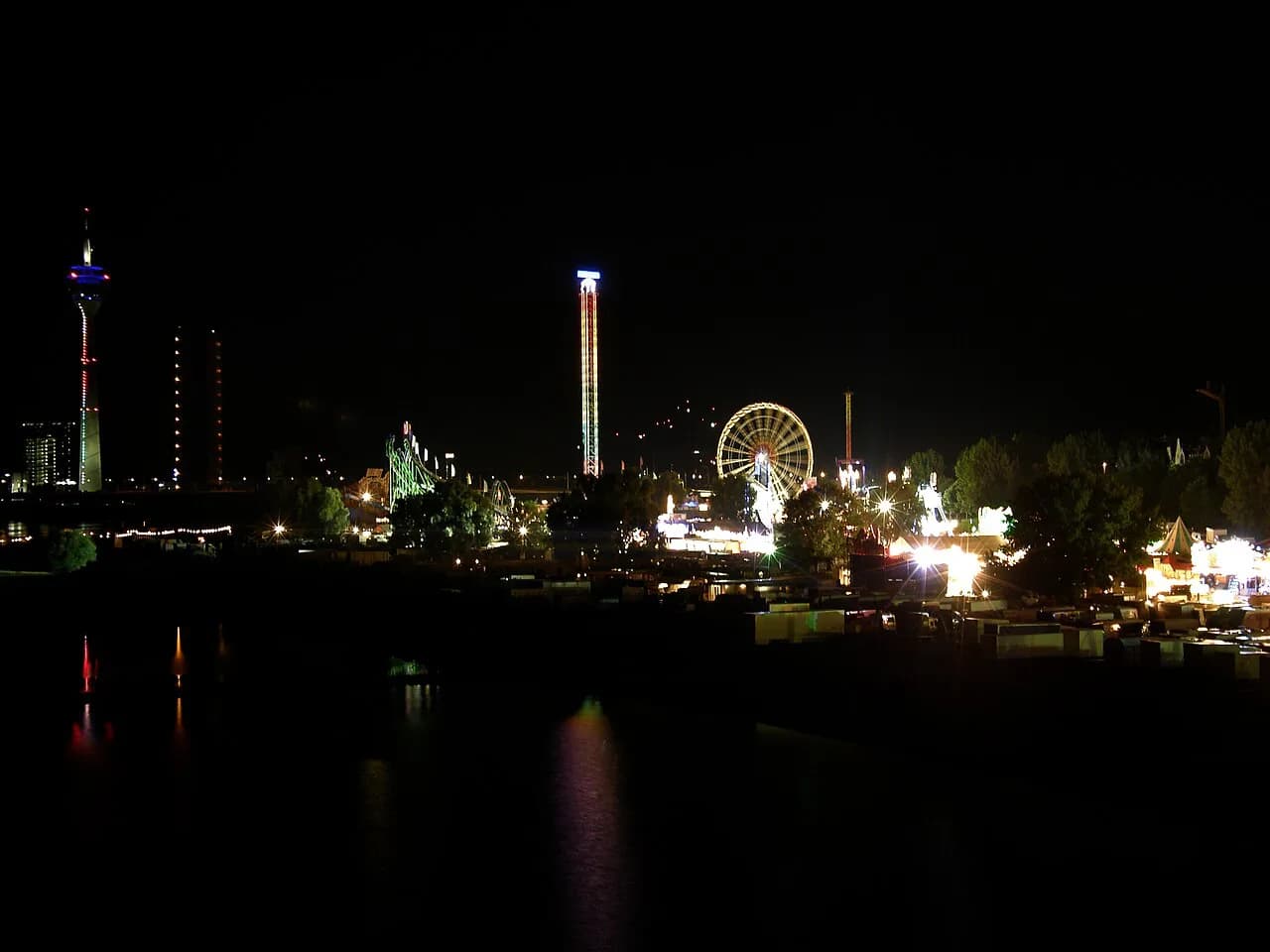
The Rheinkirmes unfolds along the Rhine River in the heart of Oberkassel. Staying here means you'll be within walking distance of the fairgrounds, offering easy access to the rides and food stalls each evening. However, this area also books out early and often appeals to visitors who want to step directly into the action. To see how this area fits into your travel logistics, our guide on how to get to rheinkirmes explains the tram connections and walking routes.
This residential quarter bustles during the festival, and a hotel might not guarantee a quiet night. You'll find local cafés and riverfront promenades to explore during the day. Verify that your accommodation sits close to the tram stops for convenient access to the rest of Düsseldorf.
Compared to the Altstadt, Oberkassel generally offers a calmer base after the fair closes. But be aware that some hotels may require minimum stays during peak weekends. Confirm the cancellation policy to stay flexible.
Staying in the Altstadt (Old Town) for Nightlife
Düsseldorf's Altstadt is famous for its dense concentration of bars and breweries, earning the nickname 'the longest bar in the world.' Staying here lets you experience the city's nightlife without a commute, but you'll need to ride a tram for roughly 20 minutes to reach the fairgrounds. The U-Bahn lines connecting the Altstadt to Oberkassel run frequently during the event.
If you arrive late or attend late-night events, the Altstadt's energy can be a bonus. However, expect street noise and premium accommodation prices in this popular area. For those who prefer a quieter getaway, an apartment in a side street might offer a balance.
Begin your evening at the fair, then hop back to the Altstadt for a late dinner or a local Altbier. That's often the routine for first-time visitors. To understand the festivities better, consult our guide that includes the full Rheinkirmes experience—you might also appreciate tips on what to wear to rheinkirmes.
Near Düsseldorf Hauptbahnhof (Central Station)
The Hauptbahnhof area offers convenience for those arriving by train and seeking easy access to the whole city. From here, you can take the U76 or U75 tram line directly to the fairgrounds in about 15 minutes. Additionally, you'll find an array of mid-range hotels and international restaurants around the station.
While not as charming as the Altstadt, the station district is practical and well-connected. With trams running to Oberkassel at frequent intervals, you can avoid the hassle of transferring. Yet, the station area can be busy at night, so choose accommodations with good reviews.
If you plan side trips to other German cities, staying near the Hauptbahnhof makes your onward journey simple. The trade-off is the absence of a local community feel. Still, for many, the convenience outweighs aesthetics.
Other Districts: MedienHafen, Flingern, Pempelfort
MedienHafen, Düsseldorf's modern harbor district, offers stylish hotels and a unique architectural landscape. While it's a bit farther from the fair, a short tram ride connects you to both the grounds and the city center. This area suits those who appreciate contemporary design and waterfront dining.
Flingern is a vibrant neighborhood with hip cafés, independent boutiques, and excellent transport links. It's a favorite for budget-conscious travelers and those who want an authentic local experience. From here, you can reach the fairgrounds in about 25 minutes via tram.
Pempelfort offers a peaceful residential setting with easy access by tram to the fair and the Altstadt. You'll find a mix of guesthouses and family-run hotels, making it ideal for those traveling with kids or looking for a laid-back stay. If you're bringing children, our dedicated guide to rheinkirmes with kids offers practical advice for a family-friendly visit. Each district provides a distinct flavor of Düsseldorf beyond the tourist hotspots.
Public Transport to the Rheinkirmes Venue
Düsseldorf's tram system is efficient and extensive during the Rheinkirmes. The fairgrounds at Oberkassel are served by multiple lines, including the U74, U75, U76, and U77, which converge at the Luegplatz station. During the event, extra services run to handle the surge of visitors, so you'll rarely wait long. For the most accurate and up-to-date schedules, always check the Rheinbahn's official website before you travel.
Walking from the Altstadt to the fair is scenic but takes over 30 minutes across the bridge; the tram is faster if you're in a hurry. Most hotel front desks can guide you on the best route, and ticket machines accept cash and cards. Also, explore options for multi-day passes to save money if you plan to ride frequently.
Booking Tips: When to Book and How to Avoid Sell-Outs
Because Rheinkirmes attracts over a million visitors, hotel rooms fill up months in advance. Ideally, plan your accommodation as soon as you have your festival dates confirmed, often before March. Flexible booking options allow you to adjust if your plans change. You can also check hotel availability and locations on platforms like Agoda, which lists options specifically near the Rheinkirmes.
Set price alerts on booking platforms and consider refundable rates to keep your options open. If hotels in central Düsseldorf are already booked, look at neighborhoods slightly farther out with direct tram connections. Similarly, neighboring cities like Neuss or Ratingen might offer more availability and affordability.
Whatever you do, don't leave your search to the last minute, as spontaneous trips may leave you with limited choices. Make reservations directly with the hotel when possible to avoid third-party cancellation issues.
Alternative: Staying in Neighboring Cities
If Düsseldorf itself is full or overpriced, consider staying in nearby cities like Cologne, Bonn, or even Duisburg. They offer frequent train connections to Düsseldorf Hauptbahnhof, from which you can easily reach the fair. A day trip on the Rhine can be a pleasant addition to your festival itinerary. Read our guide to Düsseldorf Festival Plans for ideas on combining your visit with other regional events.
Remember to factor in travel time and last-train times if you plan to stay out late. But with reserved seats on the train, you can enjoy the rides and return to a calm hotel away from the festival crowds. Use the search tools mentioned in our guide to compare options across the region.
What Not to Do: Common Mistakes
One common mistake is underestimating the crowd size and assuming you can find a room on the day. Another is choosing a hotel without considering its proximity to public transport, only to realize the walk is too far. Always verify the exact tram route from your hotel to the fair before booking.
Avoid booking non-refundable deals if there's any chance your plans might shift. Also, don't forget to check if your hotel is on the wrong side of the river, which could add a scenic but time-consuming commute. Let this guide help you avoid these pitfalls.
FAQ
We've compiled answers to some of the most frequently asked questions about where to stay for Rheinkirmes.
Plan Your Visit
Enjoy your trip to Rheinkirmes! Remember to check tram schedules and plan your arrival early for the fireworks. For a seamless experience, secure your accommodation well in advance, and don't forget to explore all the practical details in our Rheinkirmes Düsseldorf: A First-Time Visitor Guide on the main pillar page.
Frequently Asked Questions
What is the best place to stay for Rheinkirmes?
The best area depends on your priorities. For ultimate convenience, stay in Oberkassel right by the fairgrounds. For nightlife, choose the Altstadt. If you prefer access to train connections, the area around Hauptbahnhof is ideal.
How far is Rheinkirmes from the Altstadt?
The Rheinkirmes grounds in Oberkassel are located about 3 kilometers across the Rhine from the Altstadt. A tram ride takes roughly 15 to 20 minutes, or you can walk across the Rheinkniebrücke in about 30 minutes.
Is Oberkassel the best area to stay?
Oberkassel is the closest neighborhood to the venue, ideal for those who want to be near the action. However, it can be busy and fill up quickly. For a quieter stay with easy tram access, consider Flingern or Pempelfort.
What public transport goes to Rheinkirmes?
The Düsseldorf tram lines U74, U75, U76, and U77 all stop at Luegplatz, the main station for the fairgrounds. During the event, additional services may be added. Check the Rheinbahn website for up-to-date schedules.
Should I stay close to the fair or near the central station?
Staying near the central station offers better access to long-distance trains and other parts of the city. Staying close to the fair reduces commute time but may limit your options. If you plan to explore the region, central station might be more convenient.