
Cologne Christmas Markets: A Complete Planning Guide
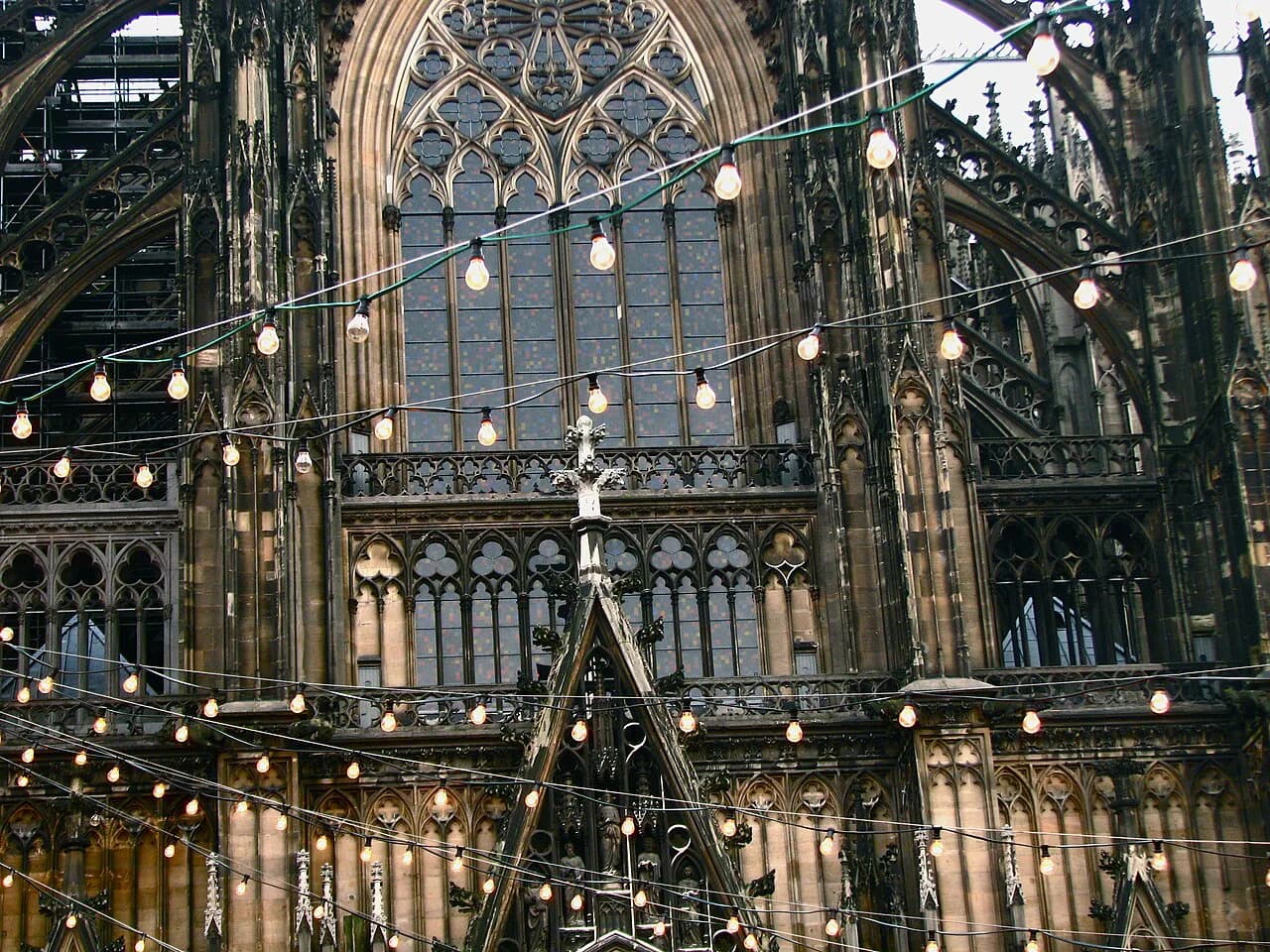
Last updated July 2026. Cologne Christmas markets fill seven squares across the city center, from Gothic cathedral views at Roncalliplatz to a legend of house gnomes in the Old Town. This guide covers the Advent-linked opening rule, the Wolters Bimmelbahn mini-train that links the markets, and the mug deposit system every stall uses.
Cologne Christmas Markets: What Sets Them Apart
Cologne concentrates seven separate Christmas markets inside a walkable city center, spread across Roncalliplatz, the Old Town, Neumarkt, Rudolfplatz, the Rhine harbor, Stadtgarten park, and the Schaafenstraße corridor. Munich and Nuremberg each center on one dominant square with a traditional, wood-carved feel. Cologne instead gives each square its own theme, from gnome folklore to a nautical harbor setting. According to Cologne Tourism, the city's own market history started relatively late, with a first Christmas market opening in 1820, decades after several other German cities had established theirs. That later start hasn't stopped the season from growing into one of the country's larger market networks, with organizers estimating more than four million visitors at the Roncalliplatz market alone each season. That range means Cologne suits a two-night city break as easily as a single afternoon stopover between other market towns. For a wider comparison of market towns across the country, the Germany Christmas markets guide lines up Cologne against other regional options.
- First-timers: start at the Cathedral Market for the Roncalliplatz backdrop, then walk into the Old Town.
- Families: Nikolausdorf at Rudolfplatz, built around a St. Nicholas theme for children.
- Food-focused visits: the Harbour Market's grilled salmon stalls or the Stadtgarten market's organic vendors.
- Craft shopping: Market of Angels at Neumarkt for handmade goods under lit paper stars.
When Cologne's Christmas Markets Open
Cologne's citywide market season runs on a fixed scheduling rule rather than one flat calendar date: it opens the Monday before the first Advent Sunday and closes on December 23. Applying that rule to 2026 puts the opening on Monday, November 23, and the citywide close on December 23 — treat that as a date derived from the rule, not an organizer confirmation. Individual markets can shift by roughly a week either side of that window, and a few, including Heinzels Wintermärchen, have traditionally stayed open past December 23 into the new year. Within that overall season, individual markets set their own daily opening windows, typically opening around late morning and running into the evening, with later closing times on Fridays and Saturdays. Confirm each market's exact dates through Cologne Tourism before locking in hotel or train bookings.
The Seven Cologne Christmas Markets, Side by Side
Each of Cologne's seven markets has a distinct footprint and focus, summarized in the table below. Hours can shift slightly year to year, so confirm them directly with each market's organizer before you plan a tight schedule. Stadtgarten's stall count sits lower than the rest, at roughly 60 vendors, which keeps the pace calmer than the Cathedral Market's more than 150. The Harbour Market runs smaller too, at more than 70 stalls, with its Ferris wheel as the visual anchor near the Chocolate Museum.
| Market | Location | Best For | Signature Detail |
|---|---|---|---|
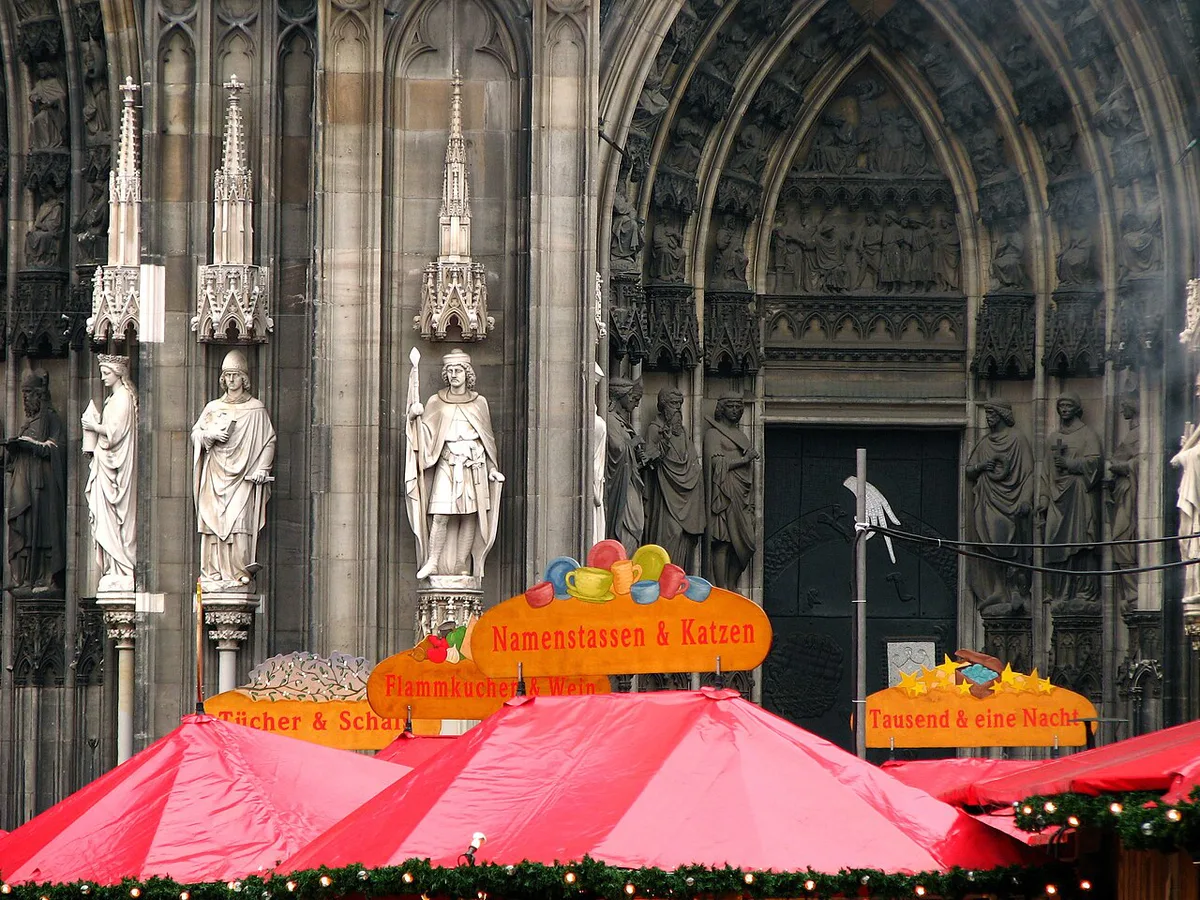
| Cathedral Market (Weihnachtsmarkt am Dom) | Roncalliplatz | First-time visitors | More than 150 stalls beneath a large Christmas tree, with the cathedral towers as backdrop |
| Heinzels Wintermärchen | Alter Markt & Heumarkt (Old Town) | Groups wanting the largest market | Ice rink, curling, and twelve collectible gnome-themed mugs tied to the Heinzelmännchen legend |
| Market of Angels (Markt der Engel) | Neumarkt | Couples and craft shoppers | White wooden huts lit by paper stars, plus handmade goods |
| Nikolausdorf (Nicholas Village) | Rudolfplatz | Families | Set against the medieval Hahnentorburg gate, with a St. Nicholas meet-and-greet |
| Harbour Market (Hafen-Weihnachtsmarkt) | Along the Rhine near the Chocolate Museum | Food-focused visits | Mulled wine served from a ship's hull and grilled salmon stalls |
| Stadtgarten Market | Stadtgarten park | A quieter, local pace | Vendors rotate weekly, with organic food and independent designers |
| Heavenue | Between Schaafenstraße and Rudolfplatz | Nightlife and LGBTQ+ visitors | High-energy stage programs |
The Heinzelmännchen Legend Behind the Old Town Market
The Old Town market takes its name from the Heinzelmännchen, a Cologne folk legend about house gnomes who did residents' chores overnight until a curious housewife spied on them and drove them off. Heinzels Wintermärchen leans into that story with gnome figures worked into the stalls and twelve different gnome-themed mug designs to track down across the market's two squares, Alter Markt and Heumarkt.
Getting Between Markets: Walking or the Bimmelbahn
Most of Cologne's markets sit close enough to walk between in under 20 minutes, and the Cathedral, Old Town, and Neumarkt markets form a compact cluster near the main train station. Wolters Bimmelbahnen runs the Christmas Market Express, a mini-train that loops between the major markets instead of running one-way. That loop format lets you hop off at a market, browse, and catch the next train onward rather than backtracking on foot. Fares and the current route aren't standardized the way opening hours are, so confirm both directly with Wolters Bimmelbahnen before treating it as your only transport option. Walking costs nothing and lets you cut through the Old Town's side streets. The train trades a small per-ride cost for less time spent on cobblestones. Within the city, the KVB network of trams and light rail reaches every market district, useful if the weather turns or your feet need a break. Cologne Bonn Airport (CGN) connects to the main station in about 15 minutes by regional train, putting you within walking distance of the Cathedral Market on arrival.
Food, Drink, and How the Mug Deposit Works
Every stall menu runs in euros, with prices posted at the counter rather than negotiated. Glühwein anchors the drink list at every market, and it typically costs more at the higher-end Market of Angels stalls than at the local Stadtgarten market. Kölsch, Cologne's own pale beer, shows up at several stalls as a cold-weather alternative to mulled wine. Some vendors also pour Feuerzangenbowle, a rum-soaked sugar loaf set alight over spiced wine, as a specialty drink. Order a hot drink and the stall adds a small deposit to the price for the mug it's served in. Return the mug to the same stall before you leave the market, and you get the deposit back in cash. Most visitors keep the mug instead and skip the refund line, since it doubles as a market-specific souvenir. Heinzels Wintermärchen raises the stakes with twelve different gnome-themed mug designs, so return visits to different stalls turn into a small collecting game.
- Reibekuchen: crispy potato pancakes, usually served with apple sauce.
- Handbrot: a stuffed flatbread pocket.
- Spekulatius: spiced shortbread cookies sold by weight.
- Dampfnudel: a soft steamed dumpling served with vanilla sauce.
- Käsespätzle: cheesy egg noodles, a filling option on cold evenings.
- Kinderpunsch: hot fruit punch, sold alcohol-free for children and spiked for adults.
Planning Your Days: A One-Day Loop, a Three-Day Stay, and Day Trips
A single day covers Cologne's three most central markets comfortably. Start at the Cathedral Market on Roncalliplatz, walk into the Old Town for Heinzels Wintermärchen, then finish at the Market of Angels on Neumarkt, since all three sit within a short walk of the main station. Three days leaves room to add Nikolausdorf, the Harbour Market, and Stadtgarten, plus non-market stops like the cathedral towers and the Chocolate Museum by the harbor. Bonn and Brühl both work as short day trips by regional train if you want time away from the markets. Check Deutsche Bahn's timetable for current journey times before committing a day to either.
- Day 1: Cathedral Market (Roncalliplatz), Heinzels Wintermärchen (Old Town), Market of Angels (Neumarkt).
- Day 2: Nikolausdorf (Rudolfplatz), Harbour Market, and the Chocolate Museum.
- Day 3: Stadtgarten Market, Heavenue, and a day trip to Bonn or Brühl.
Crowds, Cash, and What to Wear
Weekend afternoons and evenings draw the largest crowds, since Saturdays fill with local shoppers on top of visiting tourists. Saturdays skew toward locals doing their own shopping, while Tuesday mornings tend to see more out-of-town visitors and shorter lines. Weekday mornings, shortly after a market opens, offer the easiest photos at the Cathedral Market's tree. Most stalls run on cash or prefer it, so carry euros rather than counting on a card reader at every counter. Cologne's winter weather runs damp rather than dry-cold, so waterproof, low-heeled shoes matter more than a heavy coat on the cobblestones around Alter Markt and Heumarkt. Layer for the humidity, and check the Germany winter travel guide for broader cold-weather packing advice before you go.
More than four million visitors at the Roncalliplatz market alone arrive each season to a market with just over 150 stalls, compared to roughly 60 vendors at Stadtgarten park. Tuesday mornings bring fewer crowds than weekend afternoons.
Where to Stay in Cologne for the Markets
Three areas cover most budgets and priorities for a market-focused stay. All three put you within the Bimmelbahn's loop or a short walk of the main station, so no option adds serious travel time to your market days.
- Altstadt (Old Town): closest to Heinzels Wintermärchen and the Cathedral Market, both within a short walk.
- Belgian Quarter: a quieter base with its own restaurant scene, a short tram ride from Neumarkt.
- Deutz: across the Rhine from the cathedral, trading a few minutes' commute for a view of the towers lit up at night.
For trip-planning details, see Cologne Christmas Markets (official) and Official regional tourism.
For the wider planning view, compare dates and recurrence rules in Germany’s festival calendar.
Explore more Cologne guides
Frequently Asked Questions
When do the Cologne Christmas markets open in 2026?
The season runs on a fixed rule: it opens the Monday before the first Advent Sunday and closes December 23. Applying that rule to 2026 puts the opening on Monday, November 23, as a derived date rather than an organizer confirmation. Individual markets can open a few days earlier or later, so confirm exact dates through Cologne Tourism closer to the season.
Are the Cologne Christmas markets free to enter?
Yes. Entry to every one of the seven markets is free, and you only pay for food, drinks, rides, and souvenirs at individual stalls.
How do you get the mug deposit back at a Cologne Christmas market?
Return the mug to the same stall where you bought the drink before you leave the market, and the vendor refunds the deposit in cash. Keeping the mug instead is common, since it works as a souvenir tied to that specific market.
Should you walk between markets or use the Bimmelbahn?
Walking is free and workable for the cluster of central markets near the main station. The Bimmelbahn loop adds a small per-ride cost but saves time and cobblestone walking if you're covering all seven markets in one visit.
How many days do you need for the Cologne Christmas markets?
One day covers the Cathedral Market, Heinzels Wintermärchen, and the Market of Angels, all within walking distance of each other. Three days allows time for Nikolausdorf, the Harbour Market, Stadtgarten, Heavenue, and a day trip to Bonn or Brühl.
What's the difference between Heinzels Wintermärchen and the Cathedral Market?
The Cathedral Market sits on Roncalliplatz with the cathedral towers as a backdrop and draws the largest single crowd of any Cologne market. Heinzels Wintermärchen spans two squares in the Old Town, Alter Markt and Heumarkt, and centers on a gnome folklore theme with an ice rink and twelve collectible mugs.