

Rhine in Flames (Rhein in Flammen): The Visitor Guide to All Five Events
Last updated July 2026: Rhine in Flames is not one festival but five separate firework-and-ship-parade events staged in different towns along the Rhine between May and September. Bonn, Rüdesheim-Bingen, Koblenz, Oberwesel, and St. Goar/St. Goarshausen each hold their own edition on their own schedule, and booking the wrong town or date is the most common planning mistake. This guide breaks down all five locations, compares ship viewing against shore viewing, and flags the logistical details that catch first-time visitors off guard.
What Is Rhine in Flames? The Fast Answer
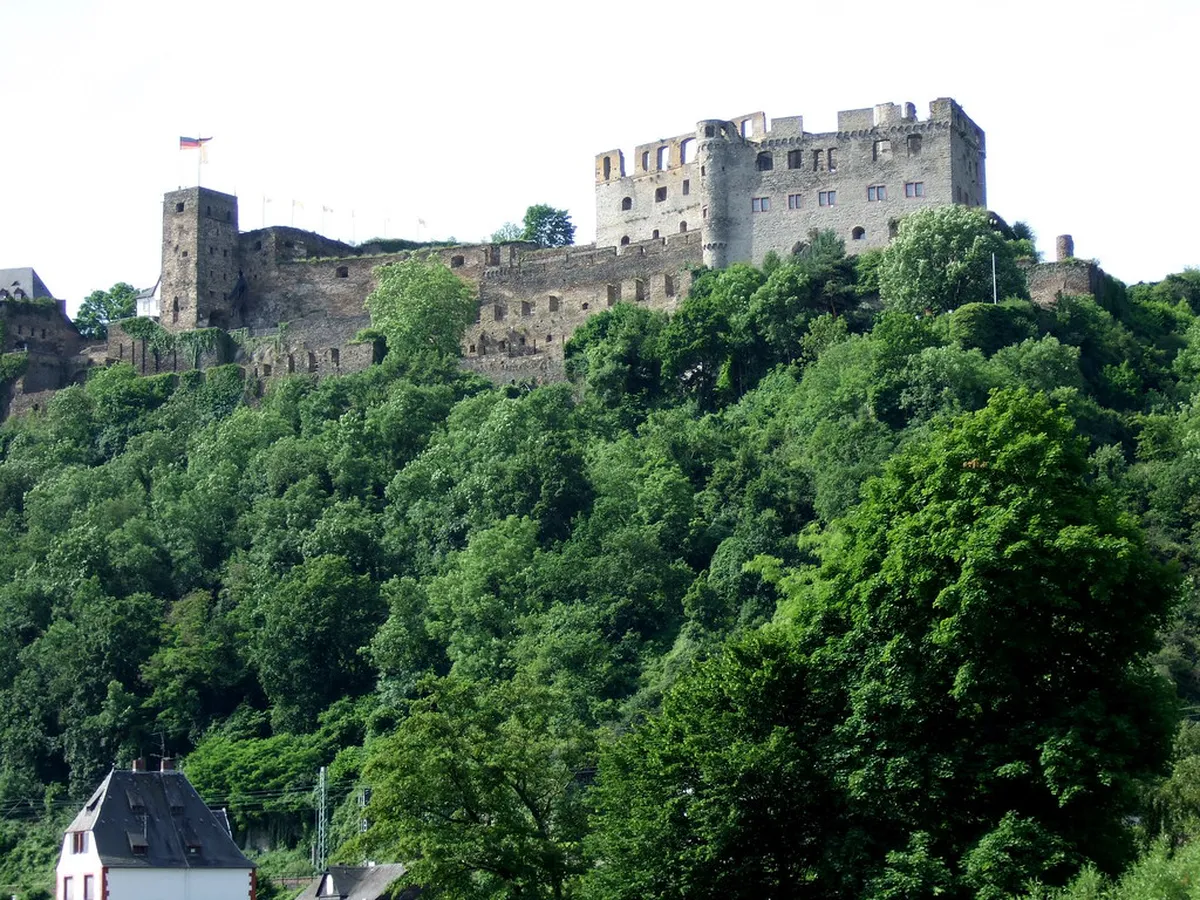
Rhein in Flammen, known in English as Rhine in Flames, is a series of five separate firework and ship-parade events held along the Rhine's UNESCO World Heritage Upper Middle Rhine Valley. Organizers stage each edition in a different town between May and September, so no single date or ticket covers the whole event. Every location shares the same visual formula: red Bengal lights along the riverbanks and castle walls, paired with fireworks synchronized to the passage of an illuminated ship convoy. That combination is why the event is often described as a display of 'burning castles.' The table below compares the five editions before the rest of this guide breaks each one down.
| Event | Month | Vibe |
|---|---|---|
| Bonn | May | Season opener between Linz and Bonn, set against the Rheinaue park landscape |
| Rüdesheim & Bingen | July | Seven firing points across a 17km stretch, convoy of roughly 30 ships |
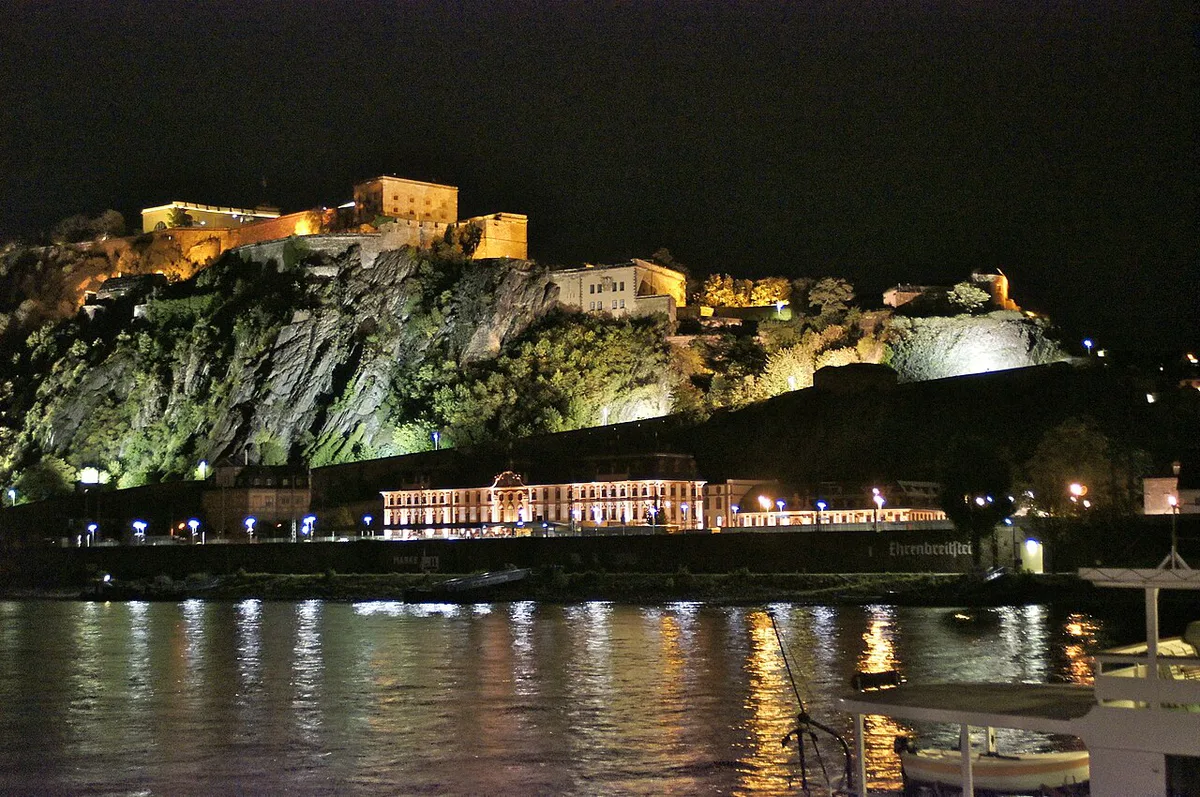
| Koblenz | August | The largest edition; 60+ ship convoy, finale over Ehrenbreitstein Fortress |
| Oberwesel | September | Wine-market atmosphere along the riverfront |
| St. Goar & St. Goarshausen | September | Convoy holds stationary between Burg Maus and Burg Rheinfels, near the Loreley |
Locations and Dates: How the Recurrence Rule Works
Each of the five editions follows a fixed recurrence rule instead of one date announced fresh every year. Bonn opens the season on the first Saturday in May, with fireworks staged between Linz and Bonn. Rüdesheim and Bingen follow on the first Saturday in July. Koblenz, the largest of the five, runs on the second Saturday in August between Spay and Koblenz. Oberwesel follows on the second Saturday in September, and St. Goar/St. Goarshausen close the season on the third Saturday in September. Applying that pattern to 2026 puts Bonn on 2 May, Rüdesheim-Bingen on 4 July, Koblenz on 8 August, Oberwesel on 12 September, and St. Goar on 19 September. Those dates are derived from the recurrence rule rather than a fresh organiser announcement, so confirm them against each town's official event page before booking travel or tickets. Treat any other 2026 date you see elsewhere the same way, as a projection from the pattern above unless the host town's own site confirms it directly.
- Bonn: fireworks over the Rheinaue park landscape between Linz and Bonn; opens the season in May.
- Rüdesheim & Bingen: seven firing points along a 17km stretch between Trechtingshausen and the two host towns; a convoy of roughly 30 illuminated ships; the current organized format has run since 1977.
- Koblenz: the largest of the five editions; a convoy of more than 60 ships sails from Spay to Koblenz; the finale lights up Ehrenbreitstein Fortress and the Deutsches Eck.
- Oberwesel: wine-market atmosphere along the riverfront.
- St. Goar & St. Goarshausen: sister-town finale where the convoy holds stationary between Burg Maus and Burg Rheinfels, near the Loreley.
Ship vs Shore: Choosing How You'll Watch
Every edition gives visitors two fundamentally different vantage points: aboard the illuminated ship convoy, or standing along the riverbank. Cost, flexibility, and how much of the display you see all hinge on that choice, and neither option suits every traveler. Ship tickets are commonly listed in the €100 to €200 range. Exact rates vary by town, operator, and package, so confirm current pricing on each host town's official ticket page before booking. Shore viewing along public riverbank paths costs nothing beyond travel and accommodation. Some reserved terraces and castle-view spots charge an entry fee, so check with the local tourist office if you want a guaranteed spot. Bingen and Rüdesheim sit on opposite banks of the Rhine, linked by the ferry covered below. Neither bank offers a uniformly better view, since sightlines depend on each town's own layout, so check the official viewing map for your host town instead of assuming.
- Ship: sails with the convoy, roughly 30 ships at Rüdesheim-Bingen and 60+ at Koblenz, passing every firing point along the route.
- Ship: boarding points are typically Bingen, Rüdesheim, Spay, or Koblenz depending on the edition, with departure in the late afternoon or early evening.
- Ship: meals and drinks are commonly included in the ticket.
- Ship: tickets often sell out months ahead of the event.
- Ship: the schedule is fixed, so passengers cannot disembark early or change plans mid-cruise.
- Shore: free or low-cost access along riverside paths, castle terraces, and town squares.
- Shore: flexibility to move between wine stalls, food vendors, and different viewing points.
- Shore: crowds run into the hundreds of thousands along the busiest stretches, according to Rhineland-Palatinate's tourism board.
- Shore: a fixed position typically shows only one or two firing points; seeing the full route requires being on the water.
- Shore: arriving early matters most in town centers and along the main promenade, where space fills hours before the first fireworks.
Getting There and Staying Over: The Bridge Problem
This stretch of the Rhine has very few road crossings, which shapes how you should plan a visit. Staying on the wrong bank from your chosen event can add hours to the trip on event night, when roads and ferry queues are busiest. Peak Rhine in Flames season overlaps with Germany's wider summer travel window, so hotel rates and availability tighten well beyond the host towns themselves. For broader seasonal planning and typical summer weather across the country, see the guide to summer travel in Germany.

- Nearest Rhine bridges to the Bingen/Rüdesheim area are in Wiesbaden, about 30km away, and Koblenz, about 70km away.
- A ferry connects Bingen and Rüdesheim and keeps running until about 1:00 a.m. on event night, though expect long queues.
- Driving is discouraged around event towns; regional trains or the VRM Guest Ticket, offered through participating accommodation hosts, are the recommended alternative.
- Book accommodation in Koblenz and Rüdesheim 6 to 12 months ahead of the event, since both towns fill early.
- Regional day tickets covering trains and some ferries are worth pricing against individual fares, especially for a group.
Spotlight: Rüdesheim and Bingen's 17km Route
Rüdesheim-Bingen is the most detailed of the five editions to plan around, since its route runs the length of the Rhine Gorge between Trechtingshausen and the two host towns. Ships depart from Bingen or Rüdesheim in the late afternoon or early evening and pass numerous castles on the way in. From there, the convoy travels toward the Loreley cliff before turning back near Trechtingshausen, passing the seven firing points on the return leg. A final large-scale fireworks display closes the night from a floating platform between Rüdesheim and Bingen, and the ships moor again around midnight.
The route stretches 17km with firing points distributed along its length, whereas a shore view typically captures only one or two points—seeing the full spectacle requires the ship convoy.
- Route: 17km, about 10 miles, between Trechtingshausen and Bingen/Rüdesheim.
- Firing points: seven along the route.
- Convoy size: roughly 30 illuminated ships.
- Running history: the current organized format dates to 1977.
- Onshore programs include wine-festival activity and general riverfront entertainment along both towns on event day.
History and Heritage: From an 18th-Century Celebration to a Regional Tradition
Local historical accounts trace the tradition to 1756, when communities along the Rhine marked the election of Johann-Philipp von Walderdorff as Electoral Prince with fireworks. That custom grew informally over the following two centuries into today's five-town festival circuit, each with its own local organizing committee. Rüdesheim-Bingen has run in its current organized form since 1977, and the Upper Middle Rhine Valley the events pass through earned UNESCO World Heritage status in 2002. That designation now frames how each town markets its edition, from castle floodlighting to the wine-country backdrop.
Mistakes to Avoid: Language, Viewing Angles, and Transport
A handful of planning mistakes show up repeatedly among first-time visitors to Rhine in Flames. If it is one stop on a longer high-season cultural itinerary, weigh its dates against other major draws on the calendar. See the Bayreuth Festival guide for another major summer cultural event worth checking against these dates.
- Language: many official city tours and onboard announcements run in German only; confirm the language before booking a guided add-on.
- Viewing angle: a shore position typically covers one or two firing points, not the full route. Only the ship convoy passes every location.
- Transport: skip driving into event towns. Use regional trains or the VRM Guest Ticket through participating hosts instead.
- Accessibility: riverfront paths in towns like Rüdesheim include cobbled streets and steep vineyard-hillside paths, which limit access for visitors with mobility needs.
- Booking: ship tickets and popular hotels move fastest for Koblenz and Rüdesheim-Bingen, the two busiest editions.
Which Rhine in Flames Event Should You Choose?
Your best event depends on whether you prioritize scale, scenery, wine culture, or easier access to open parkland.
- Bonn: Choose the May opener for the Rheinaue park setting and a route extending south toward Linz.
- Rüdesheim and Bingen: Pick this edition for the longest spectacle. Seven firing points line the 17km route from Trechtingshausen.
- Koblenz: Choose August for the largest convoy, with more than 60 ships and a finale above Ehrenbreitstein Fortress and Deutsches Eck.
- Oberwesel: Pick this September event for a smaller-town riverfront atmosphere combined with the local wine market.
- St. Goar and St. Goarshausen: Choose the finale for views between Burg Maus and Burg Rheinfels, close to the Loreley cliff.
Rail travelers should favor the town matching their accommodation bank. Crossing the Rhine after the display can mean ferry queues or a lengthy bridge detour. Ship passengers should also check the operator’s boarding town before reserving a hotel.
For trip-planning details, see Rhine in Flames (official) and Official regional tourism.
Explore more Rhine in Flames guides
Frequently Asked Questions
Is Rhine in Flames one event or several?
It is five separate events across five town groupings: Bonn, Rüdesheim-Bingen, Koblenz, Oberwesel, and St. Goar/St. Goarshausen. Each runs on its own date between May and September, so confirm which town matches your travel dates before booking anything.
Which edition is the largest?
Koblenz is the largest of the five editions, with a convoy of more than 60 ships sailing from Spay to Koblenz and a finale over Ehrenbreitstein Fortress.
Do you need a ship ticket to see the fireworks?
No. Shore viewing along public riverside paths is generally free, though a fixed shore position usually shows only one or two firing points. Seeing the complete display along the route requires being on the ship convoy.
How far ahead should you book accommodation?
Book Koblenz and Rüdesheim hotels 6 to 12 months ahead of the relevant edition, since both towns fill quickly once dates are confirmed.
How do you get between Bingen and Rüdesheim on the night?
A ferry connects the two towns and runs until about 1:00 a.m. on event night, though expect queues. Nearest road bridges sit in Wiesbaden, about 30km away, and Koblenz, about 70km away.
What's the best month to see Rhine in Flames?
There is no single best month, since each of the five towns holds its own edition between May and September. Koblenz in August draws the largest convoy, while Rüdesheim-Bingen in July covers the longest route with seven firing points.