

Germany Christmas Market Itinerary: 5, 7 or 10 Days
Last updated August 2026. This Germany Christmas market itinerary connects six verified destinations by rail while keeping the event dates tied to their published recurrence rules. Allow 10 days for the complete route, or use the shorter versions to reduce hotel changes and long travel days.
Germany Christmas Market Itinerary at a Glance
The complete route runs from Dresden through Nuremberg, Rothenburg ob der Tauber, Munich, Stuttgart, and Cologne. It uses five overnight bases because Rothenburg works as an optional return trip from Nuremberg. Check before booking: the dates below are derived from verified annual rules, not presented as organiser confirmations. Review individual destinations through the Christmas markets across Germany guide. The German National Tourist Board can also support broader destination research.
| Day | Overnight base | Main plan | Pace | Transport | Principal trade-off |
|---|---|---|---|---|---|
| 1 | Dresden | Arrival and Dresden Striezelmarkt | Light | Airport or rail arrival | Protects recovery time |
| 2 | Dresden | Dresden Striezelmarkt | Full day | Local travel | Second hotel night |
| 3 | Nuremberg | Rail transfer and Nuremberg Christkindlesmarkt | Moderate | Intercity rail | Travel limits market time |
| 4 | Nuremberg | Nuremberg Christkindlesmarkt | Full day | Local travel | More crowd exposure |
| 5 | Nuremberg | Rothenburg Reiterlesmarkt return trip | Long day | Rail | No luggage move |
| 6 | Munich | Rail transfer and Munich Christkindlmarkt | Moderate | Intercity rail | Another hotel change |
| 7 | Munich | Munich Christkindlmarkt | Full day | Local travel | Less route progress |
| 8 | Stuttgart | Rail transfer and Stuttgart Christmas Market | Moderate | Intercity rail | Short first visit |
| 9 | Cologne | Rail transfer and Cologne Christmas Markets | Moderate | Intercity rail | Longer rail segment |
| 10 | Cologne | Cologne Christmas Markets or departure | Flexible | Local travel | Departure may require another night |
Advent Timing for the Six Verified Markets
The first Advent Sunday falls on November 29 in 2026. Applying the verified rules creates a shared planning window from that Sunday through December 23. This window is derived from recurrence logic and is not an announcement from any organiser. Confirm the current schedule before buying nonrefundable transport or accommodation.
| Verified event | Recurrence rule | Planning interpretation |
|---|---|---|
| Cologne Christmas Markets | Fixed rule: Monday before the first Advent Sunday to December 23 | The rule puts the next edition from November 23 to December 23, 2026. |
| Dresden Striezelmarkt | Fixed rule: Wednesday before the first Advent Sunday to December 24 | The rule puts the next edition from November 25 to December 24, 2026. |
| Munich Christkindlmarkt | Fixed rule: opens during the week before the first Advent Sunday and ends December 24 | The opening falls during the week before November 29, 2026; verify the exact day. |
| Nuremberg Christkindlesmarkt | Fixed rule: Friday before the first Advent Sunday to December 24 | The rule puts the next edition from November 27 to December 24, 2026. |
| Rothenburg Reiterlesmarkt | Fixed rule: opens during the week before the first Advent Sunday and ends December 23 | The opening falls during the week before November 29, 2026; verify the exact day. |
| Stuttgart Christmas Market | Fixed rule: Wednesday before the first Advent Sunday to December 23 | The rule puts the next edition from November 25 to December 23, 2026. |
Why These Markets End Before or at Christmas
These six schedules are structured around Advent rather than a general winter season. Cologne, Rothenburg, and Stuttgart finish on December 23 under their fixed rules. Dresden, Munich, and Nuremberg run through December 24. That pattern does not prove every German market follows the same calendar. It does mean this itinerary should finish by December 23 if you want all six options available.
Why the 10-Day Route Is More Demanding Than a Regional Trip
Covering all six verified destinations requires five bases and several rail transfers. A regional trip would reduce luggage handling, disruption risk, and time spent checking in. This longer route suits travelers who value geographic range more than slow pacing. Anyone sensitive to cold, stairs, or frequent moves should use the 5- or 7-day version. Keep at least one flexible half-day for delays, poor weather, or fatigue.
Because all six options are available only through December 23, the 10-day route has little calendar room for a late arrival. Protecting the flexible half-day matters even when that means shortening a market visit.
10-Day Germany Christmas Market Itinerary
Treat travel days as transfer days with one focused market visit. Avoid presenting the morning city and evening city as two complete sightseeing days. Current train schedules, ticket conditions, and disruptions require a fresh check before each journey.

- Day 1 — Arrive in Dresden. Store or drop your luggage before visiting Dresden Striezelmarkt. Keep the first outing short after a flight or long rail journey. An indoor meal and an early night provide useful recovery time.
- Day 2 — Give Dresden a complete day. Visit during daylight before returning after dark. Separating the two visits reduces continuous standing time. Add an indoor break instead of filling every hour with another activity.
- Day 3 — Travel from Dresden to Nuremberg. Check out, make the rail journey, and leave luggage before approaching Nuremberg Christkindlesmarkt. Plan one evening circuit rather than expecting a full day in both cities.
- Day 4 — Use a full day for Nuremberg Christkindlesmarkt. Compare food, drink, and crafts only after checking current prices. Schedule at least two warm-up stops. A weekday visit is preferable when your dates permit it.
- Day 5 — Make Rothenburg Reiterlesmarkt an optional return trip. Leave your main luggage in Nuremberg. Check the current rail routing and final return options before departure. Stay in Nuremberg if weather, mobility, or disruption makes the excursion impractical.
- Day 6 — Move from Nuremberg to Munich. Allow time for checkout, the train, luggage handling, and hotel access. Visit Munich Christkindlmarkt after settling in. Avoid adding another market name that has not been verified for this guide.
- Day 7 — Spend a second night in Munich. Use daylight for non-market plans that you have independently confirmed. Return to Munich Christkindlmarkt later without relying on unverified opening hours. A second night also creates recovery room after Day 6.
- Day 8 — Continue by rail to Stuttgart. Leave luggage before visiting Stuttgart Christmas Market. Treat this as a moderate day with one principal objective. Travelers wanting more time can shift the Cologne transfer to the following afternoon.
- Day 9 — Travel from Stuttgart to Cologne. Check the exact service and fare before committing to a train. Use the evening for a first look at Cologne Christmas Markets. Keep dinner arrangements flexible in case the rail journey changes.
- Day 10 — Use the final day for Cologne Christmas Markets or departure. Avoid a distant excursion before a flight or reserved onward train. Add an eleventh night when the departure schedule would otherwise force a rushed morning.
How to Adapt the Route for 5, 7, or 10 Days
Remove distant stops before compressing every destination into a few hours. Five days should use two bases. Seven days can support three bases plus one return trip. Ten days covers all six verified markets, but it remains a fast itinerary.
| Trip length | Suggested route | Hotel bases | Best fit | Main compromise |
|---|---|---|---|---|
| 5 days | Munich and Nuremberg | 2 | First visit or limited leave | Omits four verified markets |
| 7 days | Munich, Nuremberg, Rothenburg return trip, and Stuttgart | 3 | Balanced rail trip | No Dresden or Cologne |
| 10 days | Complete six-market route | 5 | Travelers prioritizing range | Frequent transfers |
Weekday Versus Weekend Planning
Place full days in Dresden, Nuremberg, Munich, or Cologne on weekdays whenever possible. Weekends can bring heavier visitor pressure, especially during the limited Advent period. Use a weekend for a transfer when the alternative is putting every major-city visit on Saturday. Rothenburg still requires a current capacity and transport check regardless of weekday. Early daytime visits can simplify browsing, while an evening return provides the lighting experience. Never assume the final admission time matches an advertised closing time.
Germany Christmas Markets by Train or Rental Car
Rail is the default because this itinerary connects established cities and avoids winter parking decisions. Check every journey through Deutsche Bahn before purchase. Compare actual fares instead of assuming a rail pass is cheaper.
| Decision | Rail | Rental car |
|---|---|---|
| Best use | City-to-city route | Travel requiring schedule independence |
| Market access | Continue from the station by verified local transport | Parking may remain outside the market area |
| Luggage | Requires station and platform handling | Can remain in the vehicle only when secure and permitted |
| Winter burden | Service disruption remains possible | Adds road, parking, fuel, and insurance decisions |
| Cost comparison | Price point-to-point fares, regional options, and passes | Add rental, fuel, parking, insurance, and one-way charges |
| Booking check | Review train restrictions and refund terms | Review license, equipment, and cancellation terms |
How to Compare Rail Tickets Without Guessing
Price all planned intercity journeys first. Add the Rothenburg return trip, airport transfers, and any confirmed local transport. Next, compare applicable regional tickets and rail passes for the same travel days. Review flexibility, refund conditions, and train-specific restrictions separately. A pass that costs less can still be inconvenient if its conditions do not match your route. Save the final itinerary and ticket rules offline before departure.
Where to Stay With Five Overnight Bases
Choose accommodation for manageable station access rather than an unverified hotel recommendation. A central station-area room can reduce luggage effort but may not provide the quietest setting. An old-town room can simplify evening visits while complicating arrival with bags. Check luggage storage, elevator access, breakfast timing, step-free routes, and flexible cancellation. Book five separate stays only after confirming all six market windows.
Budget and Booking Framework
No current official prices were supplied for transport, accommodation, admission, or mug deposits. Check rail costs on the exact Deutsche Bahn journey results. Obtain lodging costs from directly bookable accommodation pages. Verify admission and deposit amounts through each current organiser source. Compare central lodging against transit-connected lodging, then compare five bases against a shorter two-base route.
| Worksheet item | What to record |
|---|---|
| Transport | Every intercity fare, local connection, airport transfer, and refund condition |
| Accommodation | Room total, taxes, breakfast, cancellation, and luggage storage |
| Market spending | Food, drinks, deposits, crafts, and any verified admission |
| Trip protection | Insurance, mobile data, medication, and disruption allowance |
| Lean planning test | Set a self-selected €40 daily discretionary ceiling |
| Moderate planning test | Set a self-selected €60 daily discretionary ceiling |
| Flexible planning test | Set a self-selected €80 daily discretionary ceiling |
How to Use the Three Budget Tests
The €40, €60, and €80 figures are planning inputs, not published prices or cost forecasts. Test each ceiling against your preferred number of meals, drinks, and purchases. Move souvenirs into a separate category if they distort the daily comparison. Add lodging and rail only after collecting live quotes. A central hotel can cost more while reducing local transport and lost time. Fewer bases can also remove storage fees and repeated transfer costs.
Food, Drinks, Mugs, and Purchases
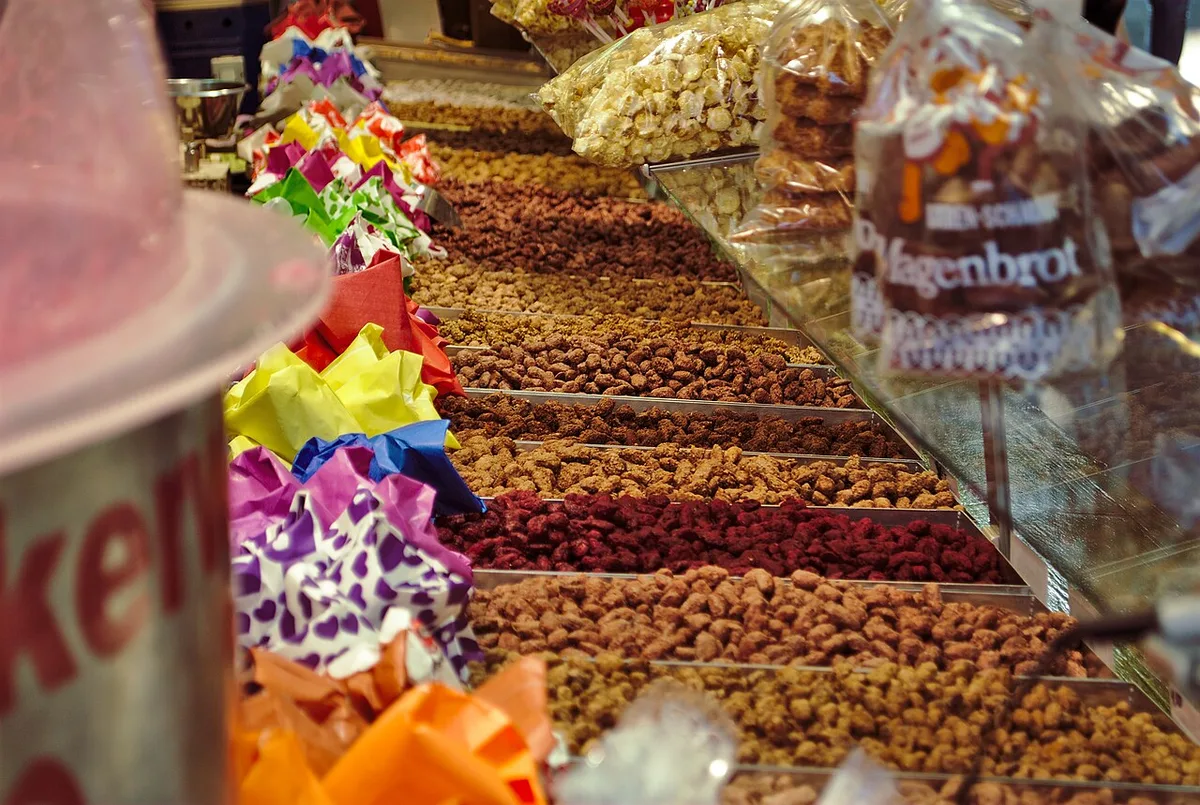
Ask vendors which foods or crafts are associated with the destination rather than assuming an item is locally exclusive. Confirm each price before ordering. Nonalcoholic alternatives may be available, but current selections require an on-site check. Ask how the mug deposit works before deciding to return or keep the mug. Carry a card plus a modest cash contingency. Protect fragile purchases inside clothing, and consider luggage space before buying another item.
The €40, €60, and €80 daily tests should be checked against food, drinks, mug deposits, and crafts together. If souvenirs are separated for comparison, they still need to be included in luggage planning, especially when the purchases are fragile.
Packing and Accessible Pacing
Pack layers, gloves, a hat, thick socks, and weather-appropriate footwear. Add compact rain protection, medication, a portable charger, and secure storage for valuables. Warm clothing does not replace indoor recovery. Schedule at least two seated breaks on each full market day. Travelers needing step-free access should verify stations, local connections, accommodation entrances, and event surfaces. A folding itinerary with fewer stops may be more useful than extra clothing.
Last-Minute Fallback Plan
A late booking should simplify the route instead of forcing six destinations into unsuitable dates. Complete these checks in order.
- Confirm all current market dates before reserving transport.
- Search station-connected accommodation beyond the immediate center.
- Reduce the journey to two overnight bases.
- Remove Rothenburg before cutting a main-base day.
- Keep every remaining day trip optional.
- Choose flexible rail terms when the price difference is acceptable.
- Prepare one verified indoor alternative in each base.
Common Germany Christmas Market Itinerary Mistakes
Most routing problems come from excess distance or unsupported assumptions. Review these nine risks before payment.
- Changing hotels on consecutive nights.
- Treating transfer days as two full sightseeing days.
- Assuming every market opens on the same date.
- Expecting all six markets after December 24.
- Scheduling every major city on a weekend.
- Buying a rail pass without pricing actual journeys.
- Ignoring luggage, stairs, cold, and standing time.
- Using unverified hours or admission rules.
- Planning a long excursion on departure day.
Final Planning Check
A 10-day route can cover the six verified markets, but the 7-day version offers easier pacing. Confirm the recurrence-derived dates against current organiser information before booking. Price each rail segment, reserve flexible lodging, and protect one half-day from advance commitments. Use the broader German market guide to compare the six destinations without adding unverified events.
Choose a Region Before Building Your Route
A compact regional route is usually easier to book and enjoy than a cross-country market chase. Choose a region based on your arrival airport, preferred pace, and tolerance for hotel changes.

- Bavaria: Munich and Nuremberg suit rail-focused first visits, and Rothenburg ob der Tauber adds a small-town Reiterlesmarkt within reach of both. Use Munich or Nuremberg as your base.
- Rhine and south-west: Cologne and Stuttgart work well for travelers wanting a shorter western route with fewer long transfers and a city-based stay.
- Saxony: Dresden anchors an eastern trip around the Striezelmarkt, Germany's oldest documented Christmas market.
- Two-region pairing: Munich with Nuremberg, or Cologne with Stuttgart, keeps hotel changes to one while still covering two distinct market traditions.
Pick the route with the fewest inconvenient transfers after pricing flights and accommodation. A famous market is rarely worth an extra hotel change if it leaves no time for weather delays, warm-up breaks, or a relaxed evening visit.
Frequently Asked Questions
How many days do you need for a Germany Christmas market trip?
Allow 7 days for a balanced route with three bases. Covering all six verified destinations requires about 10 days and five bases. A slower traveler should add an extra night rather than another stop.
Is five days enough for a Germany Christmas market itinerary?
Five days works when you limit the trip to Munich and Nuremberg. Give each base two nights and protect the remaining day for arrival or departure. Avoid adding Rothenburg if transport or weather becomes uncertain.
Can you visit these German Christmas markets by train?
Yes, the itinerary is designed around rail. Verify every connection, fare, restriction, and disruption before travel. Rothenburg deserves particular attention because it is a return trip rather than an overnight base.
Are the six markets open after Christmas?
Their verified recurrence rules end on December 23 or December 24. Do not plan this six-market route after those dates. Other winter events cannot be assumed from this article.
Why do these Christmas markets finish before or at Christmas?
Their verified schedules are tied to Advent and lead into Christmas. Three end on December 23, while three run through December 24. Those rules do not establish a universal schedule for every German event.
When should you visit the larger destinations?
Place full market days on weekdays when your travel dates allow it. Use weekends for a transfer or flexible return visit. Daytime browsing and an evening return can reduce one continuous period outdoors.
Is a German rail pass automatically worthwhile?
No. Compare point-to-point fares, applicable regional tickets, pass costs, airport transfers, and the Rothenburg return trip. Include flexibility and restrictions before choosing the lowest displayed total.
When should you book hotels and trains?
Start after confirming the current market schedules against their recurrence rules. Reserve accommodation early enough to retain useful location choices. Buy transport only after comparing restrictions, flexibility, and the complete route.